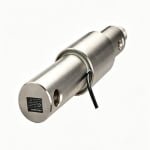
factory-direct customized load cell, built to the application-specific capacity and accuracy your project requires.
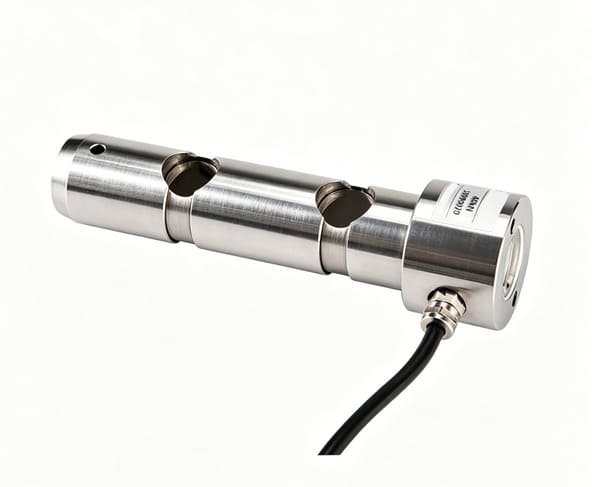
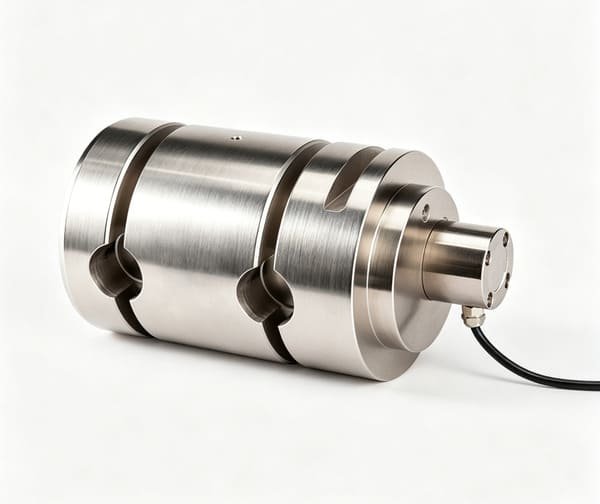
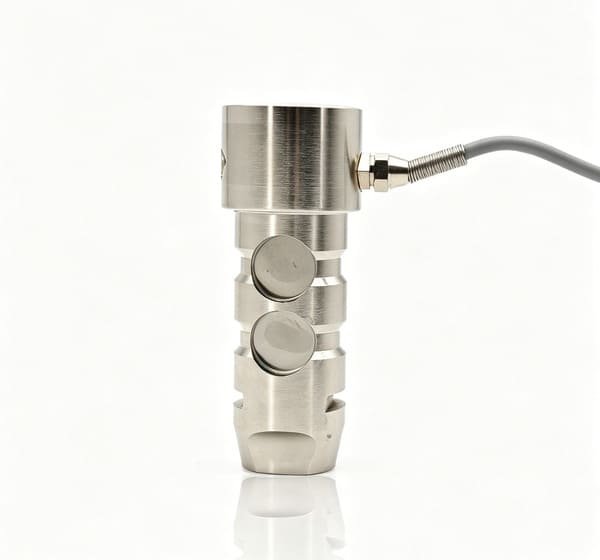
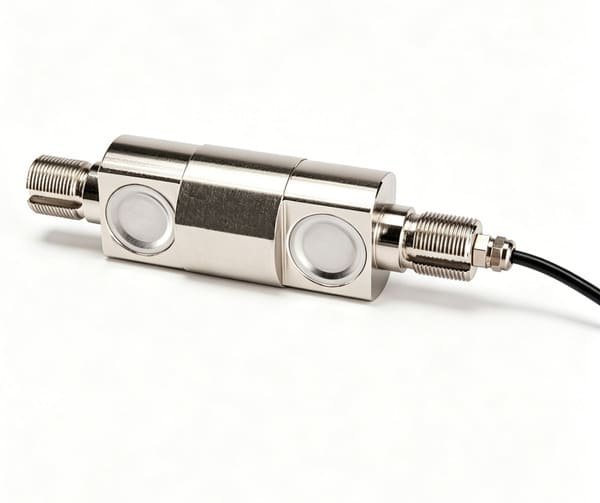
The WST701 is a customized load cell. All figures on this page come from the factory parameter sheet — what you read here is what ships.
Contact our engineers for the complete datasheet and design-in support.
Shaft-pin load cells, also known as load pins, are robust, direct-replacement sensors designed to turn standard mechanical shafts into precise force-measuring devices.
⚙️ Key Features
Direct Integration: Designed to directly replace standard pins, shafts, or bolts, they require minimal modifications to your existing machinery.
Robust & Compact: Made from high-strength stainless steel with embedded electronics, they withstand harsh environments and fit into tight spaces, protecting sensors from moisture, dust, and corrosive substances.
High Accuracy: Modern designs use double-ended shear beam technology for precise measurement (typically within ±0.5% of full scale or better), with excellent resistance to bending and off-center loads.
Customizable: Manufacturers offer custom lengths, diameters, and load capacities, with options for various protection classes (e.g., IP68, submersible up to 16,000 ft), ATEX/IECEx hazardous area certifications, and integrated signal amplifiers for 4-20mA or digital outputs.
📝 Usage & Installation
Proper installation is the most critical factor for optimal performance. Here are the key steps to follow:
Mechanical Installation & Alignment
Orientation: Align the load direction marking on the pin with the actual force vector to ensure the strain gauges read correctly.
Fit & Clearance: Maintain a proper fit between the pin and housing, usually an H7/g6 recommendation. Excessive play can cause accuracy loss.
Securing: Use an anti-rotation plate (e.g., a keeper plate) to prevent the pin from rotating, which would damage the internal wiring.
Electrical Connections & Wiring
Standard Connection: With a standard mV/V output (typically ~1-2mV/V), use high-quality shielded cables to prevent noise interference.
Signal Conditioning: Use external amplifiers if your control system (e.g., PLC) cannot read millivolt signals directly. Alternatively, choose an integrated (4-20mA) or digital (RS-485) output version for simpler, longer-distance transmission.
Wiring: The calibration certificate includes a wiring diagram; typically, it uses a four-wire connection: two wires for power excitation and two for the output signal.
System Calibration
Factory Calibration: The pin includes a factory NIST-traceable certificate showing its theoretical output.
In-Situ Calibration (Crucial for Accuracy): This is the most critical step. Perform a system calibration with the pin installed in the final assembly for best accuracy. Apply known test weights or forces to record the actual signal output; this corrects for mechanical influences of your specific equipment.
Calibration Data: Record at least 3-5 test points to verify linearity and repeatability.
Recalibration: Recalibrate annually or after any significant overload event to maintain measurement integrity over time.
🏭 Common Applications
These sensors are ideal for industries requiring real-time load monitoring.
Cranes & Lifting Equipment: Monitors hook loads, winch forces, and provides crane overload protection for tower cranes, mobile cranes, and overhead cranes.
Marine & Offshore: Measures mooring line tensions, anchor forces, and towing loads in challenging offshore environments.
Industrial & Manufacturing: Monitors tension in wire cables, belting, and processes; provides feedback for automated manufacturing and assembly lines.
Heavy Machinery & Construction: Ensures safe operation and load monitoring for excavators, loaders, and other heavy equipment.
Testing & R&D: Validates new product designs and verifies force requirements in research and development settings.
Additional Use Cases: Includes elevators/hoists for weight monitoring, railway couplings for drawbar force monitoring, and aerospace systems for component stress testing.
If you have a particular equipment type or industry in mind, feel free to ask for more specific guidance.
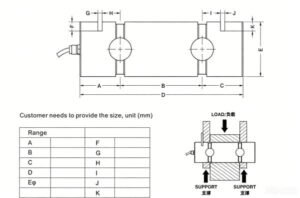
Complete technical parameters, as delivered from the factory.
| WST701 Technical Specifications | |||
|---|---|---|---|
| Rated Load | 50N-1000KN or customized weight range | Material | stainless steel or alloy steel |
| Rated Output | 1.0-2.0mv/v | Accuracy Class | ±0.5%F.S |
| Ingress Protection | IP66 | Temp.Effect On Load | ±0.05%F.S/10℃ |
| Insulation Resistance | ≥5000MΩ | Sensitivity | 1.0-2.0mV/V |
| Operating Temp. Range | -20℃-+65℃ | Creep | ±0.05%F.S/30min |
| Excitation, Recommended | Suggest 10V DC | Zero Output | ±1%F.S |
| Maximum safe overload | 150%F.S | Input Resistance | 750±15Ω |
| Connection | E+:Red E-:Black S+:Green S-:White | Output Resistance | 700±5Ω |
| Temp. Effect on Zero | ±0.05%F.S/10℃ | ||
Direct manufacturing with 10+ years of OEM/ODM experience — custom capacities, connectors, cable lengths and branding.
Send your capacity, application and annual quantity — pricing, datasheet and sample options within 12 hours on business days.
Every unit is factory calibrated and inspected before dispatch; parameters on this page reflect shipped goods.
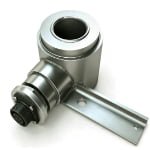
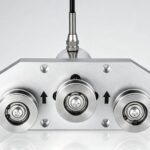
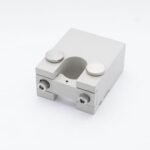
Non-standard housings, mounting patterns and cable exits are engineered around the WST701's strain-gauge body for direct drop-in to existing machinery.
Drawing-based fit
When the catalogue range does not match, the WST701 can be re-rated above or below standard capacities with matched calibration and certificate.
Custom capacity
Sub-sea, cryogenic, vacuum and high-temperature variants wrap the WST701 in special sealing, materials and cable — certified for the application.
Special certified
| Function | Wire Color |
|---|---|
| Excitation + (Exc+) | Red |
| Excitation − (Exc−) | Black |
| Signal + (Sig+) | Green |
| Signal − (Sig−) | White |
| Model | Capacity Range | Typical Application | Choose When |
|---|---|---|---|
| WST701 | — | This page | Current selection |
| WST708 | 5Ton/7.5Ton/10Ton/Customized | Customized Load cell | Alternative model in the same class |
| WST707 | 10t~20t | Customized Load cell | Alternative model in the same class |
| WST706 | 0.5-100kg or customized weight range | Customized Load cell | Alternative model in the same class |
| WST705 | 100-300KN or customized weight range | Customized Load cell | Alternative model in the same class |
| WST704 | 40~1100 kN | Customized Load cell | Alternative model in the same class |
Not sure which model fits your design? Send us your platform size, target capacity and environment — our engineers will recommend the right sensor within 12 hours.
The WST701 meets standard industrial accuracy requirements. Full accuracy figures are listed in the specifications table above.
The WST701 is available in multiple capacity steps. For requirements outside the listed range, contact us — OEM capacities can often be arranged.
Protection class details are listed in the specifications table. Ask our engineers if your environment includes wash-down, immersion or corrosive conditions.
It provides a standard industry output signal, compatible with standard weighing indicators, transmitters and PLC analog inputs.
Standard wiring follows the industry convention: excitation + red, excitation − black, signal + green, signal − white. Always confirm against the datasheet shipped with your batch.
Use the inquiry form on this page or WhatsApp us directly — we reply within 12 hours on business days. Tell us your capacity step, target annual quantity and application, and we will send pricing, the datasheet PDF and sample availability. OEM/ODM options (custom labeling, connectors, cable lengths) are available on request.
Full dimension drawings, performance curves and calibration data — sent to your inbox within 12 hours.
Deepen your selection — application guides, accuracy-class comparisons and installation notes written for B2B engineers.
 Application
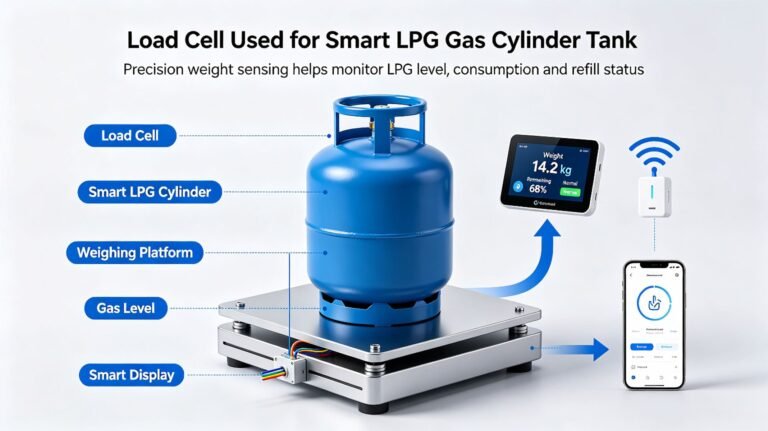
Robin · Export Sales Engineer Sep 9, 2026 9 min read Smart Gas · IoT Weighing Load Cells for Smart LPG Gas Cylinders: Creep, Battery Life,…
Read article →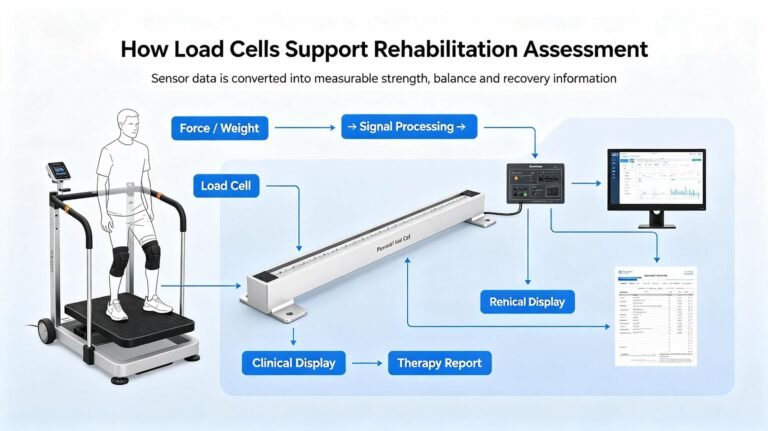 Application
Rehabilitation & Fitness · OEM Force Sensing Load Cells for Rehabilitation Testing Equipment & Smart Fitness Machines: How a 7-Device EU Platform Forced Us to Rethink…
Read article →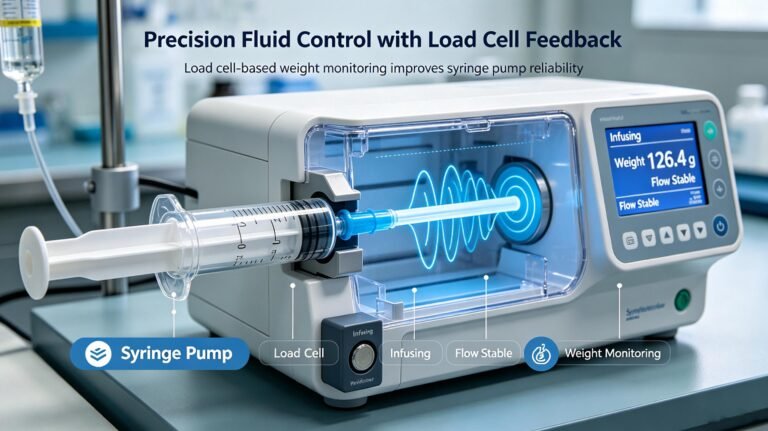 Application
VektorForce Application Note · Medical Series #6 Load Cells for Syringe Pumps: Why Our Two Stock Cells Cover 80% of OEM Designs — and the Other…
Read article →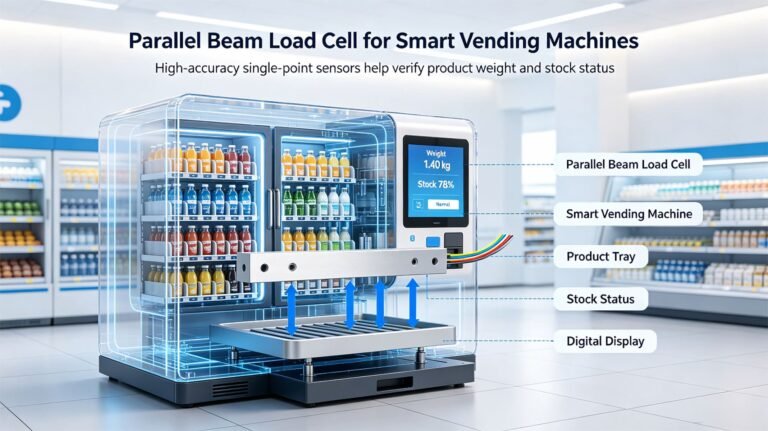 Application
Field Notes · Unmanned Retail Load Cells for Smart Vending Machines: How Weight Sensing Ended a Shrinkage Problem Cameras Couldn't Solve A first-person account of spec'ing…
Read article →Tell us your capacity step, application and annual quantity. Our engineers reply with pricing, datasheet PDF and sample options within 12 hours on business days.
WhatsApp: +86 158 2902 6027