
Case Study · Medical Devices · Regulatory
Load Cells for Medical Devices: A Real OEM Project Walkthrough
How I helped medical device OEMs fix false alarms, survive millions of cycles, and weigh babies down to 10 grams — the selection framework, the compliance traps, and the mistakes we learned the hard way.
⏱️ 14 min read
👤 By Michael — Export Sales Engineer
Why I’m Writing This
I’ve spent the last decade exporting load cells to medical device OEMs across Europe, the Middle East and the Americas. In that time I’ve shipped sensors into infusion pumps, rehab machines, urodynamic testers, patient lifts and baby scales — and I’ve watched the same five or six mistakes ruin projects that were otherwise well engineered.
The thing is, medical load cells are not industrial load cells with a fancier label. The loads are tiny (often under 20 kg), the accuracy expectations are brutal, the devices run 24/7 for a decade, and everything that touches a patient gets pulled into regulatory review. Get the sensor wrong and you don’t just lose money — you risk a recall, or worse.
This guide is the one I wish I’d had when I started. It’s built around three real projects from our order book — what the customer asked for, where our first instinct went wrong, and the spec we finally shipped. Plus the selection framework we now use on every medical inquiry, so you can skip the expensive part of the learning curve.
💡 Key Takeaway
A medical load cell is chosen on five numbers: capacity, accuracy class, temperature coefficient on zero, creep, and fatigue life — in that order. Compliance (IEC 60601-1, ISO 13485, OIML R60) is the gate you must walk through, not a checkbox you add at the end.
📋 What This Article Covers
- Why Medical Devices Need a Different Kind of Load Cell
- Where Load Cells Are Used in Medical & Rehabilitation Equipment
- How We Select a Load Cell for a Medical Project (7-Step Framework)
- Three Real Projects (and the Mistakes We Fixed)
- The Specs We Actually Shipped — Side by Side
- Common Mistakes We See (and You Can Avoid)
- Calibration & Maintenance: Keeping a Medical Load Cell Honest
- Medical Load Cell Selection Checklist (Download-Ready)
- Frequently Asked Questions
- Recommended Load Cells for Medical Devices
- Let’s Spec Your Sensor Together
1. Why Medical Devices Need a Different Kind of Load Cell
If you’ve ever specified a load cell for a truck scale or a packaging line, you already know the basics: a strain-gauge cell converts mechanical force into a millivolt signal, and you pick a capacity with enough headroom. Medical devices are a different game entirely.
Here’s what makes them different. The loads are tiny — often 20 kg or less. The accuracy expectations are brutal: a neonatal scale must resolve 5–10 g on a 20 kg platform, which is a resolution of 0.05% or better. The devices run continuously, sometimes for a decade. And the sensors sit inside equipment that touches patients, which means regulatory scrutiny — IEC 60601-1 for electrical safety, ISO 13485 for quality management, and in many markets FDA clearance for the finished device.
A load cell that drifts by 0.1% overnight is not a nuisance in a hospital bed — it can change a medication dose. That single sentence is why the medical sensor business behaves differently from the industrial one.
The market pressure is real and it’s growing. The global population aged 65 and above is expected to reach 1.6 billion by 2050, and the medical devices market is projected to grow at roughly 5.8% CAGR through the next decade. Hospitals, nursing homes and rehab centers are buying more smart beds, infusion pumps, patient lifts and rehabilitation equipment — and every one of those machines needs one or more force sensors inside.
⚠️ The Compliance Gate Is Non-Negotiable
If your device will be CE-marked or FDA-cleared, the sensor supplier’s quality system matters as much as the sensor itself. Under the FDA’s updated Quality Management System Regulation (QMSR, effective February 2026), force sensors used in regulated devices must come from suppliers with compliant, auditable quality processes. Ask for the certificate number and a copy of the quality agreement — not just a datasheet.
2. Where Load Cells Are Used in Medical & Rehabilitation Equipment
Over the years we’ve shipped load cells into almost every corner of the medical world. These are the application categories we see most often — and the engineering requirement each one silently imposes on the sensor:
| Application | What It Measures | Key Sensor Requirement |
|---|---|---|
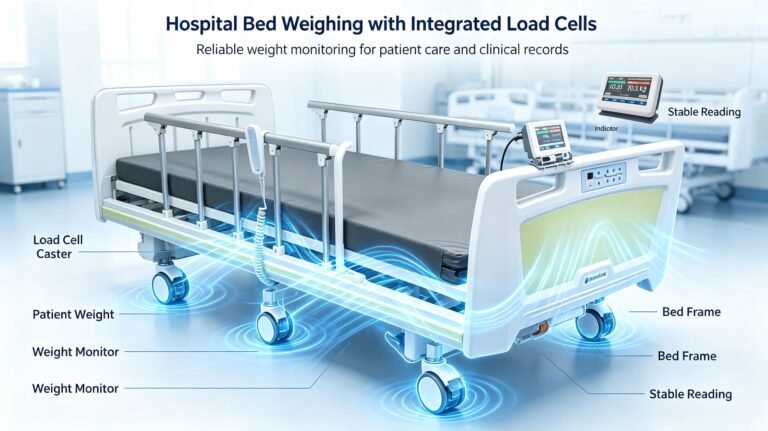
| Smart hospital beds / ICU beds | Patient weight, fluid balance, pressure-ulcer prevention | Long-term zero stability, low creep, 4-point platform mounting |
| Infusion & syringe pumps | Drip rate, occlusion detection, empty-bag alarm | High precision, minimal temperature drift, compact size |
| Rehabilitation / physiotherapy machines | Limb force during active/passive training, progress tracking | High fatigue life (millions of cycles), overload protection |
| Urodynamic testing instruments | Urine volume and flow rate for kidney function assessment | 72-hour creep stability, interference resistance |
| Patient & baby weighing scales | Body weight, newborn weight, bariatric up to 600 kg | High resolution at low range, EMC compliance, low power |
| Patient lifts & hoists | Total patient load during transfer, overload alarm | Safety-factor headroom, redundant sensing, fatigue resistance |
| Gait analysis & balance systems | Ground reaction force (GRF), center of pressure (COP) | Multi-point arrays, fast response, crosstalk control |
| Prosthetics & orthotics | Residual-limb loading, fit optimization | Miniature footprint, biocompatible materials, fatigue resistance |
3. How We Select a Load Cell for a Medical Project (7-Step Framework)
When a medical OEM emails us, they rarely say “send me a 20 kg parallel beam.” They describe a problem — a false alarm, a drift, a weight that won’t settle. Our job is to translate that problem into seven selection decisions. This is the framework we run on every single project:
Step 1 — Capacity: size it right, not big
The golden rule: rated capacity should be 1.2–1.5× the maximum expected load (2× for dynamic or impact-loaded applications like rehab machines). Oversizing “to be safe” is the most common mistake we see — a 100 kg cell weighing a 5 kg IV bag is a wasted device: its usable resolution collapses, and you pay for precision you never get. For medical loads we typically land between 5 kg and 200 kg, with micro cells down to a few hundred grams for force-feedback applications.
Step 2 — Accuracy class: match it to the clinical need
- Class C1 (≤ ±0.02% FS) — laboratory and medical-grade applications where dosing or diagnosis depends on the number.
- Class C2 (≤ ±0.03% FS) — high-end medical weighing, infusion monitoring.
- Class C3 (OIML R60) — the floor if the device itself is certified as a legal-for-trade weighing instrument.
Remember: the sensor’s class is only one link in the chain. The mechanical mounting, the A/D converter and the calibration routine together determine what the clinician actually sees.
Step 3 — Temperature coefficient on zero: the number everyone skips
Medical devices live in 20–28 °C rooms, so engineers assume temperature is a non-issue. It isn’t. The heat from the device’s own electronics — a pump motor, a warming system — can shift the zero point by more than the signal you’re trying to measure. Look at two datasheet numbers: temperature effect on zero (TC₀) and temperature effect on span. For medical work we insist on TC₀ ≤ 0.001% FS/°C, and a compensated range of −10 °C to +40 °C covers virtually every clinical setting.
Step 4 — Material & sealing: think about disinfectant
Hospital equipment is wiped down with aggressive disinfectants daily. For wet or washdown environments, choose stainless steel (304 or 316L) sealed to IP65 or higher. For fully enclosed dry electronics (a bed platform, a sealed pump housing), aluminum at IP65 is perfectly adequate and lighter on cost. Hermetic sealing matters when moisture is continuous — we’ve seen IP65 cells fail within a year in humid climates where an IP68 equivalent ran for a decade.
Step 5 — Fatigue life: the hidden cost killer
Rehab machines and patient lifts cycle millions of times. A cell rated for a few hundred thousand cycles will silently drift and fail — usually just after the warranty window. For cycling applications we specify cells with verified fatigue performance (typically 1–5 million cycles at rated load) and document it in the datasheet. This single parameter has saved our customers more field failures than any other step in this framework.
Step 6 — Output & connectivity: analog vs. digital
Traditional analog cells (mV/V output) remain the most cost-effective choice and dominate the installed base. But we’re seeing a clear shift: more medical OEMs now ask for digital or semi-digital cells with onboard ADC, calibration-data storage and serial output (RS-485, CAN or Bluetooth) so the device can self-diagnose, log calibration history and stream data for remote monitoring. If you’re designing a connected-care product, plan the digital path early — retrofitting it later is painful.
Step 7 — Compliance & certifications: verify before you commit
- IEC 60601-1 — electrical safety for medical electrical equipment (essential for CE-marked devices).
- ISO 13485 — quality management for medical devices; many OEMs now require it from their sensor suppliers.
- FDA QMSR — the FDA’s updated Quality Management System Regulation, effective February 2026; force sensors in regulated devices must come from suppliers with compliant quality processes.
- OIML R60 / NTEP — required when the device itself is a certified weighing instrument.
- RoHS / REACH — material compliance for EU markets.
Our rule of thumb: never promise a certification you cannot back up with test reports. Ask your supplier for the certificate number and, if needed, a sample for your own verification.
4. Three Real Projects (and the Mistakes We Fixed)
Nothing teaches like a shipped container. Here are three projects from our own order book — what the customer asked for, where the first instinct went wrong, and how we landed on the final spec.
Project 1 — A Syringe Pump That Couldn’t Stop Crying Wolf
A European infusion-pump OEM came to us with a classic occlusion-detection problem. The pump uses a force sensor to detect line-pressure build-up; when a clot or kink appears, the pump must alarm and stop. Their existing sensor kept triggering false alarms on the morning shift — when the drug library was changed and the pump re-primed — and occasionally missed real occlusions during night operation.
Our first instinct was “buy a more accurate cell.” That was wrong. After a week of data logging we found the real culprit: temperature drift plus a poor mechanical coupling. The pump’s motor heated the mounting bracket by 4–6 °C after 30 minutes of operation, shifting the zero point enough to mask small pressure changes.
The fix had three parts: a sensor with a tighter temperature coefficient on zero (≤ 0.001% FS/°C), a thermally isolating mounting adapter, and a software routine that re-zeroed the sensor at startup. The false-alarm rate dropped to zero in field trials, and the same cell design now runs in three generations of their pumps.
✅ What We Learned
“More accurate” rarely fixes a drift problem. Log the data first, find the thermal and mechanical path of the error, then pick the spec. TC₀ beats accuracy class in almost every pump application.
Project 2 — A Rehab Machine That Wore Out Three Competitors’ Cells
A distributor in the Middle East supplied a limb-linkage rehabilitation trainer — used for stroke recovery and spinal cord injury patients — and kept seeing load cell failures every 6–9 months. The machine applies active and passive resistance through a lever arm, and patients, some with spasticity, yank the arm hard enough to slam the sensor against its overload stops.
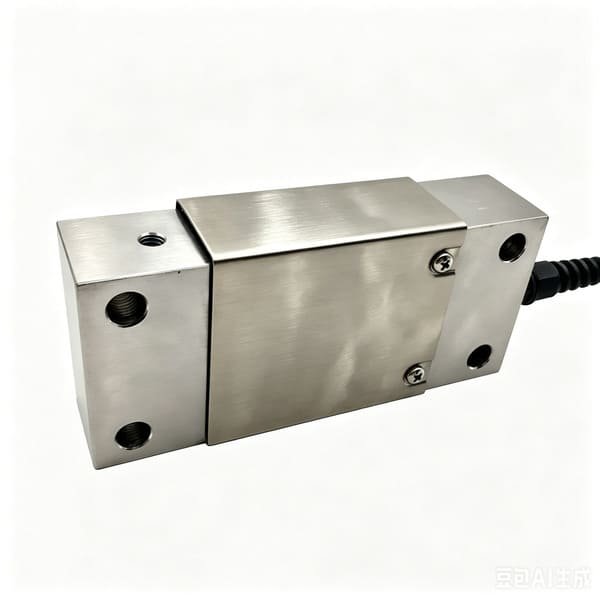
The distributor had been buying off-the-shelf cells rated for static weighing, where fatigue life is rarely documented. We replaced them with a stainless steel beam cell with a 300% safe overload and a documented fatigue life above 2 million cycles, then added a mechanical end-stop to protect the cell during spasm events.
That was three years ago. The retrofit cells are still in service, and the distributor now standardizes that spec across all their rehab product lines. The lesson for any OEM: if the mechanism cycles, demand fatigue-life documentation before you buy — it’s the difference between a warranty claim and a repeat customer.
Project 3 — A Baby Scale That Couldn’t See 10 Grams
An OEM building electronic baby scales came to us with a tight spec: 20 kg capacity, 10 g display division, minimum load 50 g, battery-powered at 3 V. Their first prototype used a single full-bridge cell, and the readings bounced around by ±20 g whenever the baby shifted weight — enough to fail their internal accuracy targets.
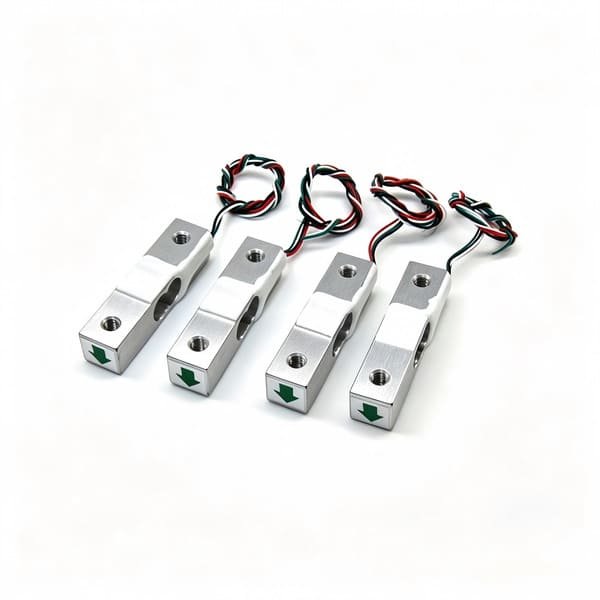
The answer was a 4-point half-bridge configuration: four 20 kg half-bridge cells (manganese steel, rubber-sealed, IP65) mounted at the four corners of the platform, each 0.6 ± 0.1 mV/V sensitivity, wired as two half-bridges in parallel. Corner loading — the baby always lying slightly off-center — was averaged out, and the total sensitivity came up to exactly the level their A/D converter needed. Combined error landed at 0.05%, comfortably inside spec.
That configuration became their standard BOM, and we’ve delivered the same kit to three more scale manufacturers since. If your device has an off-center-load problem, a multi-point half-bridge arrangement is often cheaper and more robust than chasing a single ultra-high-accuracy cell.
5. The Specs We Actually Shipped — Side by Side
Here’s the selection summary from the three projects above. If your application looks like one of these rows, this is a defensible starting point for your own spec:
| Spec | Syringe Pump | Rehab Trainer | Baby Scale |
|---|---|---|---|
| Cell type | Miniature parallel beam | Stainless steel beam | 4× half-bridge corner cells |
| Capacity | 5 kg | 200 kg | 4 × 20 kg |
| Accuracy / combined error | ±0.02% FS | ±0.03% FS | 0.05% (system) |
| TC₀ (zero temp. effect) | ≤ 0.001% FS/°C | ≤ 0.002% FS/°C | ≤ 0.003% FS/°C |
| Material / sealing | Aluminum, IP65 | Stainless steel, IP67 | Manganese steel, IP65 |
| Fatigue life | Static (continuous) | ≥ 2M cycles @ rated load | Static |
| Safe overload | 150% | 300% | 150% |
| Output | 2.0 mV/V | 2.0 mV/V | 0.6 ± 0.1 mV/V each (parallel) |
6. Common Mistakes We See (and You Can Avoid)
- Oversizing the capacity. Bigger is not more accurate — resolution and signal strength both suffer.
- Ignoring creep for continuous-monitoring devices. A 72-hour creep of 0.03% FS matters when a bed weighs a patient all night.
- Treating IP rating as optional. Disinfectant spray gets everywhere. Choose the sealing for the worst day, not the best day.
- Buying static cells for dynamic duty. If the mechanism cycles, demand fatigue-life documentation.
- Skipping the mounting review. Most field failures we diagnose are mechanical, not electrical: off-axis loading, bolted-down base plates that flex, cables routed next to power lines.
- Forgetting EMC. Hospitals are noisy electromagnetic environments. Make sure the cell and its cabling are tested against IEC 61000 EMC requirements, or you’ll chase phantom readings at installation.
- Waiting until the end to think about certification. A sensor supplier without ISO 13485 or auditable quality processes is a redesign risk hiding in plain sight.
7. Calibration & Maintenance: Keeping a Medical Load Cell Honest
A quality load cell correctly installed can last 10–20 years, but only with a disciplined maintenance routine:
- Calibrate on a schedule. Once per year is the norm; quarterly for devices used in dosing decisions. Always calibrate with traceable weights at the actual installation site.
- Zero-check before each use. A 30-second zero reading at startup catches most drift early.
- Inspect cables and seals. Cracks in cable jackets and damaged rubber boots are how moisture enters. Check them when the device is serviced.
- Document everything. For regulated devices, a calibration log is not bureaucracy — it’s the evidence your auditor will ask for.
- Watch for mechanical damage. A cell that has been dropped, overloaded or hit by a transport bump should be recalibrated or replaced, not “watched.”
8. Medical Load Cell Selection Checklist (Download-Ready)
Print this, fill it in with your engineering team, and send it to your sensor supplier. A complete brief saves at least two rounds of email.
☑️ Application & Environment
- Device type and clinical function (weighing? dosing? force feedback?)
- Max expected load ___ kg | Min load ___ g | Required resolution ___ g
- Static or dynamic (cycling) loading? Estimated cycles per year ___
- Operating temperature range ___ °C | Washdown / disinfectant exposure? Yes / No
☑️ Electrical & Compliance
- Output required: mV/V / 4–20 mA / digital (RS-485, CAN, Bluetooth)
- Supply voltage available ___ VDC | Battery-powered? Yes / No
- Target certifications: IEC 60601-1 / ISO 13485 / OIML R60 / FDA QMSR / RoHS-REACH
- Quantity for first order ___ pcs | Annual volume forecast ___ pcs
💬 Send this completed brief to our engineering team — we’ll reply within 24 hours with a recommended cell family, datasheets and test evidence.
9. Frequently Asked Questions
Can I use a standard industrial load cell in a medical device?
Sometimes, yes — for a non-regulated application like a rehab force display, a standard high-accuracy cell works fine. For anything that influences dosing, diagnosis or patient safety, plan for medical-grade requirements (IEC 60601-1, ISO 13485 supply chain, tighter temperature specs) from day one.
What is the most common cause of load cell failure in medical equipment?
In our experience: moisture ingress through damaged sealing, followed by mechanical overload and fatigue in cycling applications. All three are preventable with the right material, IP rating and fatigue-life specification.
Do I need OIML certification for a medical scale?
Only if the device is sold as a legal-for-trade weighing instrument. Clinical devices that are not trade-weighing instruments typically require IEC 60601-1 and appropriate EMC standards instead. Verify the classification for your target market with your regulatory consultant.
How accurate do load cells in medical devices need to be?
It depends on the application: Class C1–C3 (combined error ±0.02–0.03% FS) covers most medical weighing; infusion and force-feedback applications usually care more about repeatability and temperature stability than about absolute accuracy class.
What’s the difference between a single-point and a multi-point (corner) arrangement?
A single-point cell is designed to tolerate off-center loading by itself and is ideal for platforms up to roughly 60 × 60 cm. For larger platforms (beds, gait plates, bariatric scales), four corner-mounted half-bridge cells wired in parallel give better stability and cheaper replacement — as the baby-scale project above demonstrates.
10. Recommended Load Cells for Medical Device Applications
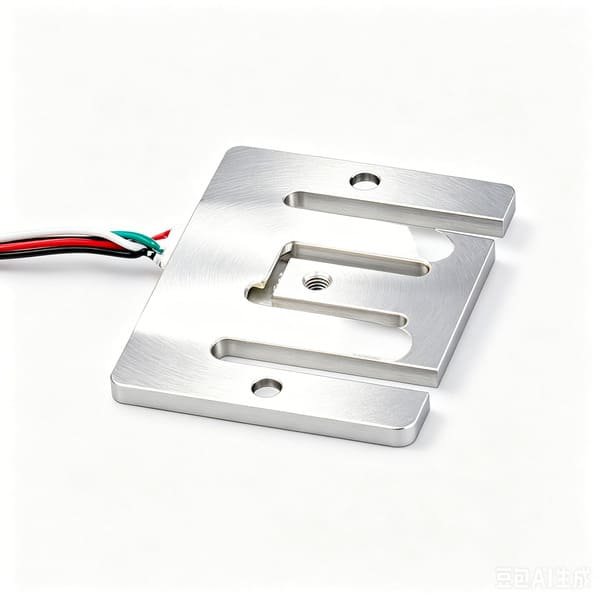
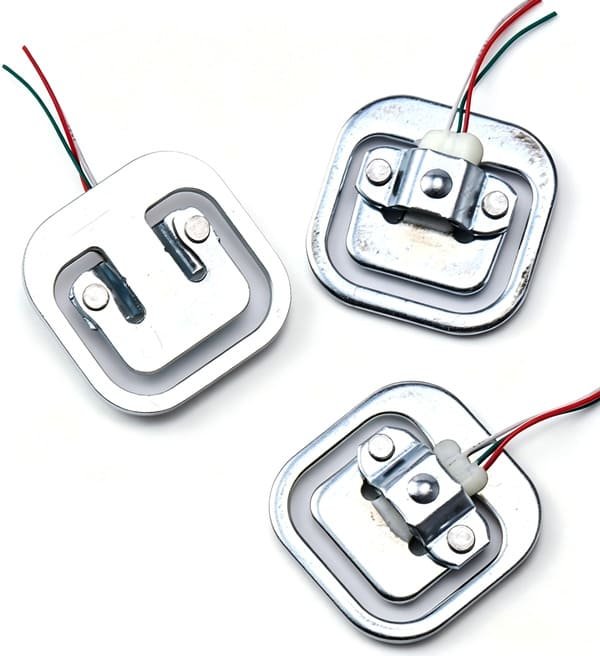
These are the five cell families we reach for most often when a medical OEM comes to us. Each one maps to a real application from the case studies above — so if your project looks familiar, you already have a proven starting point. Click through to the product page for full datasheets, dimension drawings and certification evidence.
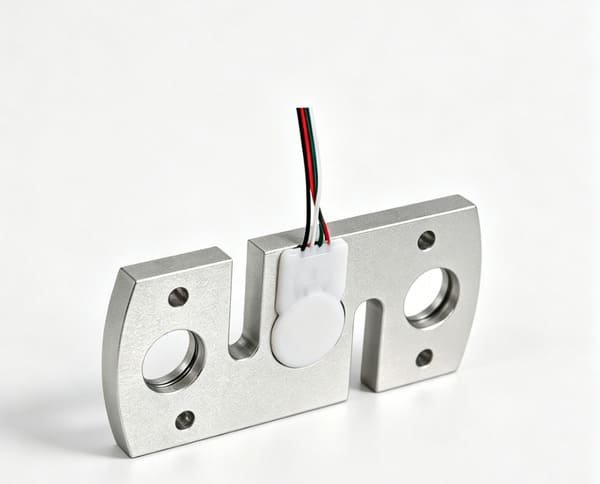
💡 Not sure which one fits? These five cover the most common medical scenarios, but every project has its own load profile, mounting space and certification path. Send us your spec sheet or the checklist above and we’ll match the right cell family — or source a custom one if none of these fit.
Let’s Spec Your Sensor Together
Every medical project we take on starts the same way — a conversation, not a quote. Tell us about your device, the load range, the environment and the certification path, and we’ll recommend a cell family with the right capacity, accuracy, material and sealing — plus the datasheets and test evidence to back it up. We’ve shipped into Europe, the Middle East, the Americas and Southeast Asia, and we’re happy to work with your engineering team through prototyping, qualification and volume production.
📩 Contact us with your application details and we’ll reply within 24 hours.