
Smart Home & IoT Weighing
Load Cells for Smart Home Products: Field Notes From a Weighing Supplier to Connected Appliance Makers
How a half-bridge load cell decides whether it’s safe to spin a litter box, what a coffee machine learns from a 1-gram hopper sensor, and the selection mistakes I see smart home OEMs make over and over.
⏱ 11 min read
✍ Michael — Export Sales Engineer
🏷 Load Cells / Smart Home / IoT
Table of Contents
- Why I’m Writing About Smart Homes at All
- Why Weight Is the Smart Home’s Most Underrated Sensor
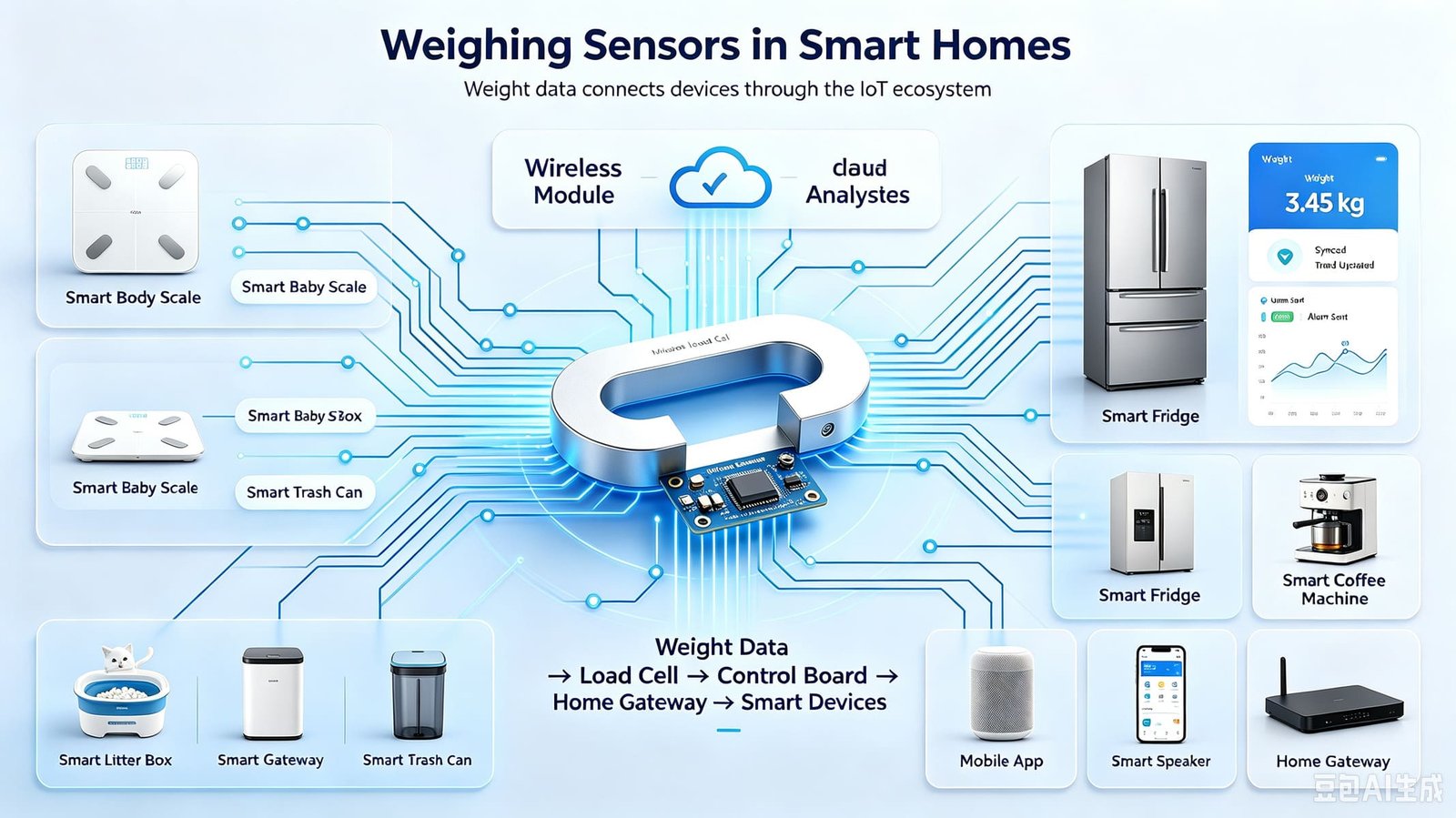
- 15 Places a Load Cell Hides in a Smart Home
- Case Study: The Litter Box That Couldn’t Feel a Kitten
- The Fix: Matched Sets, Deltas, and Honest Specs
- Where We Fit (and Where We Don’t)
- Anatomy of a Smart Home Weighing System
- Coffee Machines, Cooking Robots, and Pantry Shelves
- Selection Guide: What Actually Matters Indoors
- Seven Mistakes I See Smart Home OEMs Make
- FAQ
- Recommended Load Cells for Smart Home Products
1. Why I’m Writing About Smart Homes at All
Two years ago, if you’d asked me what industries my load cells end up in, I would have listed platform scales, truck weighbridges, silo weighing — the classic industrial stuff. Smart homes? That was maybe one inquiry a quarter, usually from a hobbyist.
That has completely flipped. In 2026 I get at least one smart home inquiry every week: smart litter boxes, coffee machines with bean-level tracking, pantry shelves that reorder groceries, waste sorting stations for apartment blocks, pet feeders, kitchen scales with app connectivity. The global smart home market was valued at around USD 147.5 billion in 2025 and is projected to pass USD 180 billion in 2026, growing at roughly 21% a year (Fortune Business Insights). Connected appliances are a huge slice of that — and it turns out that an awful lot of them need to know one simple thing: how much does this weigh?
This article is my field notes: the projects I’ve quoted, the problems I’ve helped debug, and the selection rules I now hand to any smart home OEM before they send me a CAD file. If you’re designing a connected appliance that involves weighing, I hope it saves you a round of field failures.
2. Why Weight Is the Smart Home’s Most Underrated Sensor
Smart homes are full of cameras, radar, and time-of-flight sensors. But every product team I talk to eventually hits the same realization: weight is ground truth, and it’s privacy-friendly.
A camera can guess whether your cat used the litter box. A load cell knows — it measured the animal entering, measured it leaving, and measured the clump it left behind, in grams, without recording anything a lawyer would care about. That’s why weighing shows up in places you’d never expect:
- Consumption tracking — coffee beans, pet food, water, flour, detergent. Weight depletion over time is inventory data.
- Presence & safety detection — is the cat still inside the drum? Did Grandma get out of bed this morning?
- Automation triggers — laundry load weight determines water and detergent dosing; fill level triggers collection routes for smart bins.
- Subscription commerce — “you’re down to 300 g of beans, reorder?” This is the quiet engine behind auto-replenishment business models.
Key takeaway: in a connected appliance, the load cell is rarely the “feature.” It’s the fact layer that makes the feature trustworthy — billing credits in recycling bins, dosage in cooking machines, safety interlocks in anything with moving parts. Get the weighing core wrong and the whole product story collapses.
3. 15 Places a Load Cell Hides in a Smart Home
When I first sat down to map this, I assumed I’d find six or seven applications. The list kept growing. Here’s my current count, with the typical sensing approach for each:
| Smart Home Product | What the Load Cell Does | Typical Approach |
|---|---|---|
| Smart body scale | Weight + trends to fitness app | 4× half-bridge mini cells |
| Smart litter box | Cat presence, safety interlock, litter level | 4× half-bridge, 20–75 kg each |
| Pet feeder | Food inventory, portion control by weight | Micro/flat cell, 0.5–5 kg |
| Smart coffee machine | Bean hopper level → auto-reorder | Micro cell, 0.3–5 kg |
| Smart kitchen scale | Nutrition tracking, recipe guidance | Single micro cell, 0.1–2 kg |
| Cooking robot / baking appliance | Ingredient dosing (flour, water, oil) | Micro cells per hopper |
| Smart washing machine | Load weight → water/detergent dosing | Suspended 1–2 cells or beam |
| Smart refrigerator / pantry | Item-level inventory on shelves | Digital single-point cells, 20–50 kg/shelf |
| Smart shelf / vending shelf | Detect item removal & restock | RS485 digital cells on bus |
| Smart trash can / waste sorting | Deposit weight → recycling credits | Digital single point, 50–1000 kg |
| Smart bed / mattress | Sleep presence, in-bed weight trends | 4× low-profile cells under legs |
| Smart luggage | Weight vs airline limit before you leave | Flat micro cells in handle/base |
| Smart garden pot | Soil moisture via weight (no probes in soil) | Small single point, 5–20 kg |
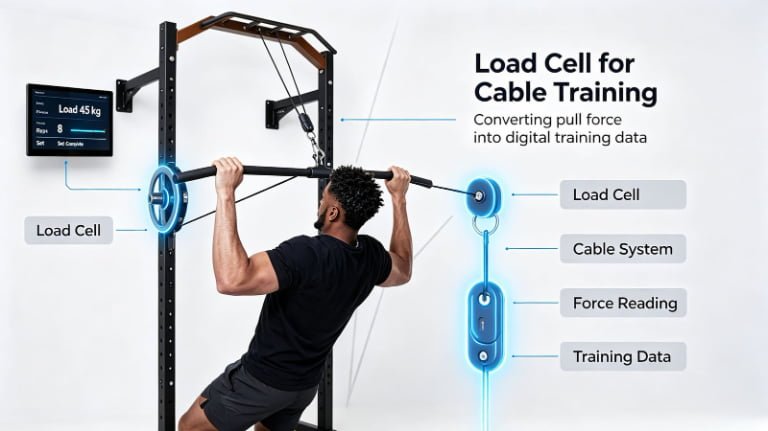
| Home gym equipment | Lift tracking, force measurement | Tension/compression cells |
| Smart standing desk | Load limit protection, usage analytics | Small beam/canister cells in columns |
Notice the pattern: pet care, kitchen, and consumables tracking dominate. Those are the categories where weight data directly drives a purchase or a safety decision — which is exactly why OEMs can’t afford to get the sensor wrong.
4. Case Study: The Litter Box That Couldn’t Feel a Kitten
My favorite smart home project so far started in late 2023 with an email from a hardware team in Shenzhen. They were building a self-cleaning smart litter box for a US pet brand and needed the weighing core: the sensors that sit between the litter drum and the base.
If you haven’t seen one of these products, the mechanics are ruthless. After the cat leaves, the whole drum rotates, sifts clean litter from clumps, and dumps the waste into a sealed tray. The entire product is a safety system built on a weight signal: the motor must never start while a cat is inside. On top of that, the same sensors are supposed to track how much litter is left and how much the cat, ahem, contributed.
Here’s the math we started from — numbers that will look familiar to anyone who’s quoted this application:
- Litter box structure + litter: roughly 20–30 kg of tare sitting on the sensors permanently
- Cat weight range in the spec: 1.5–8 kg — yes, kittens count
- Room temperature in service: −10 °C to +40 °C, and remember some markets (Korea, northern China) put these on heated floors
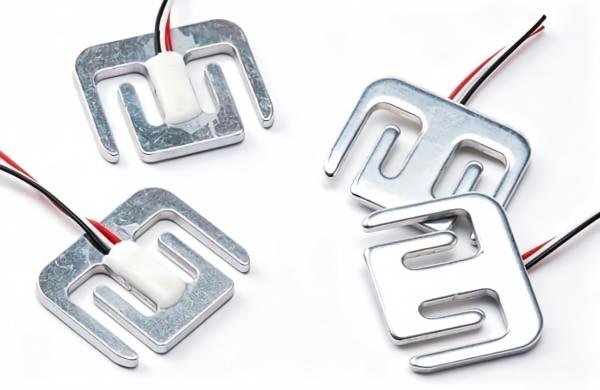
The natural fit was our WST106 micro half-bridge load cell — a thin (2.5 mm) manganese-steel flat cell, four pieces per set, one under each corner. Half-bridge cells are three-wire (red/black/white), cheap, thin, and perfect for this kind of low platform. Four 50 kg cells give you 200 kg of system capacity with a tare around 28 kg.
The prototype worked beautifully — with a 4 kg test cat stand and a careful engineer standing next to it. Then the firmware team asked the question that defined the whole project: “Our minimum detectable cat is 2.5 kg. The spec says 1.5 kg. Can you fix that?”
5. The Fix: Matched Sets, Deltas, and Honest Specs
We could have thrown precision at the problem — a C3 single-point cell with 0.02% accuracy would cost several times more per unit, and on a 200 kg system it buys you headroom you don’t need. Instead, we attacked the three things that were actually eating the kitten’s weight signal:
Problem 1: The four half-bridge cells didn’t agree with each other.
Half-bridge cells have a rated output tolerance of ±0.15 mV/V around 1.2 mV/V — that’s a ±12.5% spread cell-to-cell. Combine four unmatched cells and your corner behavior is lopsided: a cat standing near a “hot” corner registers differently than near a “cold” one. Our fix was factory matched sets: all four cells in a kit binned so their outputs sit within roughly 5% of each other, shipped as a serialized group with a test sheet. This is the same discipline we apply to matched sets for retail and medical scales, and it matters even more when you’re trying to resolve 1.5 kg on a 28 kg tare.
Problem 2: Absolute accuracy is the wrong spec — repeatability and deltas are the right one.
Here’s the insight that unlocked the project: the litter box doesn’t actually need to know the cat weighs exactly 1.9 kg. It needs to know the reading changed by ≥1.5 kg versus a stable baseline. So the firmware was reworked around deltas: hold a rolling baseline, detect a step change, confirm it’s stable for a few seconds, then classify it. For that, the ±0.1% FS repeatability of the cells does the heavy lifting — on this system that’s about 80–200 g of noise floor, comfortably below a 1.5 kg kitten, whereas chasing absolute accuracy of the total (±0.3% FS combined) would have drowned the signal. Presence detection became a rate-of-change + stability-window algorithm, not a threshold comparison.
Problem 3: The environment kept moving the zero point.
Motor vibration during the sifting cycle, floor heating, a cat that lands like a dropped melon — all of it shifts the baseline. We added: an RC filter plus a moving-average window in firmware for the vibration; auto-rezero after N minutes of confirmed idle to absorb slow thermal drift; and mechanical isolation so the drum motor’s shake didn’t feed into the sensor mounts. The rule we gave their team: take litter-level measurements only when everything is at rest, never mid-cycle.
The honest-spec conversation (don’t skip this in your own project)
The client’s marketing team wanted the app to display litter consumption “in grams.” I had to say no — politely but firmly. On a 4×50 kg half-bridge system with ±0.3% FS combined error, promising gram-level absolute readings is physics denial; honest resolution at the litter-level use case is in the tens of grams at best. We settled on per-event clump detection plus 0.1 kg display steps. Customers forgive coarse numbers. They don’t forgive numbers that lie.
Result: the 1.5 kg kitten detection passed, drum-start is gated on weight stability + a secondary IR sensor (belt and suspenders for a safety function — never rely on a single sensor when moving parts and animals share a space), and the platform shipped. The first production run was around 12,000 units, and the same weighing core has since been reused on their second-generation model.
What I keep from this project: in consumer devices, sensor selection is a firmware conversation. The cheapest cell with matched output and good repeatability, plus smart signal processing, beats an expensive cell bolted to naive firmware every time. Bring your embedded engineer to the sensor call.
6. Where We Fit (and Where We Don’t)
Before the recommendations, let me be precise about what my company actually does, because it saves everyone time:
✅ What we supply — the weighing core
- Load cells & force sensors (analog and digital RS485/RS232)
- Half-bridge matched sets with factory test data
- Junction boxes and multi-channel weighing transmitters
- Weighing indicators/controllers, including WiFi-enabled models
- Selection support, matched-set binning, calibration data, OEM customization
🚫 What we don’t do
- We don’t build the litter box, the coffee machine, or the appliance itself
- Product-level certifications (safety, EMC of the finished device, radio approvals) belong to the OEM
- We don’t write your app or your cloud backend
- We won’t claim your compliance — but we’ll give you the sensor-side data to support it
In practice this division works well: your team owns the product, the firmware, and the certifications; we make sure the four grams of signal your whole product depends on are solid from the mount up.
7. Anatomy of a Smart Home Weighing System
Whether it’s a litter box or a smart pantry, every design I see decomposes into the same five blocks:
| Layer | Function | Typical Choice |
|---|---|---|
| 1. Sensing | Mass → mV/V signal | Half-bridge set, single point, or flat micro cell |
| 2. Signal conditioning | mV/V → digital reading | On-board ADC (e.g. HX711-class) or digital cell with built-in transmitter |
| 3. Logic | Tare, filtering, event detection | MCU running delta/stability algorithms |
| 4. Connectivity | Reading → network | WiFi / BLE / Zigbee / Thread; RS485 backbone for multi-point |
| 5. Cloud & app | Trends, alerts, reordering | OEM’s platform (their domain, not ours) |
Analog vs. digital is the first fork in the road. For a single-sensor device, analog cells plus a cheap 24-bit ADC on the main board is the standard route — lowest BOM cost, and my colleague’s kitchen-scale clients run exactly this. But once you have multiple weighing points — a smart cabinet with 8 shelves, a recycling station with 6 compartments — the calculus flips. Digital single-point cells with integrated RS485/RS232 transmitters give each sensor a unique address on a two-wire bus: no junction-box trimming, no analog noise pickup across a cabinet, and you can poll dozens of cells from one MCU. Our WST1201 digital cells for smart shelves work this way, and when a project needs many channels of analog cells aggregated instead, a multi-channel RS485 transmitter like the WST1511 bridges the two worlds with Modbus RTU.
One number worth remembering for multi-point systems: on an RS485 bus at 19.2 kbps, a well-implemented digital cell can be scanned in around 10 ms — so 50 sensors still get read multiple times per second. Your bottleneck will be the app, not the weighing.
8. Coffee Machines, Cooking Robots, and Pantry Shelves
Three more smart home categories where I’ve quoted weighing cores recently — each teaches something different.
The coffee machine that knows when you’re out of beans.
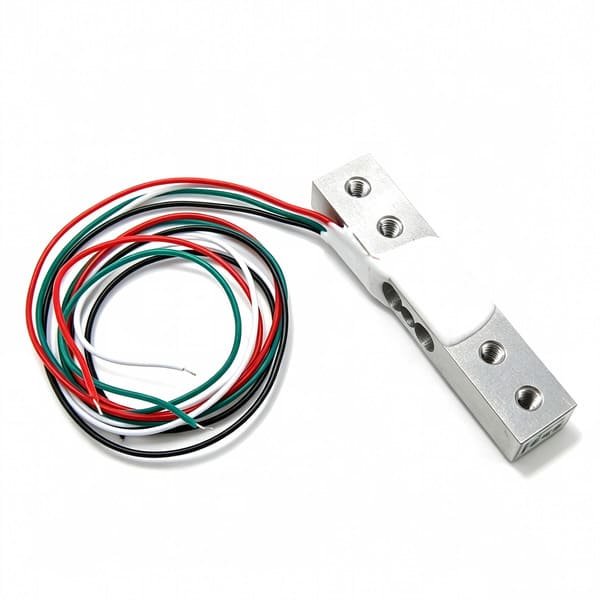
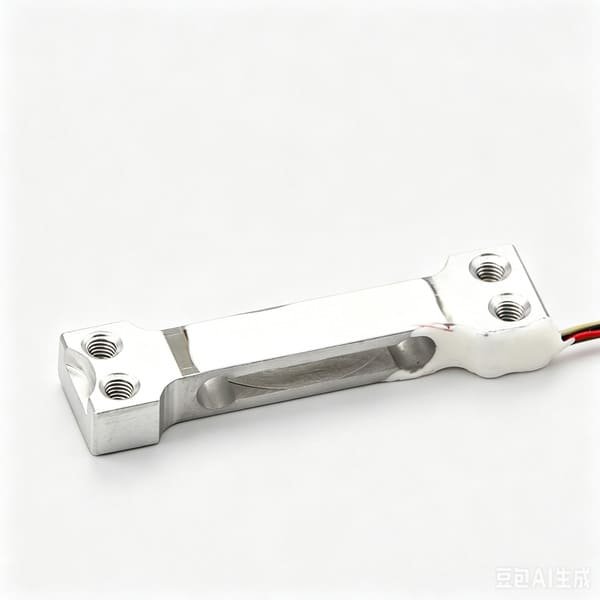
Bean-to-cup machine makers now put a micro load cell under the bean hopper (typically 300 g–2 kg full) so the machine can nag you — or your grocery app — before Sunday morning is ruined. This is a precision-lite application: nobody needs ±0.1 g, but “low beans” has to trigger before empty, so gram-level repeatability matters. Our WST109 micro load cell (300 g–5 kg, ±0.05% FS, anodized aluminum, silicone-sealed) was designed for exactly this class of duty, including coffee scales and even 3D-printer filament spool tracking — same physics, different consumable.
Cooking robots and the Rotimatic lesson.
Automatic cooking machines — think home roti makers and multifunction cooking robots — are basically ingredient dosing systems: hoppers of flour, water tanks, oil reservoirs, each weighed so the machine can meter a recipe to the gram. The engineering challenge isn’t precision; it’s hostile conditions: flour dust (surprisingly invasive — sealed cables and grommets are non-negotiable), heat from adjacent cooking chambers, and frequent washdown cycles. Specify anodized aluminum or coated cells, silicone sealing, and keep the sensing away from heat paths.
Pantry shelves that reorder groceries.
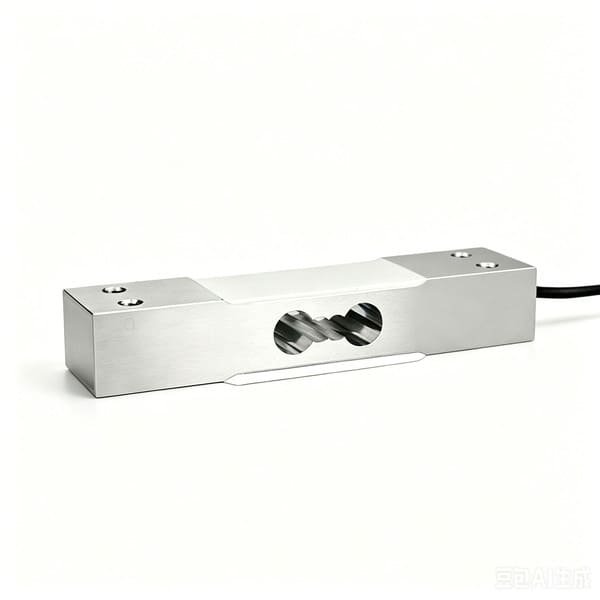
The category I’m most bullish on: smart shelves and gravity cabinets in home pantries, hotel minibars, and office break rooms, where each shelf sits on digital single-point cells and “removed one jar of pasta sauce” becomes an inventory event. The WST1201 (20/50 kg per shelf, RS485) is our go-to here, with WST1203 (200/300 kg) when shelves hold heavier stock. The interesting part for OEMs: digital cells arrive from the factory with eccentric-load compensation pre-installed (OIML R60-aligned), so one sensor per shelf is enough — no four-corner matched set, no junction box, no corner trimming on the assembly line. For consumer-electronics-style mass production, removing a calibration station from the line is a bigger deal than any component cost saving.
9. Selection Guide: What Actually Matters Indoors
Standard load cell selection rules (capacity, accuracy, environment) still apply, but smart home products add their own twists. Here’s the checklist I send now:
- Tare-to-signal ratio is the real spec. In industry, you weigh 500 kg on a 500 kg cell. In a smart home, you’re resolving a 1.5 kg event on a 28 kg tare. Budget capacity tightly (with 20–50% margin, not 4×), and think in deltas, not absolute accuracy.
- Repeatability > accuracy class. For presence detection and inventory depletion, a cell that reads the same tomorrow is worth more than one with a flattering linearity figure. Look at repeatability and creep specs before combined error.
- Matched sets for multi-cell platforms. Four unmatched half-bridge cells = lopsided corner behavior = mystery field bugs. Insist on factory-binned sets with per-set test data.
- Height budget. Consumer products live or die on millimeters. Flat half-bridge cells (2.0–3.0 mm profile) mount under the platform without visible product growth.
- Power. Battery-powered devices need low excitation (our micro cells run at 5 VDC recommended, 3–10 VDC acceptable) and duty-cycled readings — months of battery, not days.
- EMI reality. Your weighing core sits next to a motor and a WiFi radio. Shielded cables, single-point shield grounding, and firmware averaging are cheaper than field returns.
- Indoor ≠ clean. Flour dust, litter dust, humidity, floor heating, a mop hitting the base. IP65 where there’s moisture, sealed cable entries always, and check the temperature-compensated range covers heated floors.
- Digital when counting scale points. One cell — go analog + ADC. Two or more weighing locations — RS485 digital cells pay for themselves in wiring, calibration labor, and noise immunity.
Rule of thumb I give every smart home OEM: define the smallest weight event you must detect, add 50%, then pick the smallest capacity cell architecture whose repeatability gives that event a 10:1 margin over the noise floor. Then spend the saved money on matched sets and firmware, not on accuracy class you’ll never use.
10. Seven Mistakes I See Smart Home OEMs Make
- Spec’ing accuracy nobody uses. Paying C3 money for a litter-level reading displayed in 100 g steps. Match sensor cost to displayed resolution.
- Unmatched multi-cell sets. The kitten problem from section 4 — solvable for pennies at the supplier, painful to diagnose in the field.
- No overload strategy. A 20 kg cat jumping into the box is a dynamic load well above its static weight; a user standing on a “smart shelf” during install happens more than you’d think. Mechanical stops cost nothing; ultimate overload at 150% FS is not a safety margin, it’s a destruction limit.
- Weighing during motion. Reading litter level while the drum vibrates, or inventory while the compressor runs. Gate measurements to rest states.
- Cable afterthought. Routing sensor wires past the motor driver and then wondering about noisy readings. Plan cable routing in the CAD stage, not the debugging stage.
- Trusting one sensor for a safety function. If moving parts can hurt an animal or a child, weight sensing gets a redundant partner (IR, time-of-flight) — the belt-and-suspenders rule.
- Marketing writing checks physics can’t cash. “Gram-level” claims on 50 kg platforms, “exactly 37 kcal” from a kitchen-scale cell. Set the spec sheet to what the system repeatably does, or support will hate you by Q3.
11. FAQ
Q1: What load cell do smart litter boxes use?
Most use a set of four thin half-bridge load cells (e.g. our WST106, 20–75 kg each) mounted under the corners of the base. Half-bridge cells are inexpensive, only 2.0–3.0 mm thick, and four-piece sets provide cat-presence detection and litter-level tracking. Matched sets with binned output are strongly recommended for small-animal detection.
Q2: How accurate does a smart home weighing sensor need to be?
Usually far less than buyers assume. Kitchen and coffee scales work at ±0.05% FS; presence-detection applications (beds, litter boxes) depend on repeatability and delta detection rather than absolute accuracy; inventory shelves need stable zeros over weeks. Define the smallest weight event you must detect, then select for repeatability with a comfortable margin.
Q3: Analog or digital load cells for IoT appliances?
Single weighing point and cost-sensitive designs: analog cell + 24-bit ADC (HX711-class) on the main PCB. Multiple weighing points (smart cabinets, vending shelves, sorting stations): digital cells with RS485/RS232 output on a shared bus — unique addresses, no trimming, and strong noise immunity across a cabinet.
Q4: Can a load cell detect when to reorder consumables like coffee beans?
Yes — that’s one of the fastest-growing applications. A micro load cell (300 g–5 kg) under the hopper tracks depletion; a threshold triggers the reorder notification. Ensure the cell’s creep and zero stability are adequate for months between recalibrations, since consumer devices are rarely recalibrated after setup.
Q5: Do smart home load cells need IP ratings indoors?
For dry living spaces, sealing matters less than dust and EMI protection. But litter boxes (urine vapor, litter dust), kitchen appliances (steam, splashes), and anything near mopping should use sealed cells — silicone-sealed micro cells or IP65 constructions — plus sealed cable glands. Coastal and humid-climate markets push the requirement higher.
Q6: Can you customize load cells for our specific appliance design?
That’s most of what we do: dimensions, mounting hole patterns, capacity, cable length and exit direction, connector types, output signals, and matched-set binning. Send your CAD envelope and the smallest detectable weight event — we’ll propose the weighing core. Trial orders are welcome, and we respond to spec + annual usage inquiries with quotations fast.
12. Recommended Load Cells for Smart Home Products
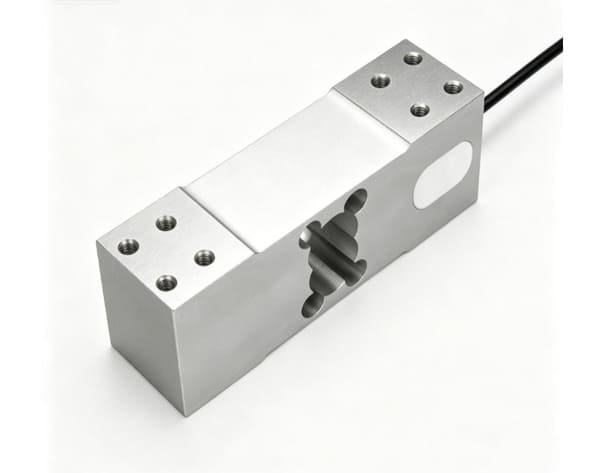
Five models from our catalog that cover the smart home space end to end — from gram-level kitchen sensing to heavy waste-sorting platforms. All are in current production and OEM-customizable.
Let’s Spec the Weighing Core for Your Smart Home Product
You bring the product — CAD envelope, the smallest weight event you need to detect, and your target cost. We bring the weighing core: load cells, matched sets, transmitters, and the selection data to keep your firmware team out of trouble. Send your spec and annual usage — you’ll have a quotation, not a brochure.
Written by Robin, export sales engineer at VektorForce. We supply load cells, force sensors, junction boxes, and weighing indicators to appliance OEMs worldwide — the weighing core, not the whole appliance. Project details are shared with client permission; figures are rounded for readability.