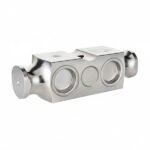
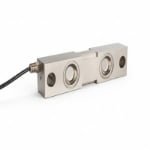
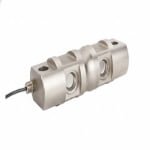
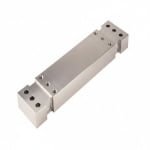
factory-direct double ended shear beam load cell, built to the application-specific capacity and accuracy your project requires.
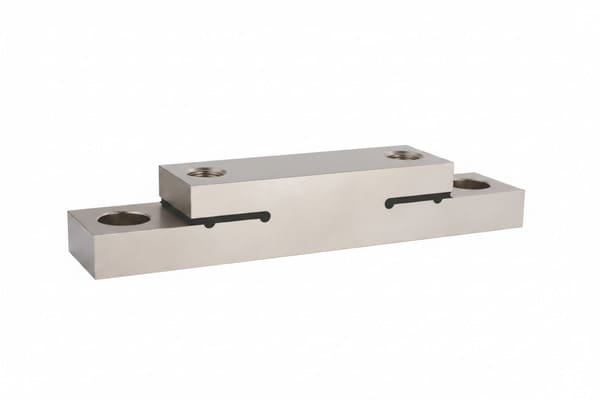
The WST1406 is a double ended shear beam load cell. All figures on this page come from the factory parameter sheet — what you read here is what ships.
Contact our engineers for the complete datasheet and design-in support.
WST1406 Onboard weighing system use Double ended shear beam load cell, The double-ended shear beam load cell is a high-precision force sensor primarily used for heavy-duty measurements in industrial applications. Its core design involves fixed supports at both ends and force applied in the middle, converting the shear deformation at the beam’s center into an electrical signal.
Its main advantages are symmetrical structure, extremely high stability, and strong resistance to eccentric loads and lateral forces. It is typically used for large-capacity weighing, with common ranges from 5 tons to over 200 tons.
Main applications include:
1. Vehicle weighing: This is the most common application, used in truck scales (weighbridges), rail scales, etc., for weighing trucks, trains, etc.
2. Tank and hopper weighing: Used for continuous level monitoring or quantitative feeding of large storage tanks, silos, and hoppers.
3. Industry and trade: Meets the accuracy requirements of commercial trade settlements and is widely used in platform scales, belt scales, and various industrial process control applications.
4. Many products are made of nickel-plated alloy steel or stainless steel, achieving IP67/IP68 protection ratings, resisting corrosion, and suitable for harsh environments such as outdoors, in humid conditions, and even requiring high-pressure washing.
FEATURES
• Material: Alloy steel
• Rated Capacities: 15t
• IP Rating: IP68
• Suitable for onboard vehicle weighing system and other electronic weighing devices
• High precision, high reliability
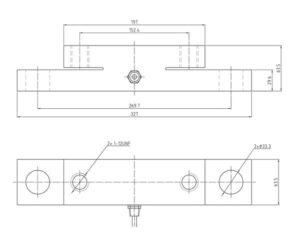
SIZE(mm)
SPECIFICATION
Complete technical parameters, as delivered from the factory.
| WST1406 Technical Specifications | |||
|---|---|---|---|
| Rated Load | 15Ton | Rated Output | 1.125 ± 0.005mV/V |
| Accruacy | 0.1% | Material | Alloy steel |
| Ingress Protection | IP68 | Patameter | Units |
| Model No. | WST1406 | Rated capacity (Emax) | t |
| Accruacy class 1)2) | 0.1% | Min. dead load | kg |
| Zero Balance | % of Emax | Repeatability Error | % of AL 3) |
| Creep; 30 minute | % of AL | Min. dead load output return (DR); 30 min | % of AL |
| Temp. effect on | Min. dead load output | % of Emax/℃ | < ± 0.002 |
| Rated output 2) | % of AL/℃ | Temperature range | Compensated |
| ℃(°F) | -10 to +40 [+14 to +104] | Operating | -40 to +65 [-40 to +149] |
| Safe storage | -40 to +80 [-40 to +176] | Excitation, Recommended | Recommended |
| V AC/DC | 5 ~ 15 | Maximum | 15 |
| Terminal resistance | Excitation | Ω | 384 ± 10 |
| Insulation resistance @50VDC | MΩ | Breakdown voltage | V AC |
| Seal type / IP rating | Hermetically welded / IP68 | Load limit | Safe |
| % of Emax | 200 | Ultimate | 300 |
| Cable | Φ6; 4-wire; PVC | Cable Length | m |
| Weight; approx | kg | Fatigue life | cycles @Emax |
| Deflection at Emax; approx | mm | Barometric pressure effect on Zero Output | Vmin/kPa |
Direct manufacturing with 10+ years of OEM/ODM experience — custom capacities, connectors, cable lengths and branding.
Send your capacity, application and annual quantity — pricing, datasheet and sample options within 12 hours on business days.
Every unit is factory calibrated and inspected before dispatch; parameters on this page reflect shipped goods.
Underneath each weighbridge section, two WST1406 ends carry the full truck wheel load in shear — ideal for legal-for-trade road weighbridges.
Shear-beam pair
Bogie and body-mounted rail scales use one or more WST1406 per axle — with the long beam length taming impact loads and wheel-flat events.
Long beam length
Mounted between support beam and vessel pad, the WST1406 gives accurate net content readout for brewing tanks, silos and chemical reactors.
multiple capacity options rated
| Function | Wire Color |
|---|---|
| Excitation + (Exc+) | Red |
| Excitation − (Exc−) | Black |
| Signal + (Sig+) | Green |
| Signal − (Sig−) | White |
| Model | Capacity Range | Typical Application | Choose When |
|---|---|---|---|
| WST1406 | — | This page | Current selection |
| WST1405 | 50K; 75K; 100Klbs | Double Ended Shear Beam Load Cell | Alternative model in the same class |
| WST1404 | 2.5 / 5 / 10 / 20 / 35 / 50 / 75 / 100Klb | Double Ended Shear Beam Load Cell | Alternative model in the same class |
| WST1403 | 10 / 20 / 30 / 50 / 75 / 100 / 150 / 250Klb | Double Ended Shear Beam Load Cell | Alternative model in the same class |
| WST1402 | 15~100 kN | Double Ended Shear Beam Load Cell | Alternative model in the same class |
| WST1401 | 10~300 kN | Double Ended Shear Beam Load Cell | Alternative model in the same class |
Not sure which model fits your design? Send us your platform size, target capacity and environment — our engineers will recommend the right sensor within 12 hours.
The WST1406 meets standard industrial accuracy requirements. Full accuracy figures are listed in the specifications table above.
The WST1406 is available in multiple capacity steps. For requirements outside the listed range, contact us — OEM capacities can often be arranged.
Protection class details are listed in the specifications table. Ask our engineers if your environment includes wash-down, immersion or corrosive conditions.
It provides a standard industry output signal, compatible with standard weighing indicators, transmitters and PLC analog inputs.
Standard wiring follows the industry convention: excitation + red, excitation − black, signal + green, signal − white. Always confirm against the datasheet shipped with your batch.
Use the inquiry form on this page or WhatsApp us directly — we reply within 12 hours on business days. Tell us your capacity step, target annual quantity and application, and we will send pricing, the datasheet PDF and sample availability. OEM/ODM options (custom labeling, connectors, cable lengths) are available on request.
Full dimension drawings, performance curves and calibration data — sent to your inbox within 12 hours.
Deepen your selection — application guides, accuracy-class comparisons and installation notes written for B2B engineers.
 Application
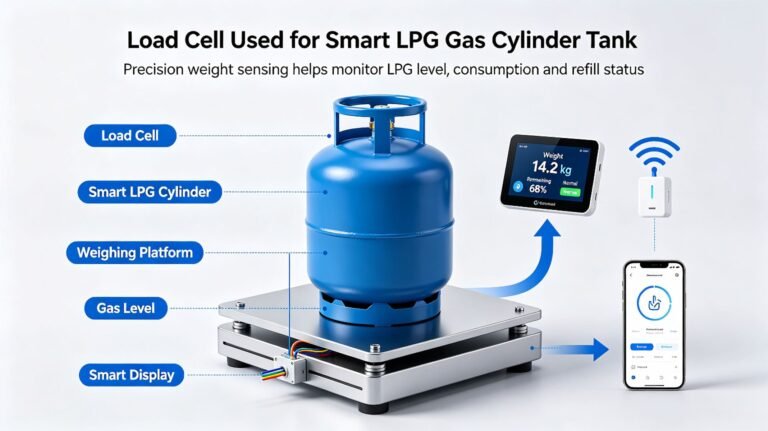
Robin · Export Sales Engineer Sep 9, 2026 9 min read Smart Gas · IoT Weighing Load Cells for Smart LPG Gas Cylinders: Creep, Battery Life,…
Read article →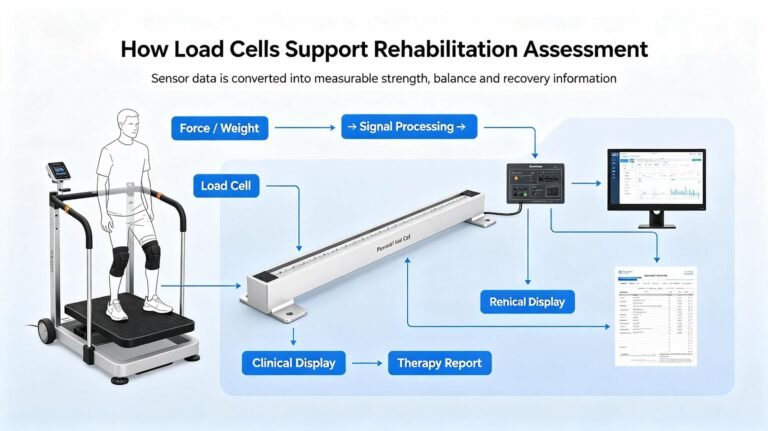 Application
Rehabilitation & Fitness · OEM Force Sensing Load Cells for Rehabilitation Testing Equipment & Smart Fitness Machines: How a 7-Device EU Platform Forced Us to Rethink…
Read article →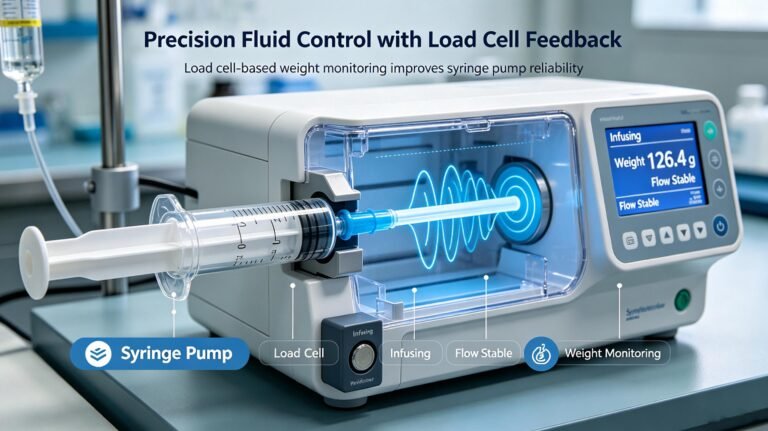 Application
VektorForce Application Note · Medical Series #6 Load Cells for Syringe Pumps: Why Our Two Stock Cells Cover 80% of OEM Designs — and the Other…
Read article → Application
Field Notes · Unmanned Retail Load Cells for Smart Vending Machines: How Weight Sensing Ended a Shrinkage Problem Cameras Couldn't Solve A first-person account of spec'ing…
Read article →Tell us your capacity step, application and annual quantity. Our engineers reply with pricing, datasheet PDF and sample options within 12 hours on business days.
WhatsApp: +86 158 2902 6027