Shackle Type Load Cell — Stainless Steel Bow Load Shackle for Lifting, Mooring & Towing Force Measurement
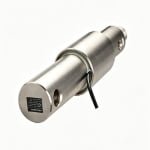
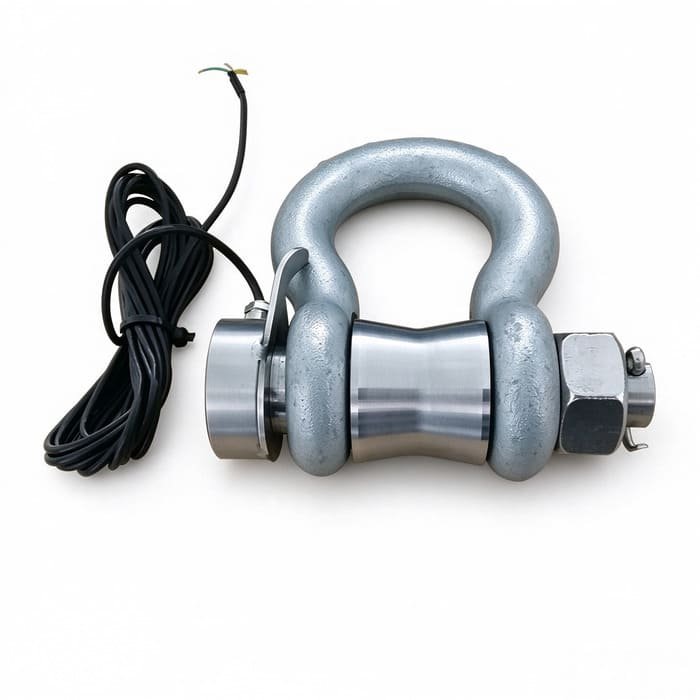
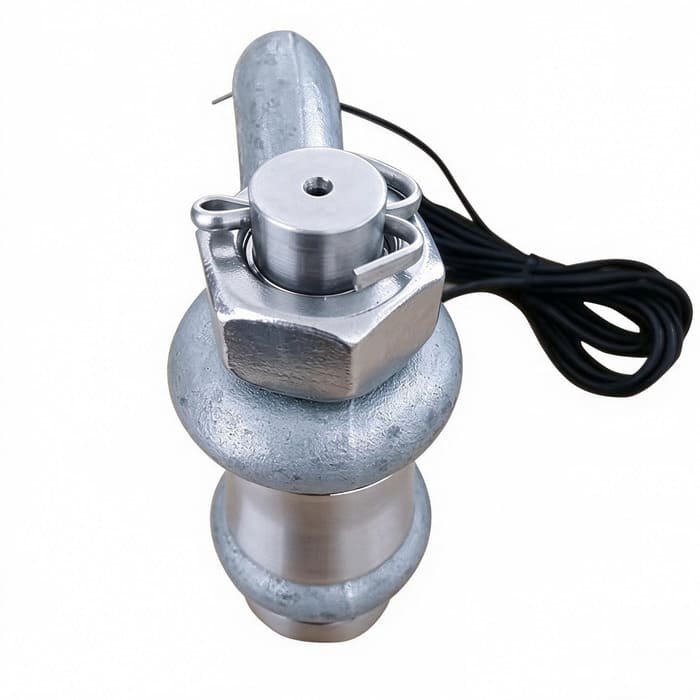
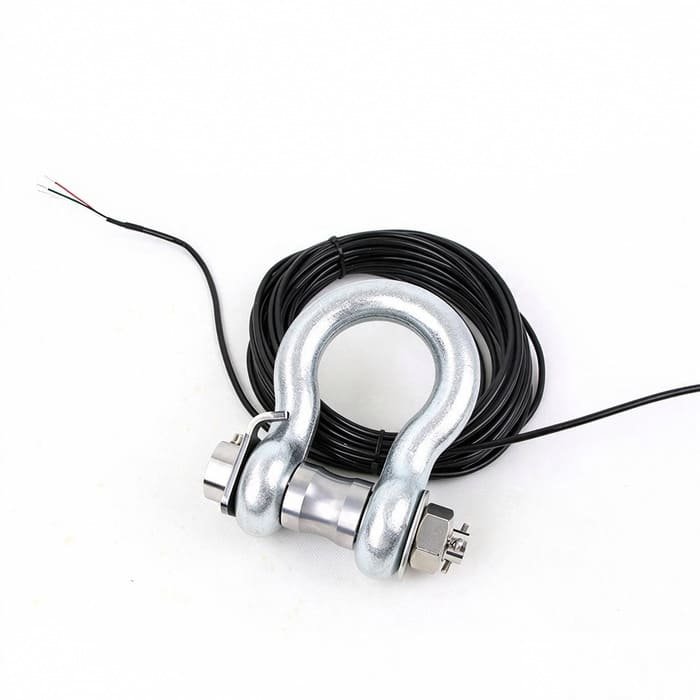
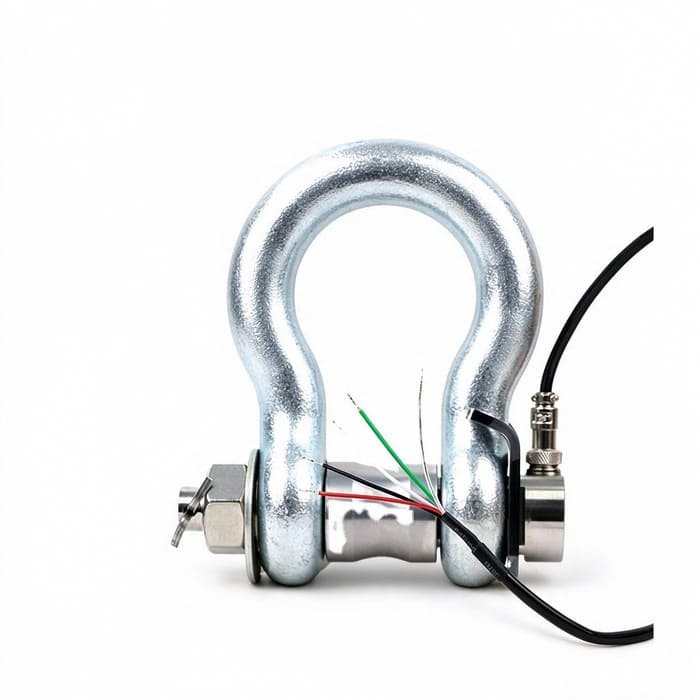
A shackle type load cell is a strain-gauge force sensor built into a bow (anchor) shackle pin, used to measure tensile loads in lifting, rigging, mooring lines and towing systems. The VK-REPLACE-model Series from VektorForce is machined from stainless steel, offers capacities from 1 t to 100 t, and is available in wired and wireless versions with IP67/IP68 sealing for subsea and harsh offshore environments.
- Capacities: 1 t – 100 t (custom ranges on request)
- Full stainless steel construction, galvanized alloy steel shackle body option
- Output: 2.0 mV/V ± 0.05% FS (analog) · RS485 / 0–5 V / 4–20 mA / wireless options
- IP67 standard, IP68 available for continuous subsea duty
- Operating temperature: −30 °C to +70 °C
- Direct drop-in replacement for the shackle in an existing rigging line — no re-rigging required
Product Description
The VK-REPLACE shackle type load cell replaces the standard pin of a grade bow shackle with a precision strain-gauge load pin, turning an ordinary rigging component into a calibrated force measurement point. The measured load is read from a full Wheatstone bridge inside the pin, giving a linear mV/V signal proportional to the tension in the line.
Because the sensor is the shackle itself, installation is simply a matter of connecting it between the load and the rigging — crane hooks, chain plates, mooring bridles, towing pennants or davit sockets. It is the fastest way to add continuous load monitoring to an existing lifting or mooring system without modifying the structure.
How It Works
A strain-gauge load pin is machined with a calibrated measuring section. When tension is applied across the shackle, the pin deflects microscopically and the bonded strain gauges respond with a change in resistance. Four gauges wired in a full-bridge (Wheatstone) configuration convert this deflection into a differential mV/V signal, which is amplified and transmitted by the integrated electronics — as analog voltage/current, RS485 digital, or via a wireless telemetry link.
Technical Specifications
Applications
- Mooring line tension monitoring — continuous load reading and data logging on mooring components of floating structures, including aquaculture (fish farm) installations; early detection of damage reduces failure risk, fish-escape events and total lifecycle cost.
- Subsea & ROV operations — IP68 versions for underwater load verification, salvage and installation pulling tests.
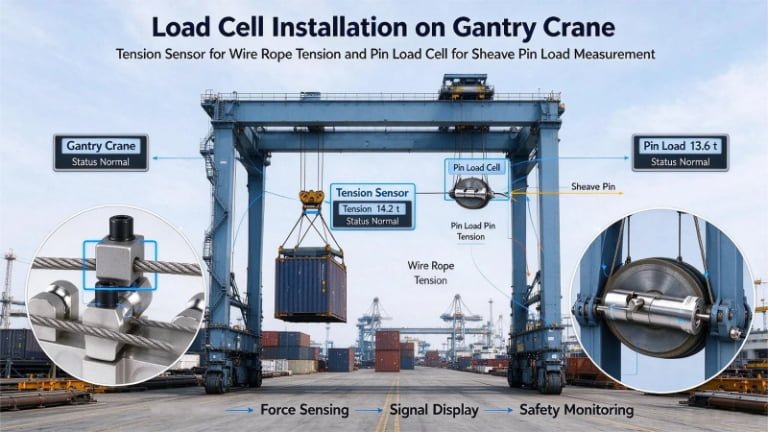
- Crane and lifting weighing — overload monitoring and load verification on cranes, davits, winches and spreader rigs.
- Towing and bollard pull testing — tension measurement in towing pennants and vessel pull trials.
- Offshore energy & marine research — environmental load data acquisition on floating platforms and moored instruments.
- Test rigs and proof-load testing — force verification in laboratories and certification test benches.
Customization Options
VektorForce manufactures load cells in-house and supports custom engineering: non-standard capacities, wireless telemetry with cloud data export, battery-powered long-duration deployments, special cable lengths and connectors, and harsh-environment coatings. Send us your capacity, shackle size and signal requirement for a tailored proposal.
Frequently Asked Questions
What is a shackle type load cell?
A shackle type load cell is a force sensor integrated into the pin of a bow shackle. It measures the tensile force passing through the shackle and outputs it as an electrical signal (mV/V, analog, digital RS485 or wireless), allowing direct load monitoring of lifting, mooring or towing lines.
How accurate is a shackle load cell?
Typical system accuracy is ± 0.5% of full scale, with a ± 0.25% FS option for high-precision requirements. Each unit is factory calibrated against certified reference equipment.
Can a shackle type load cell work underwater?
Yes. IP67-sealed versions handle splashing and temporary immersion, while IP68 versions are engineered for continuous subsea deployment, such as mooring line monitoring on floating aquaculture installations and ROV-assisted load tests.
How do you install a load shackle?
The load shackle replaces a standard shackle in the rigging line: connect it between the crane hook or anchorage and the load, secure the pin with the supplied safety clip, route the cable away from pinch points, and zero the readout before applying load. No structural modification is required.
What capacities are available?
Standard capacities run from 1 t up to 100 t. Intermediate and larger custom capacities — for example 6.5 t or 12 t to match existing shackle ratings — are available on request.
Request a Quote
Send us your required capacity, shackle size and signal output — we reply with a technical proposal and quotation within 12 hours. Trial orders welcome.