


The size of the deck decides whether you need one load cell or four.
The first question on a bench scale, a floor scale, or a platform scale is never how many kilograms. It is how big the deck is — because the deck decides whether you need one load cell or four, and no datasheet will make that call for you. Every number in this article is one I have had to defend on a real order: choosing a load cell for platform scale builds in Manila, Nairobi, and Casablanca, and being wrong about the deck exactly once.
Load Cells for Platform Scales: Three Siblings, One Decision
Bench scales, floor scales, and platform scales are usually sold as three different products. Electrically and mechanically they are one family. A bench scale is a deck up to about 400 × 400 mm sitting on a single load cell, covering a few kilograms to a few hundred. A floor scale is a bigger deck — 800 × 800 mm up to 2 × 2 m — sitting on four load cells, covering half a tonne to several tonnes. “Platform scale” is the word the trade uses for the whole clan, which is why most searches for load cells for platform scales land on pages that never say which deck they mean.
I sell the parts under the deck: the load cells, the junction box, and the weighing indicator. I do not build decks, frames, or type-approved instruments — that work belongs to the scale maker. But almost every wrong order I have seen in this family was wrong before the first part was quoted, because somebody sized the cell to the kilograms and forgot the deck. So this article runs the other way: deck first, cell second.
Two kinds of reader end up on this page. One has a scale that already exists and a complaint about it — a corner that reads heavy, a ZERO button that has stopped, a floor scale that disagrees with the weighbridge down the road. The other is building something new and arrives with a capacity and a budget. Both get the same first question from me, and it is not about capacity: it is the deck — its size, its material, and where the load actually lands on it. Capacity is a cell specification. The deck is where the reading is made, and every number in this article falls out of the deck before it falls out of the cell.
Concrete pictures help, because the words drift between markets. The bench scale is the 6 kg retail scale at a fruit stall and the 150 kg parcel bench at a courier depot — one deck, one cell, a price computed from almost every reading. The floor scale is the 1–3 t platform a warehouse drives a pallet truck onto — four cells, a junction box, and a reading that prices freight by the tonne. The platform scale is everything between and around them: counting scales in stores, mixing platforms in feed mills, the 500 kg slaughter bench, the 2 × 2 m livestock crate. When an enquiry says “platform scale” without dimensions, my first reply is always a question about the deck, because a load cell for platform scale work is chosen in millimetres before it is chosen in kilograms.
Why does one company cover the whole clan with essentially one accuracy figure? Because the split inside the family is structural, not qualitative. The 200-series cells are single-point and parallel-beam parts: aluminium, cantilever mechanics, corner compensation built in at the factory, one cell per deck, made to be read by one indicator directly. The 300-series cells are shear beams: steel, twin-plane mounting, no corner compensation at all because they are never used alone — they are made to be summed. Those are two different mechanical promises, and the deck you are building picks which promise you need. The accuracy figure is the same on both sides of the catalogue; the geometry is not.
A note on names, because buyers and catalogues blur them constantly. To me a bench scale sits on a table: one cell, decks under about 400 mm, anything from grams to a few hundred kilograms. A platform scale is the middle of the family — decks to about a metre, capacities from 100 kg to around 3 t, one cell when the deck is small enough for corner compensation, four when it is not. A floor scale is the low-profile member: it lives in or on the floor, 1 m by 1 m and up, almost always four cells, and it is the scale a pallet truck drives onto. These are conventions, not physics — I have quoted a 500 kg “bench” and a 60 kg “floor scale” in the same month. What stays constant underneath is the physics: the larger the deck relative to the cell’s own compensated surface, the more the next chapter matters.
The one decision that shapes everything else: a single-point load cell is corner-compensated for one stated deck size, and no bigger. Four shear beams under a big deck are not “more capacity” — they are the only way to make a deck that has no corners left to compensate. One cell or four is a geometry decision, not a capacity decision.
Here is the family map I keep beside me when a platform-scale enquiry arrives. Every part on it is one we export.
| Sibling | Typical Max | Deck | Cells | Our parts |
|---|---|---|---|---|
| Bench scale | 3–300 kg | ≤ 400 × 400 mm | 1 single point | WST201, WST203 |
| Counting / heavy bench | 50–500 kg | ≤ 400 × 400 mm | 1 parallel beam | WST202 |
| Big single-deck platform | 200–1000 kg | ≤ 600 × 600 mm | 1 big single point | WST204 |
| Floor / platform scale | 0.5–20 t | 800 mm – 2 × 2 m | 4 shear beams | WST301, WST302 + WST1513 + WST1502 |
Notice what the map does not contain: any cell that is “more accurate” than another. Every cell in the eight I quote below carries the same ±0.02 %F.S comprehensive error and the same C3 grade. In this family the accuracy is a constant. The variable is the deck. If you are arriving from our general selection guide or the complete load cell guide, this is the one place where the guide’s rule “start from the load” needs an amendment: start from the load, then subtract the deck you are about to build on top of it.
To make the family concrete, here are five decks I actually quoted in the last twelve months, with the division the geometry allowed. Two of them became the case stories later in this article; all five ran through the same two questions — how big is the deck, and will a price be computed from the reading — before any model number was spoken.
| Deck I quoted | Max | Deck size | Cells | Legal division |
|---|---|---|---|---|
| Retail bench, fruit stall | 15 kg | 300 × 400 mm | 1 × WST201 | 5 g |
| Counting bench, spare parts | 100 kg | 400 × 400 mm | 1 × WST202 | 50 g |
| Courier parcel bench (Manila) | 300 kg | 600 × 600 mm | 1 × WST204 | 100 g |
| Freight floor scale (Nairobi) | 2 t | 1.2 × 1.2 m | 4 × WST301 1 t | 1 kg* |
| Market platform (Casablanca) | 1 t | 1 × 1 m | 4 × 500 kg shear beam | 500 g |
*The Nairobi row carries an asterisk because its division was contested — the builder first asked for 100 g on 2 t, and the ladder in chapter four is what moved him to 1 kg. Look at the two bench rows instead and notice the quiet pattern: the 100 kg counting bench gets a coarser division than the 300 kg parcel bench earns per kilogram of capacity, because a single C3 cell only ever sells 3 000 divisions of its own capacity, and the 100 kg build spends those divisions on a smaller Max. Nothing about the counting bench’s cell is worse. Its deck asked for less, so its division is bigger — that is the trade, stated in one line.
Corner Error: The Spec Nobody Publishes
A single-point load cell is a small cantilever. Its strain gauges are arranged so that the output stays the same no matter where on the compensated platform the load sits — that is the whole trick of the design, and it is why one cell can carry a whole bench scale without a junction box. But the trick only works inside the stated platform. Put the same load at the corner of a deck that is one size up, and the reading starts to depend on where it sits. That dependence has a name — corner error, or eccentricity — and it is the one specification that decides whether a single-point build is legal. Here is the part I have to say about my own catalogue: not one of our four single-point pages publishes a corner error figure. They publish the platform size instead — WST202 and WST203 say 400 × 400 mm, WST204 says 600 × 600 mm — and WST201, the most quoted page of the four, states no platform size at all. You are expected to trust the geometry, but the geometry is only a promise if the corner error inside it is measured.
| Cell | Ranges | Body size | Stated platform | Corner error published? |
|---|---|---|---|---|
| WST201 | 3–100 kg | small single point | not stated | no |
| WST202 | 50–500 kg | parallel beam | 400 × 400 mm | no |
| WST203 | 100–300 kg | 150 × 40 × 40 mm | 400 × 400 mm | no |
| WST204 | 200–1000 kg | 174 × 65 × 60 mm | 600 × 600 mm | no |
How tight is the budget the corner error has to fit inside? The test is written down. EN 45501, the harmonised standard behind Europe’s NAWI directive, loads each corner of the deck with Max divided by (N + 1), where N is the number of cells, and requires the error to stay inside the permissible error for that load. For a 300 kg bench scale with a 100 g division — 3 000 divisions, the most a single C3 cell can legally give — the corner test load is 150 kg, which is 1 500 divisions, and the tolerance at that load is ±1.0 e. So ±100 grams, at the corner, is the entire legal budget for that scale. Not the sum of all errors — just the corner share.
| Scale | e | Cells | Corner test load | Tolerance |
|---|---|---|---|---|
| 300 kg bench (Manila) | 100 g | 1 | 150 kg = 1 500 e | ±1.0 e = ±100 g |
| 2 t floor (Nairobi) | 1 kg | 4 | 400 kg = 400 e | ±0.5 e = ±0.5 kg |
Why the trick has a size limit
The compensation inside a single-point cell is a physical arrangement, not software. The gauges are positioned so that a load applied off-centre produces a bending change that cancels against another bending change — and that cancellation is tuned, at the factory, for loads applied within one stated rectangle. Move the load outside the rectangle and the cancellation turns into reinforcement: the output grows with the moment arm, and the error is no longer a fixed offset you can calibrate away but a variable one that depends on where the parcel lands. This is why the platform size is printed on the page at all — it is the boundary of a factory adjustment, not a suggestion about deck styling. It is also why a stiffer deck buys you margin: a 4 mm checker plate that flexes half a millimetre under a corner load shares the force back toward the cell’s centre, while a 2 mm plate lets the corner take the full moment. Two decks the same size, two different corner errors — and only one of them on the datasheet.
Running the corner test on a Monday morning
The test needs no laboratory, which is why I keep telling customers to run it before they call me. Unload the scale, let it zero, then apply Max divided by (N + 1) — on the Manila bench, 150 kg of known mass — once at the centre and once at each corner of the deck, five positions in all on a single-cell scale, plus the midpoints of the edges if the deck is long. Write the five readings down. The spread between them, compared against the tolerance for that load, is the whole verdict: on the 300 kg / 100 g bench the readings are allowed to disagree by ±100 grams and nothing more. A healthy single-point bench inside its compensated rectangle shows a corner spread under a third of a division in my experience; if you see two or three divisions of spread, the cell is outside its geometry, the deck is flexing, or a foot is loose — and no amount of re-zeroing will fix any of the three. On a four-cell floor scale the same test with a quarter of Max tells you whether the corner trims in the junction box are doing their job or have been disturbed.
Manila, February 2026: the same datasheet, a different deck
A parcel-and-courier OEM in Manila built a 300 kg shipping bench on a 600 × 600 mm deck and bought WST203 cells for it — the cheapest 300 kg single point we list. Courier benches live and die by the corner test, because a parcel never lands in the middle. At the customer’s acceptance run the corner-to-corner spread was 260 grams against a legal budget of ±100 grams — 2.6 times over, which is 0.087 % of full load. The cell was not broken. Its corner compensation had been made for a 400 × 400 mm deck, and the deck they built was 2.25 times that area. Nothing on the datasheet warned them, because — as the table above shows — the datasheet does not carry a corner error line. I asked for one photo of the deck next to a tape measure and the whole dispute ended in one email: the fix was to move up one size in the same family, to WST204, which is corner-compensated for 600 × 600 mm. The re-test spread was 85 grams, inside budget with room to spare.
The sentence worth remembering: WST203 at 300 kg and WST204 at 300 kg have the same ±0.02 %F.S, the same C3, the same 2.0 ± 0.15 mV/V output, the same 406 ± 20 Ω bridge, the same IP65. What differs is the body — 150 × 40 × 40 mm against 174 × 65 × 60 mm, 2.8 times the volume — and the deck that geometry can forgive. The deck decides, not the kilogram.
There is one more thing about corner error that the industry keeps quiet: after the scale is built, the remaining corner difference is trimmed out with potentiometers in the junction box, and — a rule I learned from our after-sales team’s case file on multi-cell builds — a corner trim can only reduce the matching error, never increase it. If the cell geometry is wrong by 160 grams, no potentiometer will find a legal scale inside it. Manila bought the right cell the second time because the geometry changed, not because anything was adjusted.
Two factory practices make multi-cell builds survivable, and both are worth demanding from whoever supplies your cells. The first is the mounting discipline: never rigidly bolt both ends of every cell under one deck. Fix some, float the rest, so the deck can expand and the cells cannot pull against each other through the frame — a super-rigid installation turns four independent sensors into one tangled structure whose output depends on wrench torque. The second is the batch trick: instead of buying a matched set, you can ask for a batch built to one narrow output tolerance — our line can hold a batch to 1.8 ± 0.005 mV/V for a small premium per cell — and then every cell in the batch is interchangeable, with no matching, no recording, and no wrong-cell-in-the-wrong-corner error at installation. For a bench-scale OEM building two hundred decks a month, that premium is the cheapest quality department they will ever hire.
One Cell or Four: A Geometry Decision, Not a Capacity One
Once the deck is past 600 × 600 mm, no single-point cell will forgive its corners, and the build has to become a four-cell scale. The expensive mistake I keep meeting is what I call the four-singles build: taking four of the same single-point cells that worked so well on the bench and bolting them under a floor deck. It looks thrifty. It is the wrong construction, for three reasons that have nothing to do with capacity.
First, a single-point cell is a cantilever with one fixed end and one floating end. Mount four of them under a rigid deck and the deck itself bridges the floating ends — the four cells start arguing with each other through the deck, which is the same over-constrained-frame problem I described in our smart-checkout article, and it makes the reading a function of how tight the bolts are. Shear-beam cells like the WST301 are made for this: a double-bending beam that mounts on two planes and shares load predictably. Second, four cells need their outputs summed and matched — that is junction-box work, with corner trims, and it assumes the cells were made to be matched. Third — and this is the one that surprises people — the indicator has to survive four or eight bridges in parallel, and bridge resistance decides whether it can. More on that in the system chapter; the short version is that eight of our 406 Ω single-point cells would drag the indicator’s excitation below its plate rating, while eight 700 Ω bridges are exactly what it is built for.
If your build genuinely is four cells over a big deck, the parts that belong under it are the shear-beam family — WST301 for floor scales, WST302 when the deck gets heavy — plus the WST1513 junction box and a WST1502 indicator. That is a weighing system, and it is what I supply: cells, box, and display, matched as one order. The deck, the frame, and the type approval stay with the scale maker. The multi-cell module thinking behind this comes from the same place as our tank weighing systems, where four modules under one vessel have been standard practice for decades.
Nairobi, November 2025: the quotation I split in half
A freight-forwarding equipment builder in Nairobi asked me to quote “the same cell as the bench, four times” for a 2 t, 1.2 × 1.2 m floor scale — four WST204 cells, on the logic that 1 000 kg each was comfortably over 2 000. The kilograms were fine. The geometry was not: four single-point cells under a rigid deck is the over-constrained frame again, and his deck was 1.2 m of folded checker plate with nowhere for the floating ends to float. I did not send one quotation; I sent two. Option A was his build, with the over-constraint risk written on the cover in one sentence. Option B was four WST301 1 t shear beams, one WST1513 four-channel box, and one WST1502 indicator, with the arithmetic that matters on a build like this: total capacity 4 t against a working load of 2 120 kg — a 53 % utilization, which sits at the bottom of the 50–80 % band I want to see; the sizing rule C = K0·K1·K2·K3·(Max + W)/N with the shock, mounting and bias factors multiplies out to 730 kg × K1, so K1 = 1.37 lands on the 1 t cell — a number I can defend, because a pallet set down 5 mm onto a deck that flexes 1 mm peaks at 1 + √11 = 4.3 times static, which is 108 % of one cell’s rating for an instant. The naive Max/N answer is 500 kg; the cell he actually needed is twice that, and none of the doubling is about the cargo. He built option B. It is still his only floor-scale bill of materials.
It is fair to ask what the four-cell build actually buys, because it costs more before the first pallet arrives. What it buys is geometry: a deck that can span 1.2 m or 1.5 m without the corners arguing, capacities that start where single-point cells stop (2 t and up on real decks), corner adjustment that survives a banged frame, and cells bolted on two planes instead of cantilevered off one, which forgives the deck flex that no folded plate escapes. What it costs is assembly and calibration labour — four mountings, box wiring, corner trims, a dead-load step — plus two components (box and indicator) whose failure modes deserve their own chapter, which they get. Neither list is a reason to avoid the build; the mistake is only choosing it when one cell would do, or the reverse.
Which leaves the gray zone, and I get a version of this question every week: a 600 to 800 mm deck carrying 300 to 500 kg — single point or four cells? My rule is blunt. Up to 600 mm and 500 kg, single point, because a single cell has no corner matching to go wrong and one bolt less to loosen. From 800 mm up, or above 500 kg of live load, four shear beams, because above those numbers deck flex starts to fight the cantilever and the corner-error test gets harder to pass as the deck grows. Between 600 and 800 mm I decide on two things: where the load actually lands (a load always centred buys the single point more room than the number suggests) and who services the scale (a four-cell build needs someone willing to open the junction box twice a year). I would rather explain that rule on a call than sell four cells into a build that never needed them.
What the Platform Buys: Divisions, Dead Load, and the Zero Bill
Every C3 load cell carries exactly 3 000 divisions of its own capacity — that is what the class means, and OIML R60 polices it through the cell’s minimum verification interval. The deck cannot change that number; it can only spend it. So the honest way to pick a platform-scale cell is to compute the smallest legal division first, and let it tell you the capacity, not the other way round. Two gates decide it. The cell gate: each cell must cover at most 3 000 divisions of its share, which on a four-cell scale means e ≥ (Max + tare)/(N × 3 000). And the spread gate: four cells average their noise, so the division must be at least the cell’s minimum interval times √N. Whichever gate demands the bigger division wins.
| Build | Cell gate | Spread gate | Legal e | n = Max/e |
|---|---|---|---|---|
| 100 kg bench, 1 cell | 33 g | 33 g | 50 g | 2 000 |
| 300 kg bench, 1 cell | 100 g | 100 g | 100 g | 3 000 |
| 500 kg bench, 1 cell | 167 g | 167 g | 200 g | 2 500 |
| 1 t deck, 1 × WST204 | 333 g | 333 g | 500 g | 2 000 |
| 2 t floor, 4 × 500 kg | 177 g | 333 g | 500 g | 4 000 |
| 3 t floor, 4 × 1 t | 263 g | 667 g | 1 kg | 3 000 |
Read the last two rows twice. On a 2 t floor scale built from four 500 kg cells, the cell gate asks for a 177 g division but the spread gate asks for 333 g — so the scale is legal at 500 g and illegal at 200 g, no matter how good the cells are. On a 3 t floor scale with four 1 t cells, the spread gate alone pushes the legal division to a full kilogram. A C3 cell sells you exactly 3 000 divisions of its own capacity; the deck cannot change that. When a customer asks a Nairobi-style question — “can I have 100 g on a 2 t floor scale?” — the answer is arithmetic before it is commercial: not with C3 cells at that capacity, and I would rather prove it with this table than discover it at type approval. (If the reading prices freight, this is the same wall our checkout-scale article ran into, only taller.)
Each cell also carries its own minimum interval — Vmin = Emax ÷ 3 000 for a C3 part — and the scale’s division must respect it at every cell simultaneously. That is the spread gate in the table, and it is the one customers forget because it has no commercial equivalent: you cannot buy your way past it with a better grade, because the better grade’s own Vmin simply scales down with its capacity. What you can change is the capacity, which moves Vmin down, or the number of cells, whose square root divides the required division — going from one cell to four buys you a factor of two on the spread gate, which is exactly the arithmetic in the 2 t row. Automatic zero-tracking is not part of this negotiation: it may only chase drift at up to 0.5 e per second and only below a set fraction of Max, so it will erase a slow afternoon creep and never a deck swap.
The empty deck is the biggest customer the cells have
Before the first parcel arrives, the cells are already working. A 1.2 × 1.2 m floor deck in 4 mm checker plate with its frame weighs about 120 kg, which is 30 kg per cell — 3 % of a 1 t cell’s life, 6 % of a 500 kg cell’s. On a bench scale the proportion inverts: a 400 × 400 mm steel deck weighs around 6 kg, which is trivial on WST203 at 300 kg and impossible on WST201 at 3 kg — that is what the smallest bench ranges are actually for: tiny decks, and nothing else. Two consequences follow. Structurally, the deck is why the sizing rule carries a (Max + W) term before any shock factor — the WST301 quotation in Nairobi was sized to lift 2 120 kg forever, not 2 000 kg once. And electrically, the deck sits inside the zero budget, which is where most “my scale drifted overnight” tickets really live.
| Deck | Plate + frame | Per cell | % of cell capacity |
|---|---|---|---|
| 400 × 400 bench, 3 mm | ≈ 6 kg | all of it | 6% of a 100 kg cell; 200% of the 3 kg range |
| 600 × 600 platform, 4 mm | ≈ 15 kg | all of it | 1.5% of a 1 t WST204 |
| 1.2 × 1.2 m floor, 4 mm + frame | ≈ 120 kg | 30 kg | 3% of 1 t cells; 6% of 500 kg cells |
Deck material moves that number more than deck size does. Painted mild-steel checker plate is the reference; the same footprint in 304 stainless for a washdown area adds 10–15 % to the plate mass and pushes you toward sealed cells and a box you can hose; a GRP composite deck common on courier benches weighs a third of steel but flexes more, which feeds straight back into the corner error of the previous chapter. When a customer sends me a deck drawing, the two numbers I extract before any load cell conversation are the footprint and the plate thickness — because between them they decide both the zero bill and the corner budget, and neither appears anywhere on a cell datasheet.
Casablanca, July 2026: the ZERO button has a 4 % budget
A produce-market cooperative in Casablanca rebuilt an outdoor 1 t platform scale after the original checker deck rusted through, and the new deck came in at 110 kg against the old 60. From the day it reopened, the empty scale read about 45 kg heavy, and pressing ZERO did nothing. The foreman was convinced the new load cells were fake. They were the same four WST301-family cells, all reading within 0.1 % on a dead-weight check. What had actually happened: a legal scale may only re-zero within 4 % of Max — 40 kg on this scale — and the new deck alone is 11 % of Max. The original installation had trimmed the dead load out at commissioning, into the junction box and the indicator’s dead-load calibration; the rebuild re-used the old calibration, so the extra 50 kg of deck sat outside the button’s reach by design. The boot-time zero range (20 % of Max) could absorb it, but nobody had re-run the dead-load step. The fix took fifteen minutes and no parts: re-run the dead-load calibration, re-trim the corners — downward only, as always — and write the deck weight on the calibration card. I billed a service visit and sold nothing, which is the correct outcome when the part was never the problem. A heavier deck does not make the scale wrong; it makes the ZERO button weaker.
That case is also where the vocabulary needs sorting, because two masses travel under the word “tare” and mixing them up sells the wrong cell. Tare on the display is a live subtraction: the indicator reads the packaging or the tote, stores it, and shows net. It is repeatable, it costs nothing, and it does not touch the cell’s capacity at all. Dead load is different: it is the mass the cells feel before the first gram of cargo arrives — the deck, the frame, the pallets that never leave the scale — and it is charged twice, once against the cell’s capacity in the sizing arithmetic and once against the ZERO button’s 4 % budget. When an importer tells me “Max is 1 t and tare is 150 kg”, my next question is always which of the two he means: a 150 kg tote he can lift off is display work, a 150 kg deck is calibration work, and the two answers lead to different quotations.
Temperature rides in on the same bill, because zero drift is charged per cell and — as on any multi-cell bridge — it adds. All four single-point pages state ±0.02 %F.S per 10 °C; on WST203’s 300 kg that is 60 grams per 10 °C, or 0.6 e on the Manila scale, 1.5 e across a 25 °C swing from a morning store room to an afternoon loading dock. Outdoors it is worse: the Casablanca platform’s four cells drift 0.4 kg per 10 °C together, 1.2 kg across 30 °C — 2.4 e, with no corner error involved. Two footnotes I insist on putting in writing: WST204’s compensated range, −10 to +60 °C, is the widest of the four single-point pages (the family’s other pages stop at +40); and WST201’s zero-drift line is printed two ways on the same page — ±0.1 %(0.02 %)F.S/10 °C — a five-fold difference between the two readings, which we resolve per batch before any temperature-sensitive order ships.
| Cell | Zero / output drift | Compensated | Operating | Note |
|---|---|---|---|---|
| WST201 | ±0.1 %(0.02 %)F.S/10 °C — two writings | −10…+40 °C | −20…+60 °C | 5× between the two printed drifts; batch confirm |
| WST202 | ±0.02 %F.S/10 °C | −10…+40 °C | −20…+60 °C | — |
| WST203 | ±0.02 %F.S/10 °C | −10…+40 °C | −20…+60 °C | 60 g/10 °C at 300 kg = 0.6 e |
| WST204 | ±0.02 %F.S/10 °C | −10…+60 °C | −20…+80 °C | widest window of the four |
| WST301 | ±0.02 %F.S/10 °C | −10…+60 °C | −35…+80 °C | best cold start of the eight |
| WST302 | ±0.02 %F.S/10 °C | not published | −20…+65 °C | compensated range: get in writing |
Per-10-°C numbers stay abstract until they are converted into seasons, so here is the conversion I run for the four builds in this article. The division counts are the honest ones: drift eats into the error budget that the corner test and the linearity test are also drawing from, so a build that spends 2.4 e on temperature alone has less left for everything else.
| Build | Seasonal swing | Zero drift, whole bridge | In divisions | What I advise |
|---|---|---|---|---|
| Manila courier bench (WST204, indoor) | 25 K | 150 g | 1.5 e | none — indoor and single cell |
| Nairobi floor (4 × WST301 1 t, unheated warehouse) | 30 K | 2.4 kg | 2.4 e | recalibrate twice a year |
| Casablanca outdoor platform (4 × 500 kg) | 30 K | 1.2 kg | 2.4 e | seasonal recalibration; shade the frame |
| Cold-store floor (4 × WST301 1 t, −20 °C room) | 40 K | 3.2 kg | 3.2 e | WST301 for the −35 °C window, recalibrate seasonally |
The Box and the Display: The Other Two Parts
A one-cell bench scale connects straight to its indicator. A four-cell floor scale needs the two parts nobody photographs: the junction box that sums and trims, and the indicator that decides what the number is allowed to be. I quote them on the same order as the cells, because the three parts are one electrical argument — and because the two most expensive platform-scale failures I have watched were both box failures, not cell failures. In one of them, water in a four-channel box shifted the corner matching by a fraction of a percent, which on a 12 t corner load was tens of kilograms; the cells were replaced twice before anyone opened the box. If a multi-cell platform misbehaves, open the box first — our junction-box wiring and adjustment guide exists exactly for that visit, and so does the piece on telling whether a load cell is actually damaged.
The box we pair with floor-scale cells is the WST1513: a 185 × 134 × 35 mm stainless enclosure with four, six or eight channels, low-drift trimming resistors and potentiometers, and surge protection on the PCB. One honest gap: the page describes it as sealed but publishes no IP rating, so for an outdoor pit I ask the factory in writing — the same question I would ask about any box that will spend its life under a deck.
The wiring sequence on a four-cell build is short enough to memorise and strict enough to matter. Excitation goes in matched pairs — red to positive excitation, black to negative, green to positive signal, white to negative on our colour code — and each cell’s cable lands on its own channel of the box, never shared. Then the adjustment order: trim the zero offset at empty deck first, then a quarter-load corner pass (the same five-position test from the corner chapter, repeated per corner until every corner reads low — trimming is subtractive, an over-trimmed corner cannot be raised), and only after both passes does the span calibration happen against test weights. Skipping straight to span on a fresh build is the most common cause I see of a scale that weighs its first month well and drifts apart by corner for the next six.
The display side has a hard electrical gate that almost nobody reads until it fails. The WST1502 indicator drives up to 4 × 350 Ω or 8 × 700 Ω load cells from a 5 V supply — both of which work out to the same 87.5 Ω of parallel bridge resistance. That number is the real specification, and our cells’ input resistances make it a decision:
| Build | Bridge input | Parallel equivalent | Against the 87.5 Ω gate |
|---|---|---|---|
| 4 × WST301 (375 Ω) | 375 Ω | 93.75 Ω | pass, +7.1% |
| 4 × WST302 (380 Ω) | 380 Ω | 95 Ω | pass |
| 4 × single-point family (406 Ω) | 406 Ω | 101.5 Ω | pass, +16% |
| 8 × single-point family (406 Ω) | 406 Ω | 50.75 Ω | fail — 58% of the gate |
| 8 × 700 Ω bridges | 700 Ω | 87.5 Ω | pass — the design point |
The signal-side arithmetic shows why the indicator is not the bottleneck in a healthy build. A 300 kg cell at 2.0 mV/V on 10 V of excitation spans 20 mV; across its 3 000 legal divisions that is 6.67 µV per division. The WST1502 digitises a ±10 mV window into 5 000 000 counts — 4 nV per count — so each division occupies about 1 667 counts. Resolution is not the problem; noise, thermal EMFs at connectors, and box corrosion are. This is also why four-wire cabling deserves respect: the excitation leads carry current and drop voltage along their length, so the cell’s actual supply differs from the indicator’s — tolerable on a 2 m bench cable, material on a long floor-scale run. Where the build allows six-wire sense lines, the indicator reads the true bridge voltage and cancels the cable entirely; our four-wire family instead gets a cable length fixed at the factory, which is one more reason not to re-terminate cells in the field. (A connector heated by a nearby contactor adds thermal EMF on top; our page on telling whether a load cell is actually damaged starts there.)
That failing row is not hypothetical. A builder who extends the four-singles logic to an eight-cell deck — two decks of four, or a long platform on eight points — and keeps our 406 Ω single-point family will pull the excitation down to 58 % of the resistance the WST1502 is rated for, and the symptom will arrive as a warm indicator and a reading that walks. Bridge resistance is a system specification, not a datasheet detail. The WST1502 itself is a stainless, RS-485 Modbus indicator with a 5 000 000-count A/D, a ±10 mV input range, selectable 10/20/80 conversions per second, animal weighing, counting and hold functions, and 30 hours of battery. Its division list runs down to 0.001 — which is display resolution, not a legal division, and the difference between those two words is the subject of half the arguments I referee. Two page defects, in fairness: the features list says it works from 0 °C while the specification table says −10 °C, and the phrase “accuracy can be increased ten times” is marketing copy, not a metrological claim — ask us what the actual verified accuracy class is before you put it on a drawing.
Who Regulates a Platform Scale
One question sorts the whole family: will a price be computed from this reading? A market bench scale in Casablanca, a courier bench in Manila, a freight floor scale in Nairobi — yes, and the whole instrument falls under legal metrology: the EU’s NAWI directive 2014/31/EU with EN 45501, Class III limits on the number of divisions, periodic verification. A platform scale that gates a filling line or feeds internal stock numbers — usually not; the product-safety regulation and the machine directives take over instead, and the cell’s OIML R60 certificate is component evidence, not an instrument approval. We have walked both roads in earlier articles — the AI checkout scale lives entirely inside the first road, and the sorting-scale article covers the R51 machines that judge rather than bill.
Two markets I ship to run the same logic under different paperwork, and buyers ask about both. In China, a platform scale that computes a price is verified against JJG 539, and the metrology rule behind it classifies the instrument by its number of verification scale intervals — the same “how many e” question the EU asks, with the same conclusion that the cells’ job is to make 3 000 honest divisions possible. In the United States, NIST Handbook 44 governs commercial scales section by section, and its acceptance and maintenance tolerances are stated in divisions too, so a buyer who has already chosen the division size and the cell capacity has done most of the compliance thinking whether he quotes in euros, yuan or dollars. None of this changes what I put in the box — component-certified load cells for platform scales, matched data, an indicator that counts what it is told — but it is why I ask for the destination market on the first enquiry: the cell that passes both regimes comfortably is usually the same cell, and I would rather prove that in the quotation than after the shipment.
A practical footnote about verification, because it changes who owns the error budget afterwards. Approval happens once, at the manufacturer or a notified body; periodic verification happens for years afterwards, in the customer’s country, on the customer’s floor, and it re-tests the same corner positions and linearity points this article has been computing. A scale that passes on the day it ships can fail its first stamp inspection two years later if the deck was re-welded, the box was opened and re-trimmed badly, or the cells were replaced one at a time from a different batch — three events I have all seen. The buyer’s protection is paperwork: keep the original matching sheet, record the trim positions, and replace multi-cell sets in matched batches rather than single cells. I keep batch data for years for exactly this reason, and I would rather re-supply a matched quartet than argue with an inspector’s test weight about which corner drifted.
What this means for what I supply is on one table. I sell the weighing core — cells, junction box, indicator, matched data — and I say no to the rest, every time, in writing.
| I supply | I do not supply |
|---|---|
| C3 load cells with OIML R60 component certificates (WST201–WST204, WST301, WST302) | Type-approved instruments — the whole-scale approval belongs to the scale maker |
| WST1513 junction boxes, trimmed and matched to the cells shipped in the same order | Decks, frames, pits, ramps — the mechanical platform is the OEM’s design |
| WST1502 indicators, including dead-load calibration guidance | Legal-for-trade verification of the finished scale — that is the operator’s and notified body’s job |
| Corner-matching data and batch test sheets for multi-cell builds | Safety-rated components or risk assessments for machinery |
The Eight Parts I Actually Quote
These are the eight parts of this family I put on quotations, with the fine print I attach to each. Every specification below is taken from the product page as it stands today, gaps included — the gaps are the reason our quotations carry extra lines, not fewer. (And one confession I make on every order that touches the first card: our own WST201 page still opens with the sentence “WST204 is hot sale”, which is the wrong model number and has been for as long as the page has existed. The specifications under it are correct and checked against the batch data; the sentence above them is ours to be embarrassed by.)
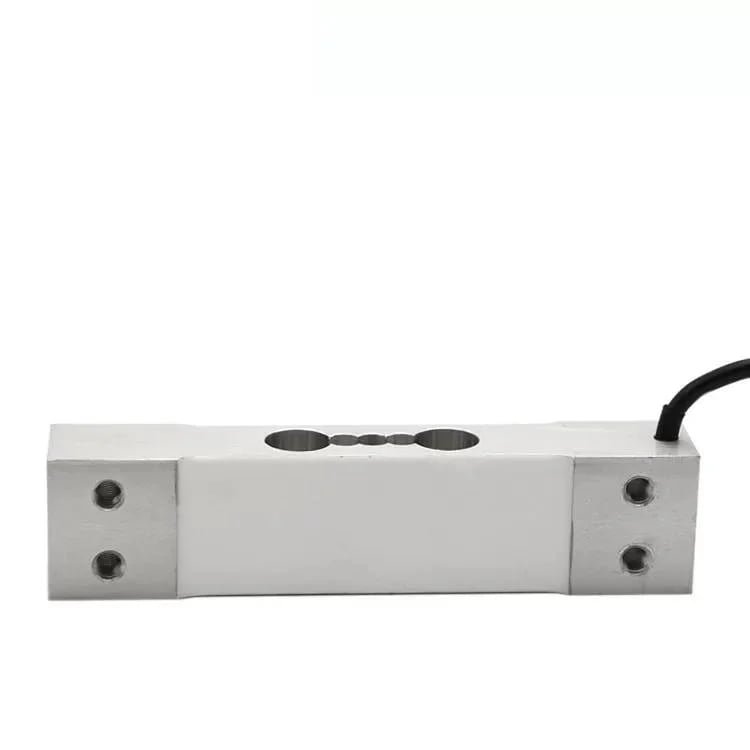


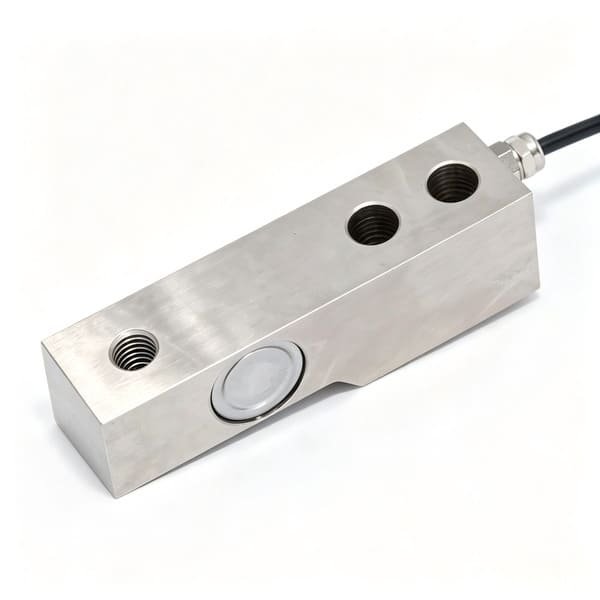
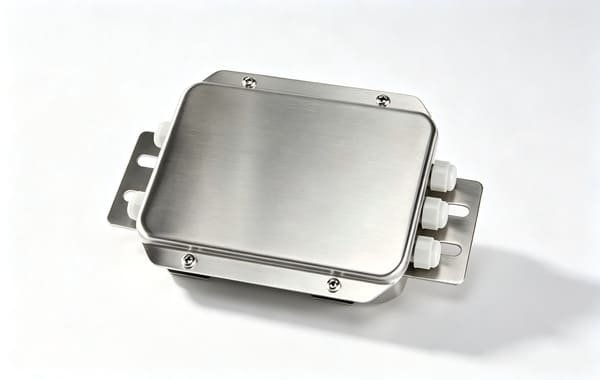

Two catalogue neighbours I deliberately kept out of the grid. The WST212 is a 100–200 kg parallel beam whose own page name carries “bench scale” — a fine cell, but it duplicates the WST202 slot in this family and I quote it only when a customer is already standardised on it. And the WST1501 is the simpler sibling of the WST1502 indicator; when a build needs no Modbus and no counting, it is the honest budget answer. Five questions I will ask before quoting any of the eight: deck size and material; maximum live load and the smallest parcel that must weigh legally; whether a price is computed from the reading; how many cells, and what their input resistance adds up to in parallel; and whether the indicator you already own can drive that number.
Once those five are answered, my quotation writes the arithmetic back instead of just quoting a price: the cell capacity and how the sizing factors produced it, the number of divisions the build can legally display, the parallel resistance the indicator will see, and — on four-cell orders — the batch matching data that ships with the cells. That last page is deliberate. A platform scale is the one product family where my part of the work is invisible inside somebody else’s instrument, and the matching sheet is the only piece of paper that survives into the customer’s calibration file and proves what was inside the box. It costs us a day per multi-cell order at the factory, and it has ended every corner-error argument before it started, which is why every quotation for four cells or more includes it by default.
Questions I Hear Every Week
How big a deck can one single-point load cell carry?
Whatever the corner compensation was made for — on our pages, 400 × 400 mm for WST202 and WST203, 600 × 600 mm for WST204, and unstated for WST201 (we confirm it per order). The cell’s accuracy is identical on all of them; the corner error is not. Beyond the stated platform, the reading starts depending on where the load sits, and the EN 45501 corner test will find it.
Can I use four single-point load cells instead of four shear beams on a floor scale?
I quote against it every time. Four cantilever cells under a rigid deck over-constrain the frame, so the reading becomes a function of bolt torque; they were never designed to be summed and matched; and eight of the 406 Ω family would also drag a WST1502-class indicator below its 87.5 Ω excitation rating. Four WST301 shear beams, a WST1513 box and a WST1502 indicator cost little more and behave like one instrument.
What division can I legally get on a 2 t floor scale?
With four 500 kg C3 cells: 500 g. The cell gate asks (Max + tare)/(N × 3 000) ≈ 177 g, but the spread gate asks the cell’s minimum interval times √4 ≈ 333 g, and the legal 1-2-5 ladder lands on 500 g — 4 000 divisions, inside the Class III ceiling. 200 g on that build is not a better cell away; it is arithmetic away.
Why does my floor scale read differently depending on where the pallet sits?
Three usual suspects, in order: the deck is bigger than the cells’ corner compensation; the corner trims in the junction box were never done or were disturbed; or the deck flexes enough to change the load share between cells. Re-run the corner test with Max/(N + 1) at each corner, compare against the tolerance for that load, and trim downward only.
How many load cells can one indicator drive?
Ask it in ohms, not in cells. The WST1502 is rated for 4 × 350 Ω or 8 × 700 Ω — both are 87.5 Ω in parallel. Any combination whose parallel equivalent stays above 87.5 Ω is fine: four of our 406 Ω cells are 101.5 Ω, four 375 Ω WST301s are 93.75 Ω, but eight 406 Ω cells are 50.75 Ω and will overload the excitation.
How much does the deck itself weigh, and does it matter?
A 400 × 400 mm steel bench deck is about 6 kg; a 1.2 × 1.2 m floor deck with frame is about 120 kg — 30 kg per cell. It matters twice: it is permanent dead load the sizing rule must carry, and it lives inside the zero budget. A legal scale may only re-zero within 4 % of Max, so a deck swap that adds 50 kg of dead load puts the empty scale outside the ZERO button’s reach until the dead-load calibration is re-run.
Are these cells washdown-safe?
The single-point and WST301 pages state IP65 — splash-proof, not hose-proof. For daily washdown, say so at enquiry: we would quote the stainless variants we have elsewhere in the range rather than let an IP65 cell stand in a food plant. The WST302 page publishes no IP at all, and the WST1513 box describes sealing without a rating — both get confirmed in writing before the order.
Do you sell approved platform scales?
No — and that is deliberate. We supply the weighing core: C3 cells with OIML R60 component certificates, the WST1513 junction box, the WST1502 indicator, and matched batch data. The deck is the scale maker’s design, and the type approval, initial verification and periodic re-verification of the finished instrument belong to the scale maker and the notified body. A component certificate is evidence for that process, not a substitute for it.
Deck dimensions, live load, smallest legal parcel, and whether a price is computed from the reading — those four lines are enough for me to send back a cells-plus-box-plus-indicator quotation with the division arithmetic shown. If the load cells for platform scales you are buying turn out to be the wrong geometry, I would rather tell you before the deck is welded.
Get a Platform-Scale Quotation
More field notes: the blog index · selection guide · junction box wiring