
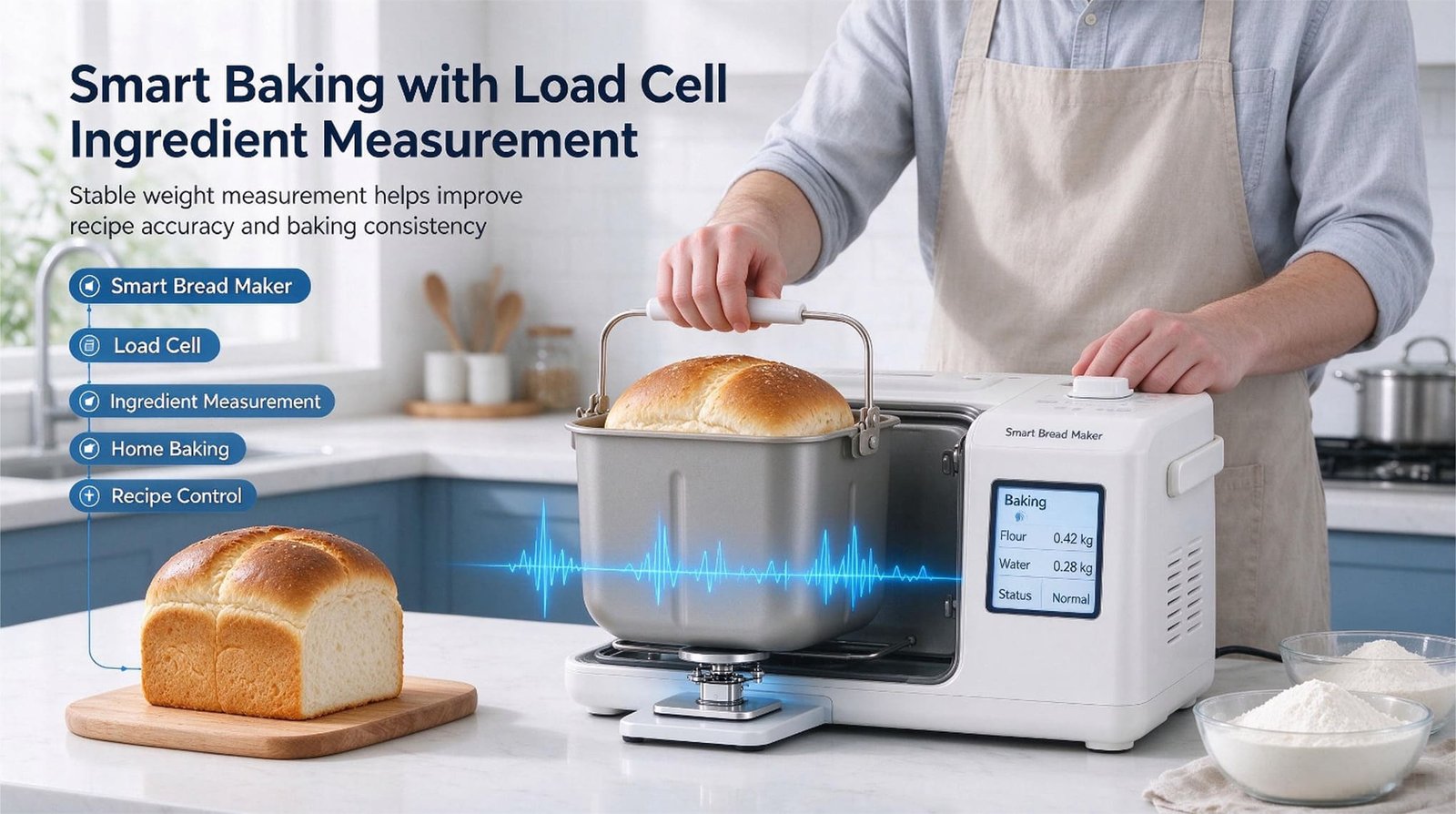
Load Cells for Smart Bread Makers: The Smallest Ingredient Inherits the Biggest Range
Nine grams of salt. That is the whole seasoning of a two-pound loaf, and it is the ingredient that decides whether the dough rises on schedule or runs away from you. On a bread-maker scale the industry has settled on — one gram of resolution across a three-kilogram platform — that nine grams carries a ±1.5 g error floor. Sixteen per cent. The five hundred grams of flour you carefully weighed land at 0.3 %. I have quoted four bread-maker programmes since 2023, and in three of them the load cell was not the problem at all; in the fourth it was in exactly the right place and reading the wrong quantity.
A 9 g salt dose on a 3 kg platform
1 g in 3,000 g is already the market spec
IEC 60335-2-9 · EN 55014 · RED 2014/53/EU
Heat, tare and the kneading shaft
1. A bread maker is four different weighing jobs
When an OEM writes to me and says “we need a load cell for a smart bread maker”, that one sentence covers four completely different specifications. They differ in capacity by a factor of sixty and in the quantity being measured by a factor of a thousand. Almost every mis-specification I have seen starts with a team answering the wrong one of these four questions.
| Job | What is on the platform | Typical gross | Smallest quantity that matters |
|---|---|---|---|
| A. Batch mass | Pan + flour + water + everything, kneading and baking in place | 1.0 – 2.8 kg | the flour, 300–1,400 g |
| B. Additive dose | Salt, sugar, yeast, seeds, fruit, chocolate — the small compartment | 50 – 150 g | the salt, 4–18 g |
| C. Water | Either the pan (the water lands on the same cell) or a reservoir | 200 – 900 g (pan) or 1.2 – 2.0 kg (reservoir) | about 1 % of the target, 3 g |
| D. Presence and events | Is the pan in the machine; did the lid close; did the user take the loaf out | same as A | a binary decision, 200 g threshold |
Job D is the one nobody budgets for and every finished machine uses. A bread maker that knows the pan is present can refuse to start; one that knows the pan was removed after the bake can stop the keep-warm timer; one that knows the lid is open can pause. None of that needs accuracy. It needs a threshold and a debounce, and it comes free with job A.
The market context matters here, because “smart” in this category is now mostly about measurement rather than connectivity. QY Research puts smart bread machine shipments at about 5.5 million units in 2025 at an average price near USD 87, with a capacity band of 500–1,000 g of finished loaf; Intel Market Research reports that smart-connected models passed 50 % of new launches, up from roughly a third three years earlier. The feature that sells is not the app. It is the machine telling you what you actually put in it.
And the industry has already answered the resolution question without much discussion. The German GASTROBACK Scale & Crust Pro (item 42828) ships with an integrated scale rated 1 g steps up to 3,000 g, weighing ingredients directly in the appliance; the LCKSMAL SC-3206 puts a digital scale inside the bread pan. Three thousand grams divided by one gram is 3,000 divisions — which is precisely the C3 ratio in OIML R60. That is not a coincidence and it is not a legal requirement, as I explain in section 15. It is what the available cells already do, so it is what everyone specified.
I supply the cells, the junction box for a multi-cell platform, the indicator if the machine has one, matched output sets, custom cable lengths and connectors — and the arithmetic plus the test plan that tells you which of the four jobs above your drawing is actually solving.
I do not supply the pan, the paddle, the coating, the dispenser gate, the heating element, the control board, the app or the CE technical file. If you are looking for someone to design the appliance, that is a different supplier. If you already have the appliance and need to know whether the weighing part of it can work, we should talk.
2. A cup of flour is not a unit of flour
Start with the part that has nothing to do with load cells but decides whether the load cell is worth fitting at all.
American recipe convention says one cup of all-purpose flour weighs 120 g (USDA and King Arthur develop recipes by spooning flour into the cup and sweeping it level) or about 125 g in older cookbook standards. But a cup is a volume. Dip the same cup straight into the bag, which is what most people actually do, and you compress the flour: 150 g, sometimes 160 g. Fluff and sift it first and the same cup holds 110 g. Every one of those is a “cup of flour”, and the spread is 1.45× in bulk density — 0.465 to 0.676 g/mL. As one baking reference puts it, two people using the same cup can differ by a third.
Now put that into a real bread-machine formula. The recipe says three and a half cups of flour and one and a third cups of water. Water by volume is honest — a liquid cup is a liquid cup, good to about ±1 %, so that is 315 g. The flour is not.
| How the cup was filled | g per cup | 3½ cups = flour | Hydration with the same 315 g water | Total dough |
|---|---|---|---|---|
| Sifted, spooned light | 110 | 385 g | 81.8 % | 700 g |
| Spooned and swept (USDA) | 120 | 420 g | 75.0 % | 735 g |
| Spooned and swept (cookbook standard) | 125 | 437.5 g | 72.0 % | 752.5 g |
| Dipped and swept | 150 | 525 g | 60.0 % | 840 g |
| Packed or tapped down | 160 | 560 g | 56.2 % | 875 g |
Read the third column again. The same recipe, followed correctly by a careful person, lands anywhere between 56.2 % and 81.8 % hydration — a 25.6-point spread — and the total mass of dough moved by 25 % in the process. Sixty per cent hydration makes a firm, slightly tight pan loaf. Eighty per cent makes a batter that will not hold a shape and will not climb the pan. There is no bread-machine program in the world that bakes both of those well, and the machine cannot tell them apart, because it never learned how much flour it received.
A bread maker that weighs the pan knows the flour within a gram or two. It can then compute the water from the measured flour instead of from the nominal recipe, hold hydration at 65 % no matter how the user filled the cup, and tell the user what they actually made. That is a feature no measuring-cup recipe can copy.
What it is not is a reason to buy a more accurate cell than you need. The flour only has to be known to about ±5 g on 500 g to hold hydration inside ±1 point. Everything below that is spent on a different ingredient, and section 4 shows where it goes.
There is a difference between this problem and its nearest neighbour in our own blog. In smart coffee machines the dose is 18 g of ground coffee and the target is an absolute one: plus or minus a tenth of a gram, because the espresso ratio is unforgiving. Here the dose is five hundred grams and the target is a ratio. Different error budget, different cell, different place to put it.
3. The recipe is a percentage, not a gram list
Bakers do not write formulas in grams. They write them as percentages of the flour, because that is the only form that scales. Flour is always 100 %, and everything else is a ratio to it. Here is a normal two-pound bread-machine loaf, the kind of formula that fills a 1,000 g pan:
| Ingredient | Mass | % of flour | What its error actually changes |
|---|---|---|---|
| Bread flour | 500 g | 100 % | loaf size and total dough mass; sets every other dose |
| Water | 325 g | 65 % | hydration 1:1; crumb openness, pan climb, bake time |
| Salt | 9 g | 1.8 % | fermentation rate and gluten tightness — the whole schedule |
| Sugar | 20 g | 4 % | crust colour, yeast food, sweetness |
| Butter or oil | 25 g | 5 % | crumb softness, shelf life; slows fermentation |
| Instant dry yeast | 5 g | 1.0 % | how fast, and whether the loaf arrives inside the program |
| Total dough | 884 g | — | bakes to about 796 g; see section 8 |
Now the important structural point. If the machine measures the flour and then computes every other dose from the measured value, the flour error cancels out of the ratios. Put in 495 g instead of 500, and the machine adds 321.75 g of water, 8.91 g of salt and 4.95 g of yeast — the formula is exactly right, the loaf is 1 % smaller, and nobody notices. What does not cancel is the error in each individual dosing step, and that error is a fixed number of grams set by the platform, not by the ingredient.
Salt is the sharp end of this for a reason that has nothing to do with taste. Salt is osmotically active: it slows yeast by roughly 15–20 %, and that slowdown is what gives a lean dough its predictable timeline. Every serious reference converges on the same window — Hamelman 1.8–2 %, Robertson 2 %, Reinhart 2 %, Forkish 2.1–2.2 %, Buehler 2 % — and the practical guidance around it is blunt: below 1.7 % the bread tastes flat, above about 2.5 % the gluten goes tight and fermentation slows noticeably. Below 1 % the dough ferments so fast that the machine’s own program no longer fits it.
A relative error on the flour propagates as the same relative error on the loaf and cancels out of the ratios, provided the machine recomputes the doses. A fixed absolute error on a small dose does not cancel and never will, because it is a property of the range you bought.
So the question is never “how accurate is the cell?”. It is “how many grams is the error floor, and what is the smallest dose it lands on?” For a 9 g salt dose, the answer is uncomfortable. Section 4 does the arithmetic.
4. The smallest ingredient inherits the biggest range
Here is the sentence I end up writing in almost every bread-maker quotation, and it is the one thing in this article worth remembering:
A load cell’s error is a percentage of its rated range. It is not a percentage of what you happen to have put on it. So the absolute error floor you get is fixed on the day you choose the range, and it is identical for a five-hundred-gram pile of flour and a nine-gram pinch of salt. The flour absorbs it. The salt does not.
Do the arithmetic on the reference formula from section 3. A 3,000 g pan platform at the conventional 0.05 % F.S comprehensive error has an absolute floor of 1.5 g — anywhere on the platform, at any load. Compare that one number against every dose the machine has to deliver:
| Platform | Range | Error floor | Flour 500 g |
Water 325 g |
Salt 9 g |
Yeast 5 g |
|---|---|---|---|---|---|---|
| In-pan, 0.05 % F.S | 3,000 g | 1.50 g | 0.30 % | 0.46 % | 16.67 % | 30.00 % |
| In-pan, C3 0.02 % F.S | 3,000 g | 0.60 g | 0.12 % | 0.18 % | 6.67 % | 12.00 % |
| In-pan, oversized 5 kg | 5,000 g | 2.50 g | 0.50 % | 0.77 % | 27.78 % | 50.00 % |
| Additive platform, 0.05 % | 500 g | 0.25 g | — | — | 2.78 % | 5.00 % |
| Additive platform, 0.05 % | 200 g | 0.10 g | — | — | 1.11 % | 2.00 % |
Look at the right-hand column of the first row. The cell is doing exactly what its datasheet promises — 0.05 % of 3,000 g is 1.5 g, verified on a deadweight tester, certificates and all — and the yeast dose is still wrong by nearly a third. Five grams of yeast with plus or minus 1.5 g on it is not a measurement of yeast. It is a range of yeasts.
The second row is the one that surprises people. Upgrading from a general-purpose 0.05 % cell to a genuine C3 cell buys you a factor of 2.5 on the floor — 1.5 g down to 0.6 g — and that is a real, testable, certified improvement. But 0.6 g on a 9 g salt dose is still 6.67 %. You spent the accuracy budget and the salt problem is still there, because you cannot buy your way out of a range. That is the part that takes a few emails to land.
And the third row is what happens when someone future-proofs. “We might do a three-pound loaf later, let us take the 5 kg version.” The floor becomes 2.5 g and the salt dose is now wrong by 27.78 %. Nobody intended that. It came in as a procurement convenience.
Absolute error floor = grade % × rated range. Independent of the load. The flour gets 0.30 % of itself in error and shrugs. The salt gets 16.67 % of itself in error and the loaf changes schedule.
There are only two honest levers: make the range smaller for the small ingredient, or make the grade better for the same range. The first lever is cheaper and more effective. The second has a hard floor at C3, because that is where commercially available single-point cells stop.
One more piece of the range arithmetic, because it is where a lot of drawings quietly lose capacity. The pan is not part of the recipe but it is part of the load. A 1,000 g-class pan runs about 680 g, so a 3,000 g platform has 2,320 g left for ingredients — 77 % of the range you paid for. On the reference formula, 884 g of dough sits on top of that 680 g pan, which is 1,564 g = 52 % of the platform. If you go up to a 1.5 kg loaf class you need 1,667 g of dough, so pan plus dough is 2,347 g — over the usable window on a 3,000 g platform, and the machine has not even added the fruit yet.
That is why the sensible architecture for a bread maker with real dosing ambition is not one bigger platform. It is one pan platform sized to the largest loaf you intend to bake, plus a second, small platform for the additives — the salt, sugar and yeast compartment that machines like the Panasonic-style SD series already separate mechanically. On a 500 g additive platform the same 0.05 % cell gives a 0.25 g floor, and the salt dose is good to 2.78 %. Same cell family, same price band, twenty-five times better on the ingredient that matters. Section 10 covers the mechanical version of that idea.
5. Case 1: the 40 g that came from the kneading shaft
In early 2024 an OEM in the Hangzhou area sent me a message that I have now received, in slightly different wording, about a dozen times. It read, roughly: “We are using a 3 kg platform under the pan with four of your flat cells. During the knead the display moves 30 to 80 g. Your load cell quality has a problem. We are looking for a new supplier.”
I did not argue and I did not quote a replacement. I asked for three things: a thirty-second phone video of the display during the knead program, a photo of the frame with the motor in shot, and one number — what does the display read when you put a 1 kg certified test weight on the pan cradle with the machine switched off?
The answer to the third question settled it. With the machine off, a 1 kg weight read 1,000 g and stayed there for ten minutes. Put 2 kg on and it read 2,000 g. The cell was not merely within specification, it was showing the same number twice — a repeatability result that on a 3 kg platform means the cells were well inside 1.5 g. Their own test proved the parts were good before I had to.
The video showed the rest. The drift appeared the moment the drive engaged, and it tracked the motor, not the display refresh, not the dough. Their pan cradle, their motor bracket and their gearbox all bolted to the same piece of sheet metal. The kneading paddle pushes back against a stiff dough through a 45 mm radius coupling, so a modest tangential force at the paddle becomes a very large equivalent weight down at the cells:
| Tangential force at the paddle | Torque at 45 mm radius | Equivalent weight seen by the cells | As a share of a 3 kg platform |
|---|---|---|---|
| 5 N | 0.23 N·m | 510 g | 17 % |
| 10 N | 0.45 N·m | 1,019 g | 34 % |
| 20 N | 0.90 N·m | 2,039 g | 68 % |
| 30 N | 1.35 N·m | 3,058 g | 102 % |
Only a fraction of that leaks into the weighing frame — a few per cent, depending on how stiff the bracket is and where the force finds a path to ground. A few per cent of one kilogram is tens of grams. Their measured 30–80 g drift is 1.0 to 2.7 % of full scale, which is 20 to 53 times the 1.5 g their cells were actually delivering. Two different numbers, two different mechanisms, and the one they were blaming was the good one.
The fix was five changes to their drawing. None of them was a sensor:
- Separate the drive frame from the weighing frame. Motor, gearbox and belt tensioner moved onto a bracket tied to the chassis, with the pan cradle isolated on its own four-cell sub-frame. This is the single change that did most of the work.
- Give the torque a short path to ground. A tie-rod from the gearbox housing to the chassis takes the reaction torque directly, so it never has to travel through the cradle.
- Support the driven end properly. The paddle shaft needed its own bearing in the chassis, so the only load transferred to the cradle was the vertical component of the dough’s resistance — which is what they wanted to measure anyway.
- Let the cable hang. Their cell cable was cable-tied to the motor bracket at three points. A stiff, restrained cable is a force path. It now runs in a loose loop with strain relief on the fixed frame, not on the cradle.
- Only believe the reading when the shaft is stopped. Their firmware sampled continuously, including during kneading. It now takes the pan value in a stable window with the drive off and a 1.5 second settle, which is the same discipline every filling machine uses.
After the changes the drift collapsed into the noise floor: roughly plus or minus 2 g during the knead, and under a gram at rest. They kept the same cells, from the same shipment, and the machine became quotable. I sold them nothing on that call, and they have bought three more runs since — which is, honestly, the reason I write this section rather than a paragraph about our ISO certificate.
Set 500 g of certified test weight on the pan cradle, machine switched off. Note the display. Now run the knead program with an empty pan — no flour, no water. If the reading moves, nothing is pushing back on the paddle, so whatever you are seeing is a force path from the drive, a thermal transient or a cable. The cell has not changed its mind.
Then repeat with the weight off and the machine off, and watch the display for fifteen minutes while the bake chamber is warm. If that is stable and the knead is not, you have a mechanical problem. If neither is stable, you have a wiring or excitation problem. If both are stable but the weight reads wrong, now we talk about the cell.
6. Case 2: the 40 g the bake chamber bakes into the scale
Late in 2024 an OEM in the Shunde appliance cluster came to me with a complaint that sounded like a quality escape and turned out to be a specification oversight. Their words: “The scale is perfect in the morning and wrong in the afternoon. Our lab tests pass. Our line audit fails.”
I asked where the audit bench was. It was on the line, downstream of the bake test station, in a room that had just had a hundred machines go through a full bake cycle. The lab bench was in an air-conditioned metrology room at 22 °C. The audit bench was sitting in air that had been warmed by the machines, and the cradle under the pan was, by my estimate from their thermocouple log, somewhere around 62 °C.
Forty degrees of span. What does that do? It depends entirely on a datasheet line that most bread-maker drawings never look at: temperature effect on zero, quoted in percent of full scale per 10 °C. And here is the trap that catches almost everyone — that percentage has to be multiplied by the range you bought before it becomes grams.
| Cell | Zero TC (%F.S / 10 °C) |
Range on the drawing | g per 10 °C | g over the 40 °C cycle | vs that cell’s own error floor |
|---|---|---|---|---|---|
| WST101 flat micro | 0.10 | 10 kg | 10 g | 40 g | 8× |
| WST103 kitchen | 0.20 | 5 kg | 10 g | 40 g | 16× |
| WST107 miniature | 0.50 | 10 kg | 50 g | 200 g | 40× |
| WST1101 planar beam | 0.05 | 30 kg | 15 g | 60 g | 4× |
| WS1102 planar beam | 0.05 | 20 kg | 10 g | 40 g | 4× |
| WST201 single point C3 | 0.10 | 10 kg | 10 g | 40 g | 20× |
Read rows two and four against each other. WST101 carries twice the zero-TC percentage of WST1101 — 0.10 against 0.05 — and still drifts less in grams per 10 °C: 10 g against 15 g. Because it is a 10 kg cell and the planar beam on that drawing was a 30 kg cell. If you have ever chosen a cell by picking the smallest percentage in a column, this is the row that should change your habit. Always multiply the coefficient by the range before you compare anything.
There is a second nuance that matters more than the numbers. These cells are temperature-compensated from −10 °C to +40 °C. At 62 °C you are twenty-two degrees outside the compensated window, so the datasheet figure is no longer a measurement — it is a linear extrapolation of a curve that bends. And the error is not a random wobble you can average away. It is a bias. It sits there all afternoon, in the same direction, on every machine on that bench.
Three changes, and again none of them was a different sensor:
- A thermal break. The pan cradle now sits on insulating standoffs with an air gap between it and the chamber wall, and the cable was rerouted away from the heating element. The cradle’s steady-state temperature dropped by roughly two-thirds. Cell temperature is what matters, not chamber temperature, and they are not the same number.
- Zero inside the working thermal window, not at switch-on. Their firmware tared once, immediately after power-up, when the machine was coldest. It now re-zeros whenever the pan-present check (job D from section 1) says the pan has been placed, which is always a few seconds before the first ingredient lands. A tare taken at 62 °C is a valid tare at 62 °C.
- Choose the range the application needs. They had specified 30 kg planar beams because the platform was large, not because the load was large. For a two-pound loaf the working load never exceeds 2 kg. That single line on the drawing was worth more than any coefficient on the datasheet.
After the thermal break and the re-zero the residual drift across a full cycle measured under 4 g: about a tenth of a gram per degree at the cell. On the flour dose that is nothing. On the bake-loss reading in section 8 it is five per cent of the reporting signal, which is why that feature has to be designed around this section rather than before it.
7. Case 3: the machine that tried to weigh the rise
This one is my favourite, because the customer was not wrong about the physics — they were wrong about which quantity physics had given them.
In 2025 a Polish OEM asked me, in a single line: “Can the pan load cell tell the user when the dough has doubled?” They wanted a rise indicator — a “ready” signal based on the dough, not on the timer. It is a genuinely good product idea, and the answer is no, for a reason worth walking through.
Dough and bread are almost the same mass and wildly different volumes. Our 884 g of dough at about 1.15 g/mL occupies some 769 cm³. The baked loaf leaves the machine at roughly 796 g and about 4 cm³ per gram of specific volume, which is 3,182 cm³ — a factor of 4.14 in volume against a change of −10 % in mass. During the proof stage alone, the volume triples while the mass drops by around one per cent.
| Stage | Volume | Mass | What the load cell sees |
|---|---|---|---|
| Dough after mixing | 769 cm³ | 884 g | reference |
| End of proof | ×3.0 (+200 %) | −1 % (8.8 g) | 8.8 g, or 5.9× its 1.5 g floor |
| End of bake | 3,182 cm³ (×4.14) | 795.6 g (−10 %) | 88.4 g total change |
So the pan cell is looking at a signal of about 200:1 against the thing the user actually cares about. The rise is a volume event; the cell reads mass; and mass does not go up at all during proof, it goes down slightly, because the carbon dioxide that is inflating the dough is leaving through the surface. You can build a rise detector on an 8.8 g signal, but you would be measuring it in a chamber that drifts tens of grams with temperature (section 6) and moves tens of grams with the drive (section 5), and your detector would be beaten by both.
I wrote back that the pan cells cannot give them a rise signal, and that if they bought cells from me for that purpose I would be selling them something that does not do the job. Then I sent them the version that does.
Translate the volume question into a force question. Put a light probe on the dough surface — a lid-mounted lever, or a follower on a 0.5 N/mm spring. One millimetre of rise compresses that spring by 0.50 N, which is 51 g-equivalent. On a 500 g cell at 0.05 % the error floor is 0.25 g, so one millimetre of rise is 204 times the floor; five millimetres is 255 g-equivalent. That is a rise signal with three orders of magnitude of margin, and it needs a small, cheap cell rather than the big one. The pan platform should stay doing the job it is good at.
There is one more thing I put in that reply, because it is the honest engineering answer and it saved them a component. If the goal is “tell the user when the dough is ready”, fermentation rate is far more sensitive to temperature than any sensor is to mass. Yeast activity roughly doubles per 10 °C rise — the classical Q10 = 2, which works out at about 7.2 % per degree. A proof that takes 60 minutes at 24 °C becomes about 79 minutes at 20 °C and about 40 minutes at 30 °C. A thermistor in the chamber wall costs a fraction of a load cell and predicts the rise far better than weighing it does. Measure what changes, not what is convenient to measure.
8. What a load cell can report: bake loss
Having spent a section explaining a job the pan cells cannot do, here is one they can do almost for free, and which no bread maker on the market reports.
The mass of a loaf is the dough minus what evaporated. FAO figures for bread put the loss at roughly 9–11 %: a 500 g finished loaf needs about 560 g of dough, an 800 g loaf about 889 g. That means our 884 g of dough should leave the machine at about 796 g, a change of 88.4 g. And the machine already has two of the readings it needs — pan plus dough before the bake, and pan plus loaf after it.
The important point is what kind of accuracy this needs. It is a difference between two readings taken minutes apart on the same platform with the same pan, so absolute accuracy largely cancels; what you need is repeatability and a stable zero. The 0.05 % floor on a 3,000 g platform is 1.5 g, and the signal is 88.4 g. 1.5 g on 88.4 g is 1.7 % relative — which is plenty for the sentence “this loaf lost about ten per cent of its mass” and nowhere near enough for the sentence “this loaf lost 9.87 per cent”. Report the band, not the digits.
- Assume a 10 % loss and a reading good to one percentage point. That is a 1.5 g resolution on an 88.4 g signal, which is exactly what a conventional 3 kg platform already gives you — no accuracy upgrade required.
- Do the thermal work from section 6 first. The “before” reading is taken cold and the “after” reading hot, so any zero drift lands directly in your answer. Under 4 g of residual drift on an 88.4 g signal is workable; 40 g is not.
- Prioritise repeatability and creep over comprehensive error. A planar beam at ±0.02 % repeatability is a better choice for this feature than a cell with a lower headline error figure and a slower creep specification.
- Hold excitation constant. A shared supply for the cell and the display, or a ratiometric reference, so a supply sag does not appear as a mass change.
- Use it as a diagnostic, not a score. A loaf that loses 15 % is telling the user their hydration or their pan coverage was off; a loaf that loses 6 % is telling them the bake was short. That is a genuinely useful machine, and it sells itself.
If you want to compare how the same platforms behave when the requirement is a small absolute dose rather than a ratio, our smart home product and fitness equipment guides go through the same range-versus-dose arithmetic in different applications, and the conclusion keeps coming out the same way.
9. Water is the good news — and the density trap
Water is the one part of this job where not weighing is a defensible design decision, and I have told more than one customer to spend the money elsewhere.
The reason is the error budget. To hold hydration inside one percentage point on 500 g of flour you need the water known to about ±5 g. A volumetric fill — a pump with a timed run, or a graduated reservoir — holds 315 g to roughly ±1 %, which is ±3 g. Water is a clean, single-density, non-compacting liquid; a millilitre is a gram to within 0.3 %, and it does not change with how enthusiastically the user poured it. So a volumetric water fill is inside the budget with margin, which means the water path does not need a second weighing platform and does not need a tolerance of a tenth of a gram. Flour does. Section 2 is the reason, and it is worth re-reading before you spend anything on water.
The trap is the word “cup”. A recipe that says one cup of liquid means 236 mL, and the mass of that cup depends entirely on what the liquid is:
| One cup (236 mL) of | Density | Mass | Effect if substituted for water |
|---|---|---|---|
| Oil | 0.920 g/mL | 217.7 g | stiffer dough than intended |
| Water | 0.997 g/mL | 235.9 g | reference |
| Milk | 1.030 g/mL | 243.7 g | +3 %, negligible; adds lactose and fat |
| Honey or syrup | 1.420 g/mL | 336.0 g | +42 %, a different dough |
Same cup, same fill line, 217.7 g to 336.0 g — a 1.54× spread. If your machine offers a honey-and-oat programme and it dispenses the honey by volume using a water-calibrated pump, it is putting 42 % more liquid into that dough than the recipe calls for, on every loaf, and no load cell anywhere in the machine will notice, because the machine never weighed the honey at all. This is the same lesson as the teaspoon in section 11 wearing a different hat: a scale does not fix a recipe, it fixes a badly measured one. If the ingredient is dispensed by volume, the volume has to be calibrated for that ingredient.
One last water note, because it is a real feature opportunity and it is not a mass measurement. Dough temperature drives fermentation rate, and the variable the machine actually controls is the water. Standard baker’s practice is a desired dough temperature: for a direct dough, the base value is three times the target dough temperature, and the water temperature is that base minus the room and flour temperatures. Target 24 °C in a 22 °C kitchen with 22 °C flour gives a base of 72 and a water temperature of 28 °C. That is a thermistor and a lookup table, not a load cell — and it is a better use of the second sensor than trying to weigh water to ±0.1 g.
10. The additive compartment is a second platform
Everything in section 4 said the same thing: the salt dose is only bad because it is being measured by a platform sized for the flour. So the design answer writes itself — give the additives their own platform.
This is not exotic. Most bread makers already have a separate additive compartment mechanically: a small dispenser that holds the dried yeast, seeds and fruit and releases them at a beep partway through the cycle, sometimes as a tray in the lid, sometimes as a sliding gate. The compartment exists because the ingredients want to be added at different times. The only change is to put it on a cell instead of on a spring-loaded hinge. On a 500 g platform the same 0.05 % cell family gives a 0.25 g floor, and the salt dose of 9 g becomes good to 2.78 per cent instead of 16.67 — a factor of six, for one small cell and one small bracket. On a 200 g platform the floor drops to 0.10 g and the salt is good to 1.11 %. That is better than most of the stand-alone kitchen scales sold to home bakers.
Four mechanical points I raise every time this comes up:
- Weigh loss-in-weight, not gain-in-pan. Put the cell under the hopper, not under the bowl. The pan is already occupied by a paddle and a mechanism that moves, and the hopper is a static object whose mass only ever goes down during a dose. Loss-in-weight also lets the gate cross-check itself: if the cell says 3 g left the hopper and the gate was open for the expected time, the dose is confirmed; if the cell says nothing left, the gate is jammed and the machine can flag it.
- Keep the gate torque out of the cell. A solenoid or a stepper pushing a gate is exactly the section 5 problem in miniature. Reaction force goes to the chassis, the hopper hangs free, and the only path from the hopper to the world is through the cell.
- Size for the container, not just the dose. A 500 g platform is generous for 9 g of salt, 20 g of sugar and 5 g of yeast — but not if the hopper body itself weighs 180 g and the fruit option adds 150 g. Subtract the tare before you subtract the platform range, or you have quietly gone back to a 1 % dosing error. If the compartment really has to stay small, a 200–500 g miniature cell — we make one as WST110 — is the right part, not a scaled-down 50 kg beam.
- Decide sequential or simultaneous. One additive platform means salt, then sugar, then yeast, dosed one after another, and the floor applies to each separately. If you want simultaneous dosing you need one cell per ingredient, and the honest economics usually do not work unless one of them is genuinely critical to the loaf.
Earns it: salt and yeast, because both change the fermentation schedule and both are dosed in single-digit grams. Also earns it on machine diagnostics — a hopper cell is the only way the firmware can tell a jammed gate from an empty compartment, which is the difference between a service call and a message on the screen.
Does not earn it: sugar and fat, where a few grams either way is a colour difference, and fruit or nuts, where the user is going to add what they add. If the budget only stretches to one extra cell, spend it on the hopper holding the salt and yeast and leave the rest on volume. For the general selection logic behind that call, our selection guide walks the same trade-off through other applications.
11. Salt, sugar, yeast: the teaspoon is the real problem
Before you spend a cent on a better cell, look at what you are competing with. Most home bakers salt bread by the teaspoon, and a teaspoon is not a unit either.
| Ingredient (one level teaspoon) | Mass | 1½ tsp against 437.5 g flour | Verdict |
|---|---|---|---|
| Fine table salt | 6.0 g | 9.00 g = 2.06 % | top of the window |
| Coarse or sea salt | 4.5 g | 6.75 g = 1.54 % | just under the window |
| Flake salt | 2.8 g | 4.20 g = 0.96 % | ferments fast and tastes flat |
| Granulated sugar | 4.0 g | 6.00 g | crust colour only |
| All-purpose flour | 2.8 g | 4.20 g | shows the spoon problem again |
| Baking soda | 4.8 g | 7.20 g | irrelevant at bread pH |
Salt spans 0.96 % to 2.06 % of the flour from the same instruction — a 2.14× spread, straddling both edges of the 1.8–2.2 % window that every serious baking reference converges on. The midpoint is about 1.51 %, so a user following the same spoon instruction can be roughly ±36 % away from the intended dose without doing anything a recipe author would call wrong.
Now put that next to an additive platform at 0.25 g on a 9 g dose: 2.78 %. The weighing solution is about thirteen times more repeatable than the spoon it replaces, and it is the only one of the two that can be printed in a programme manual. That is the number worth putting in your own literature, not the 0.05 % on the datasheet. The datasheet figure is where you start; the spoon is who you are beating.
Nobody in this market is choosing between a 0.05 % cell and a C3 cell. They are choosing between a machine that knows the salt and a machine that does not, and the alternative to knowing the salt is a measuring spoon with a 2.14× spread. A bread maker load cell is not sold on its 0.05 %; it is sold on knowing the salt. Frame the quote that way and the accuracy upgrade stops being a cost and starts being the product.
12. Down-stop, thermal break, one cell or four
Three mechanical decisions decide whether a bread-maker weighing system survives its first week in a real kitchen. None of them is about accuracy.
Down-stop. Users drop the pan in. It is not abuse; it is the normal workflow, twice a day, for the life of the machine. Take a fully loaded pan — 680 g of pan plus about 1,650 g of ingredients, so 2.33 kg — and set it down from 20 mm, which is what a hand does when it is not being careful. That is an impact speed of 0.626 m/s, and what it turns into depends entirely on how long the deceleration takes:
| Stopping time | Deceleration | Peak force | Equivalent weight on the cells |
|---|---|---|---|
| 1 ms (cell takes the impact) | 626 m/s² = 63.9 g | 1,460 N | 148.8 kg |
| 5 ms (stop is soft) | 125 m/s² = 12.8 g | 292 N | 29.8 kg |
A 3 kg cell is rated for 120 % safe overload (3.6 kg) and 150 % (4.5 kg), with a 200 % ultimate. A hard impact is 148.8 kg, which is forty-one times the safe overload, and it will destroy the cell — and, worse, it will destroy it partially, so the machine keeps working and starts reading 20 g light. Set the down-stop so it engages above the working range and below safe overload, roughly 3.6 to 4.2 kg on a 3 kg cell, and make sure it is a stop the cradle lands on, so the overload path bypasses the cell entirely instead of passing through it. If you inherit a machine that already has mysterious drift after a few months on site, checking whether the cell was damaged before you re-tune anything is usually the fastest route to the answer.
Thermal break. Section 6 is the whole argument, compressed into one sentence: put an air gap and an insulating standoff between the pan cradle and the bake chamber, and route the cable away from the element. The cell should be at roughly the temperature of the room, not the temperature of the bread.
One cell or four. Both work, and they fail in different ways. A single-point cell like WST201 gives you one part, one cable and no summing junction, with C3 accuracy — but the load has to land where its compensation was trimmed, so the pan must be constrained against off-centre placement. Three or four low-profile planar beams like WST1101 or WS1102 give you a platform of essentially unlimited size in a package that is 5 to 11 mm thick, which is the whole reason those parts exist — but most planar beams are not corner-adjusted, so the four have to be output-matched and the junction box has to be able to trim them. That is what the junction box is for, and matched output sets are something I supply as a matter of routine rather than as a special order.
One thing to be clear about, because it comes up in every review meeting: four cells do not divide the error by four. Each cell brings its own floor to the sum; random contributions partly average, systematic ones do not. If your specification needs 0.6 g on a 3 kg platform, buy a C3 single-point cell and mount it properly. Do not buy four general-purpose cells and hope the arithmetic works out.
13. What a load cell cannot tell you
I would rather list the boundaries than let you discover them in a design review. A pan platform measures the mass of everything sitting on it. That sounds modest, and it is, and it is exactly why it is useful. But it means the following are outside its reach, no matter how good the cell is:
| The question | Why mass cannot answer it | What actually measures it |
|---|---|---|
| Will this flour absorb the water? | Flour ships at 12–14 % moisture and varies by mill and season; same mass, different absorption | A moisture meter, or the machine’s own dough-feel feedback |
| Is the gluten developed enough? | That is a rheology question, not a mass question | Drive torque or motor current — a different sensor class, and section 5 shows why it has to be kept away from the cells |
| Has the dough doubled? | Volume triples while mass falls about 1 % | A follower on a known spring, or an ultrasonic / optical height sensor |
| Which ingredient went in? | A platform reports total mass and nothing about composition | Sequence. Dose one ingredient at a time and the machine knows by construction |
| Is the loaf baked through? | Mass after baking tells you water left, not where it is | Internal temperature, or crust colour |
| Can this be billed by weight? | A bread-maker scale is a convenience scale, not a legal-for-trade instrument | An approved instrument — see the box below |
For a domestic bread maker none of this matters, and the 1 g in 3,000 g that the market has settled on is a design convention rather than a legal obligation. Nobody is invoiced for the flour in their own kitchen.
The moment the same weighing goes into a commercial line — portioned dough for resale, a checkweigher, anything a customer pays by weight for — the whole machine falls under instrument-level approval: OIML R76, EN 45501 and, in Europe, the Measuring Instruments Directive 2014/32/EU. My OIML R60 component testing and my ISO 9001 quality system support your technical file. They are not an instrument approval, and I will not describe them as one.
I build the weighing part of the machine. The conformity of the machine is yours, and your notified body’s. That division is uncomfortable to explain in a quotation and much more uncomfortable to discover later.
14. Nine questions before you release the drawing
This is the list I actually send, usually within an hour of the first inquiry. If you answer all nine, I can tell you the error floor in grams for your smallest dose before I quote a part number — and about a third of the time the answer is that you need a different architecture, not a different cell.
| Question | What it settles |
|---|---|
| 1. What is the largest finished loaf you intend to bake? | Platform range, and therefore the whole error budget. A 1.5 kg loaf and a 500 g loaf are different machines. |
| 2. What does the empty pan weigh? | How much of your range is gone before the first ingredient. On a 1,000 g pan that is 680 g — 23 % of a 3 kg platform. |
| 3. Does the pan stay in the machine for kneading and baking? | Whether you inherit the kneading torque problem and the full 40 °C thermal cycle, or only the dosing problem. |
| 4. Which ingredients are weighed, and which are dosed by volume or by time? | How many platforms you need — and it is often one, not three. |
| 5. What is the smallest dose you must get right, and what percentage error does the recipe tolerate? | This is the specification. For a bread maker the answer is almost always salt, 9 g, and a few per cent. |
| 6. What temperature will the cell see at its mounting point, not in the chamber? | Whether you are inside the −10 to +40 °C compensated window or extrapolating beyond it, and which cell’s zero-TC coefficient you can afford. |
| 7. Is the drive motor mounted on the weighing frame? | If yes, expect 30–80 g of apparent drift, and it will not be the cell’s fault. |
| 8. What repeatability do you need at the reading point? | A different requirement from accuracy. Bake-loss reporting and presence detection are both repeatability problems, not accuracy problems. |
| 9. What is the interface on the control board — mV/V into your own ADC, or digital? | Analog cell, digital cell, or cell plus indicator. It also fixes the excitation you can offer, which sets your cable-length limits. |
Question five is the one that decides projects. Almost every bread-maker inquiry I receive arrives with a capacity already chosen — usually 3 kg, occasionally 5 kg — and no statement of the smallest dose. Reversing those two, smallest dose first and capacity second, would resolve most of the design arguments I have been invited into.
15. What I supply, and what I do not
I want this section to be unambiguous, because a lot of bread-maker inquiries arrive addressed to the wrong kind of supplier.
| What I supply | What I do not supply |
|---|---|
| Load cells — flat micro, miniature, kitchen-class, planar beam, single-point C3, S-type, shear beam and column types, in analog or digital output | The pan, the paddle, the shaft coupling or the drive train |
| Matched output sets for multi-cell platforms, with the figures recorded per unit | The dispenser gate, the solenoid or stepper that drives it, or the hopper body |
| Summing junction boxes, including stainless multi-channel types with per-channel trim | The heating element, the bake chamber, or the thermal-break bracket |
| Weighing indicators and controllers with RS232 or RS485 output, where the machine has a display | The control board, the firmware, the app or the cloud service |
| Cell, junction box and cable supplied as one assembly, cut to your length and fitted with your connector | The mechanical design of the appliance, or a redesign of your cradle |
| Custom capacity within a family, custom mounting pattern, thread, cable exit direction and marking | The CE technical file, the IEC 60335-2-9 report, the EN 55014 EMC results or the RED 2014/53/EU assessment |
| The arithmetic: error floor in grams on your smallest dose, range check against pan tare, corner-load plan, thermal budget | Instrument-level legal metrology — OIML R76, EN 45501 or MID approval — or the finished machine’s warranty |
| Test data per shipment: repeatability, hysteresis, zero return, creep, zero shift over your working temperature window | Conformity of the appliance as placed on the market — that is yours |
The left column is a component and measurement business. The right column is an appliance business. I get asked for the right column constantly, and for a domestic bread maker the honest answer is that you probably already have those suppliers, and what you may not have is somebody who will tell you the salt dose is 16.67 % wrong before you tool the injection mould.
On documentation, one clarification that has saved several customers a wasted meeting. A bread maker is an IEC 60335-2-9 appliance, its EMC is governed by the EN 55014 series, and if it has Wi-Fi or Bluetooth it also needs a RED 2014/53/EU assessment — all of it appliance-level, all of it yours. What I can give you for that file is the component evidence: the OIML R60 performance data for the cell, material and surface-treatment information, and the test records from the shipment. That is what a technical file needs from a transducer supplier, and it is what I hold.
16. Questions I get asked about bread-maker weighing
Which load cell do you recommend for a smart bread maker?
It depends on whether the pan itself is the platform. For a 3 kg pan platform with four low-profile cells, WST1101 or WS1102 planar beams are usually the best fit because they are 5–11 mm thick and can be output-matched as a set. If you want a single cell and the highest grade available, WST201 is a C3 single-point cell at ±0.02 % F.S. For the additive compartment, the range has to come down: a 500 g platform gives a 0.25 g floor against 1.5 g on the pan. WST101 and WST103 are the flat and kitchen-class options for lighter pan platforms and smaller machines, and WST107 is the choice when the machine gets wiped down and needs IP65. My general advice is to pick the range from the smallest dose first, and only then pick the family.
Is 1 g resolution on a 3 kg platform enough for salt and yeast?
Resolution and error are different things, and 1 g of resolution does not mean 1 g of accuracy. A 3,000 g platform is 3,000 divisions, which matches the C3 ratio in OIML R60, and that is what the market has settled on — several shipped machines, such as the GASTROBACK Scale & Crust Pro 42828, use exactly 1 g steps up to 3,000 g. The problem is that the absolute error floor is the grade percentage times the range: 0.05 % of 3,000 g is 1.5 g anywhere on the platform. On a 9 g salt dose that is 16.67 %, and on 5 g of yeast it is 30 %. Resolution is fine; the range is the issue. Fix it by making the additive range smaller, not by adding digits to the display.
Can one load cell weigh the pan and the ingredients at the same time?
Mechanically yes, and that is how most machines do it. The pan sits on the platform and the cell reports total mass, which is why you need the pan’s own tare before the first ingredient. What one cell cannot do well is measure the salt precisely, for the range reason above. Use the pan platform for what it is good at — the flour, the water, the total batch and the presence checks — and give the salt and yeast their own small platform if the recipe depends on them.
Do I need a C3 load cell for a bread maker?
No, and this is one of the clearest examples of buying the wrong improvement. A domestic bread maker is not a legal-for-trade instrument, so nobody audits the accuracy class. Upgrading a 3 kg platform from a 0.05 % cell to C3 moves the error floor from 1.5 g to 0.6 g — a real and testable factor of 2.5 — but the salt dose only improves from 16.67 % to 6.67 %, because you cannot buy your way out of a range. C3 is worth having when you need the certified repeatability for a commercial application; for a domestic machine, spending the same money on a second small platform does far more for the loaf.
How many load cells should a bread-maker platform have?
One, three or four all work, and each fails differently. A single C3 single-point cell gives you the best grade with the fewest parts and the shortest cable run, but the load has to stay in the trimmed area, so the pan must be constrained against off-centre placement. Three cells are statically determinate, which removes any rocking. Four planar beams give you an essentially unlimited platform size in a very low package, which is why those parts exist — but most planar beams are not corner-adjusted, so the set has to be output-matched and trimmed at the junction box. One thing worth stating plainly: four cells do not divide the error by four. Each cell contributes its own floor, and only the random part averages out.
Can the machine tell when the dough has risen enough?
Not from the pan cells. During proofing the dough’s volume roughly triples while its mass falls about one per cent, because the carbon dioxide inflating it is leaving through the surface. That is a signal ratio of about 200:1 in favour of the quantity the load cell cannot see. If you want a real rise signal, put a follower on a known spring instead: one millimetre of rise on a 0.5 N/mm spring is 51 g-equivalent, which is 204 times the error floor of a 500 g cell. And if the goal is simply to predict when the dough is ready, a temperature sensor is more useful than any mass reading — yeast activity roughly doubles per 10 °C, so a proof that takes 60 minutes at 24 °C takes about 79 minutes at 20 °C and about 40 minutes at 30 °C.
Will the heat of the bake damage the load cell?
It will not usually destroy it, but it will change its zero, and that is worse, because the machine keeps working and starts lying. Cells are compensated from −10 °C to +40 °C; a cradle sitting in air warmed by a bake can reach the low sixties. The drift that follows is a percentage of full scale per 10 °C multiplied by the range: WST103 needs 0.20 % F.S per 10 °C, which on a 5 kg cell is 10 g per 10 °C and 40 g across a 40 °C cycle — sixteen times the cell’s own 1.5 g error floor at that range. The cure is mechanical, not electrical: an insulating standoff and an air gap between the cradle and the chamber, a cable routed away from the element, and a re-zero taken inside the working temperature window rather than at switch-on.
Can a bread maker report how much water the loaf lost during baking?
Yes, and it needs no extra hardware. Reference figures put bread’s bake loss at about 9–11 % of the dough mass, so 884 g of dough should leave the pan at roughly 796 g — an 88.4 g change, which the machine can get by weighing the pan before and after the bake. On a 3 kg platform the 1.5 g floor is 1.7 % of that signal, so the honest output is “this loaf lost about ten per cent” rather than a figure to two decimal places. The prerequisite is the thermal work: the before-reading is cold and the after-reading is hot, so residual zero drift lands directly in the answer. Under about 4 g of residual drift the feature is sound; at 40 g it is meaningless.
Recommended load cells for smart bread makers
Six parts cover the pan platform, the additive compartment and the smaller machines. Capacities, accuracy figures and materials below are from the current datasheets; matched output sets, cable length, connector and mounting pattern can all be customised.
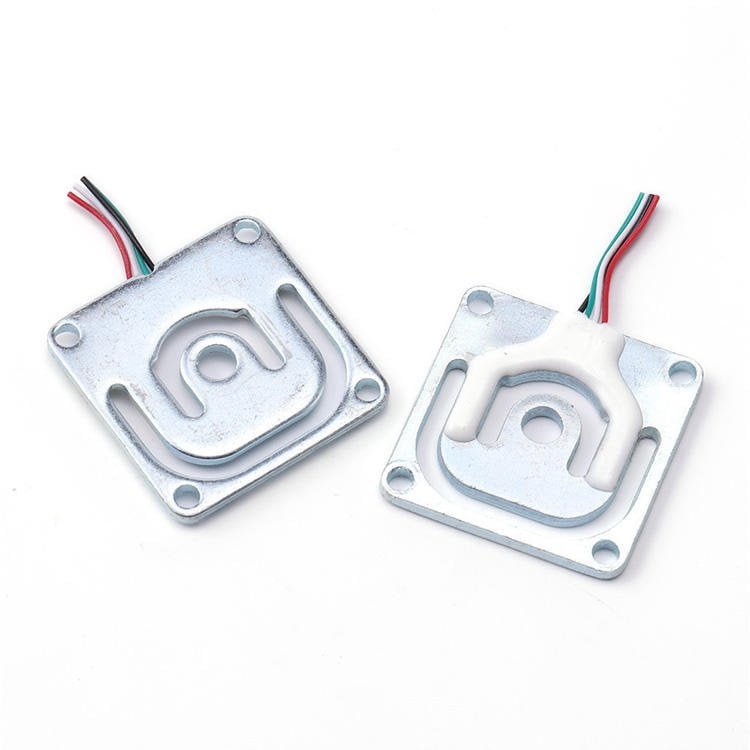
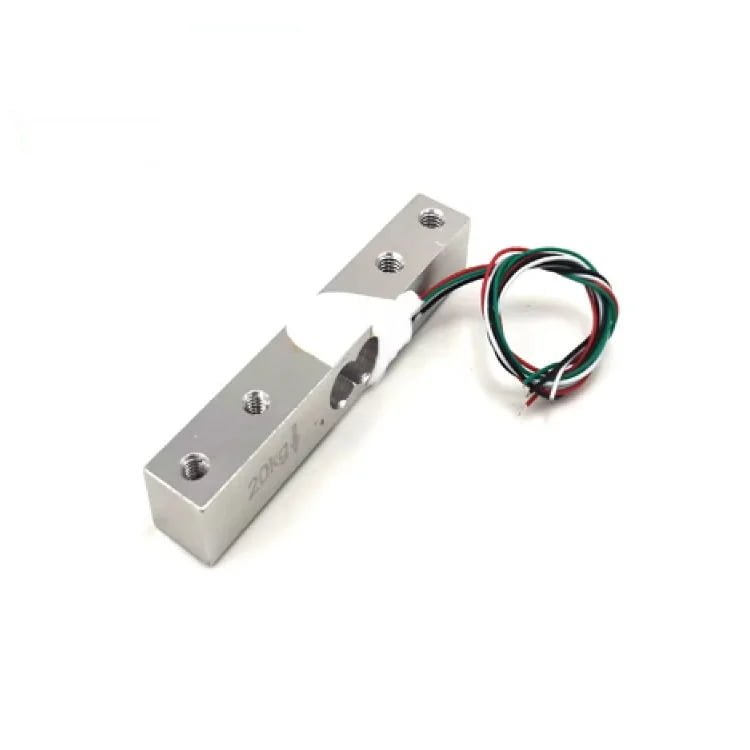
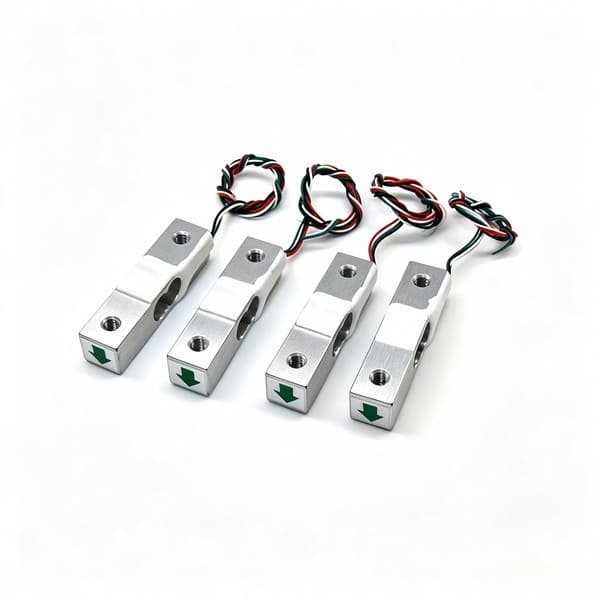
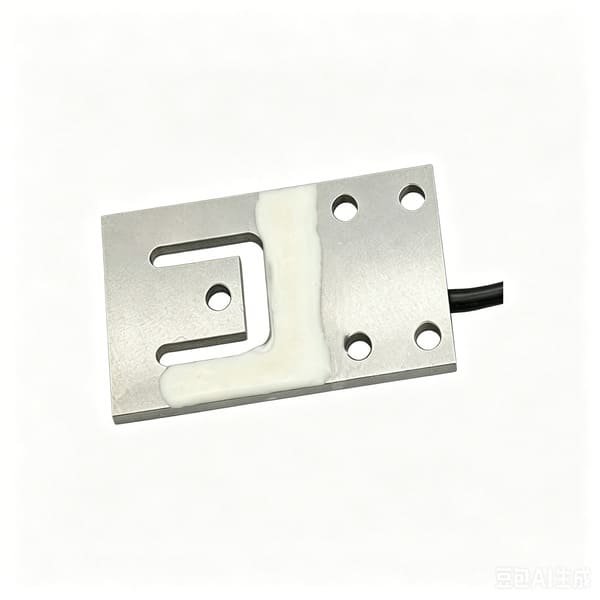
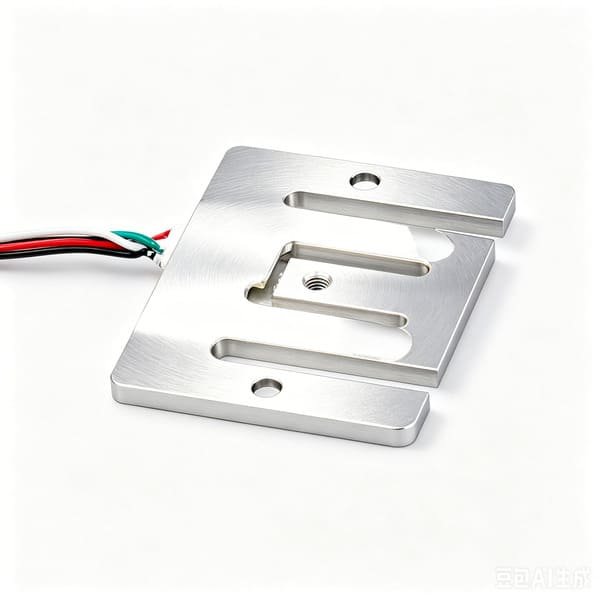
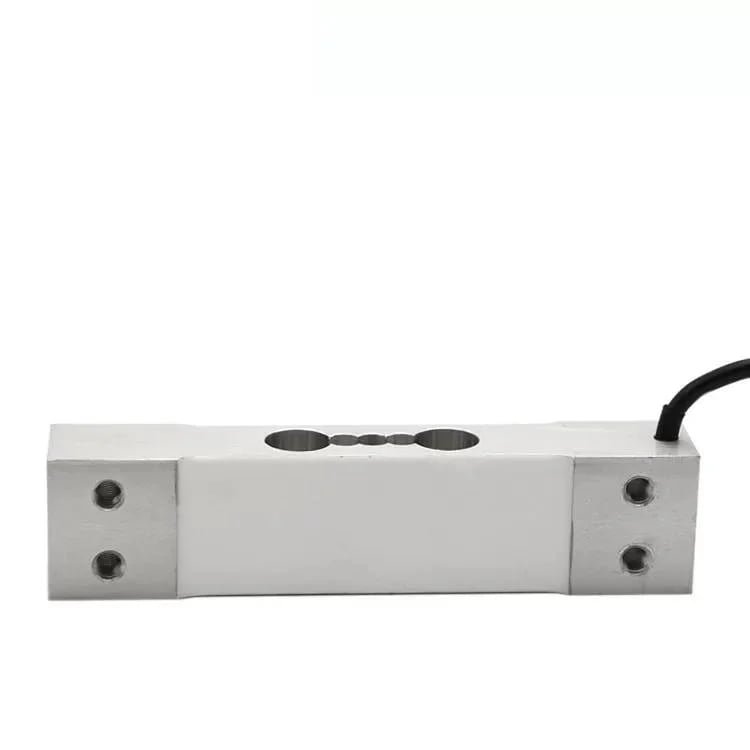
If you want the wider picture before choosing, the complete guide to load cells covers the families and their principles, and the selection guide walks the trade-offs between them.
Pan platform, additive compartment, junction box, indicator, matched output sets, cable and connector assemblies, and a test plan with the numbers recorded per shipment. Tell me the pan mass, the largest loaf, the smallest dose and the temperature at the cell — usually answered within 12 hours. Custom capacities, mounting patterns and cable lengths are routine work, and trial orders are welcome.