
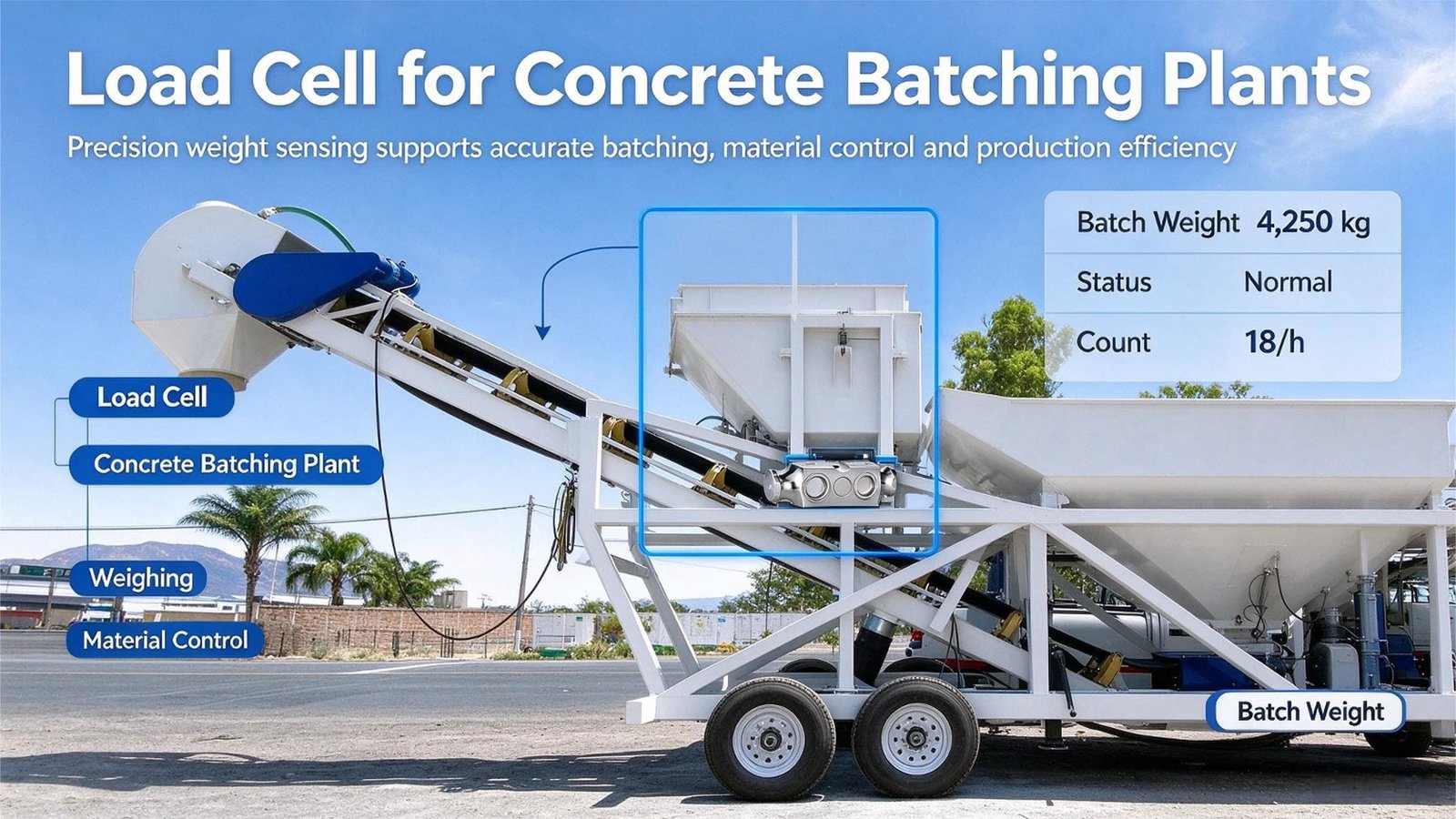
Load cell for concrete batching plants:How I size a weigher
A batching plant is not one scale. It is four scales with four completely different failure modes, wrapped in cement dust and standing outdoors in the weather. Here is the arithmetic I use to size them — and the three installations where the load cell turned out to be the last thing that was actually wrong.
Robin · Export Sales Engineer
~19 min read
ASTM C94 · EN 206 · IS 4925
Why a batching plant is not a weighing problem
I have been asked to quote load cells for concrete plants for a long time now, and the conversations almost always start in the same place: someone sends me a capacity, a quantity and a hole pattern, and asks for a price. That is a fine way to buy a part. It is a bad way to buy a weighing system, because in a batching plant the load cell is rarely the component that decides whether your concrete is in specification.
Here is the uncomfortable version of that claim, which I will prove with arithmetic further down. Under ASTM C94, a batching scale has to be accurate to the greater of ±0.15 % of scale capacity or ±0.4 % of the applied test load. A standard C3 load cell set, mounted properly, will land at something like ±0.03 % of full scale. In other words the weighing hardware is ordinarily five to ten times tighter than the tolerance it exists to serve. The scale class is almost never what puts a batch out of specification.
What does put a batch out of specification is a list of things that none of my datasheets describe: a flexible connection that quietly hardened into a rigid strut, a moisture probe reading 2 % while the sand is at 6 %, a junction box with condensation inside it, a portable plant that was reverified at commissioning and never again after it moved three times. This article is about those, and about where a load cell genuinely does carry the responsibility.
The scale of this industry, briefly
The ready-mix batching plant market sits around US$10.9 billion in 2025 heading to about US$13.6 billion by 2032 (roughly 3.2 % CAGR), with Asia-Pacific taking the largest share and stationary plants about 60 % of units. Around 74 % of newly installed plants now include automated weighing systems, and roughly 68 % of commercial construction worldwide uses ready-mix rather than site mixing. That last number is the one that matters to me: every one of those plants has four or more weighing scales in it, and every one of those scales has a load cell at the bottom of its error budget.
Four weighing jobs on one plant, and they share almost nothing
When I look at a batching plant dwg I mentally split it into separate weighing systems, because they need separate answers. Our own internal selection material puts it neatly: choosing a sensor for a mixing plant means weighing up the range, the accuracy, the available mounting space, the surrounding environment, the type of loading and the required service life — and different scales on the same plant weight those six factors very differently.
1. Aggregate batchers
3–4 cells per bin · 500–2000 kg each
Stone falling from a belt or skip. Shock-dominated, not accuracy-dominated. Tolerance ±2 % is wide; the enemy is impact and side load, so you buy overload margin and rocker hardware.
2. Cement & SCM scales
3–4 cells per silo · 300–2000 kg each
The tightest tolerance on the plant: ±1 %. Dust, fine divisions, screw feeders whose reaction you must keep off the weighed frame. This is where accuracy is bought cheapest.
3. Water scales
1–3 cells · 100–1000 kg
Measured by mass, this is the only part of the plant where ±0.15 % scale accuracy beats the ±1.5 % a flow meter can give you — which is exactly why some manufacturers now weigh it.
4. Admixture scales
1 cell · 25–200 kg
The finest divisions on the plant and the most aggressive media. A few kilograms of superplasticiser on a 50 kg scale. Corrosion and washdown decide the part, not the capacity.
To those four I would add a fifth measurement that is not a load cell but lives in the same error budget: the aggregate moisture probe. Keep it in mind, because in my experience it is responsible for a bigger share of out-of-specification concrete than all four scales put together — which is awkward, because I do not sell it and cannot help you with it.
A distinction I get asked about constantly
A batching scale (this article) is a process scale: it answers “did we just put in the right amount?” — fast, per cycle, repeatability-first. A silo or tank scale answers “how much is left?” — slow, absolute, long-term zero stability. Same vessel, same cells, opposite design decisions. If you are weighing the cement silo for inventory rather than the cement batcher for dosing, read the OEM guide to silo and feed tower weighing instead, or the field notes on silo weighing with micro-strain sensors.
The tolerance chain: what ASTM C94, EN 206 and IS 4925 actually require
Before I select anything I want to know which standard the plant is signed off against, because the numbers are not the same and one of them is materially tighter on my part. Here are the three I meet most often, side by side.
| Constituent | ASTM C94 | EN 206 / BS 8500 | IS 4925 |
|---|---|---|---|
| Cement / cementitious | ±1 % | ±2 % | ±2 % |
| Mixing water | ±1 % (metered) | ±2 % | ±2 % |
| Aggregate (fine / coarse) | ±2 % | ±3 % | ±3 % |
| Chemical admixture | ±3 % | ±2 % | ±3 % |
| Total batch mass | ±1 % cumulative | ±1 % | ±1 % |
| Weighing scale itself | greater of ±0.15 % capacity or ±0.4 % of applied load | per MID / national verification | per IS 4925 verification |
Three things fall out of that table and they matter commercially.
First, cement and water are the tightest, and both are measured by mass. They are tight because they set the water–cement ratio, and the w/c ratio is the single largest lever on compressive strength. That is good news for a load cell supplier: the two most critical measurements on the plant are the two where a load cell is the natural instrument.
Second, the tolerance on the scale and the tolerance on the material are different numbers, and they are independent. A scale can be perfectly inside its accuracy class and still produce an out-of-tolerance batch — if it is badly zeroed, loaded outside its useful range, or fed by a computer that thinks the sand is drier than it is.
Third, most plants that feed a fixed mix design do not legally need a certified scale at all. Internal process control needs no certificate. But the moment your weighing result determines what somebody pays for — trade settlement, a project specification, an audit — the certificate stops being paperwork and becomes a hard procurement requirement, and the responsibility for it sits with the plant and its verifying body, not with the component maker.
One more rule that bites
ASTM C94 limits discharge of ready-mixed concrete to 90 minutes, or 300 mixing-drum revolutions, after the cement first meets the aggregate and water — whichever comes first — unless a retarding admixture and testing justify otherwise. Your plant and your haul fleet have to be sized so every load discharges inside that window. It has nothing to do with load cells, and yet it is the rule that most often makes a plant buy throughput it does not need and a scale it cannot keep calibrated.
The scale accuracy rule almost nobody reads
Here is the rule, in the words the standard uses: the weighing equipment must be accurate to the greater of ±0.15 % of scale capacity, or ±0.4 % of the applied test load. NRMCA plant certification guidance repeats it the same way. The reason people misread it is the word greater. You do not get to pick the friendlier of the two; you take whichever is looser at the load you are testing at, and that flips around as the load rises.
The crossover is at 37.5 % of scale capacity. Below that, ±0.15 % of capacity governs and it is a constant number of kilograms. Above it, ±0.4 % of the applied load governs and the permitted error grows in proportion to what you put on the scale. So on a 3 000 kg aggregate scale the permitted error is 4.5 kg at any load up to 1 125 kg, and then grows: 7.2 kg at 1 800 kg, 12 kg at full scale.
Now put the real tolerance next to it. A 3 m³ batch carries roughly 1 800 kg of aggregate, and C94 allows ±2 % of that — 36 kg. The scale’s permitted error at that load is 7.2 kg. The scale is allowed to be five times tighter than the material it is measuring, and a competent C3 installation will be better than that again.
The conclusion I lead every technical meeting with
The load cell is not the limiting factor in a batching plant. Upgrading from a 0.03 % FS cell to a 0.02 % FS cell improves the plant’s accuracy by a fraction of a kilogram per batch. The same money spent on flexible connections that stay flexible, a level and grouted base, a corner adjustment, and a moisture probe that is actually being checked — that changes the number by tens of kilograms.
I would still rather sell you the 0.02 % cell, and I will quote it. But I am not going to pretend it is where your problem is.
Now do it for all four scales on a typical 1 m³ plant, and notice which one is actually my problem.
| Scale | Capacity / batch | Error the scale is allowed | Error the material is allowed | Headroom |
|---|---|---|---|---|
| Aggregate | 3 000 kg / 1 800 kg | 7.4 kg | 36 kg (±2 %) | 4.9× |
| Cement / SCM | 500 kg / 350 kg | 1.4 kg | 3.5 kg (±1 %) | 2.5× |
| Water | 300 kg / 175 kg | 0.7 kg | 1.75 kg (±1 %) | 2.5× |
| Admixture | 50 kg / 5 kg | 0.075 kg | 0.15 kg (±3 %) | 2.0× |
Read the right-hand column as how much room there is between what the standard lets the scale do and what the standard lets the concrete do. The aggregate scale has nearly five times of room — which is the arithmetic reason aggregate problems are almost always mechanical. The admixture scale has the smallest margin on the plant and the smallest capacity, and yet it is the scale nobody wants to spend money on. And the cement scale, with 2.5× of room and a ±1 % tolerance sitting on it, is where a load cell genuinely earns its keep.
The resolution question, so we can close it permanently: a 2.0 mV/V cell on 10 V excitation gives 100 mV at full scale. A C3 scale has 3 000 divisions, so one division is always 33 µV — on a 50 kg admixture scale exactly as on a 3 000 kg aggregate scale, because 1/3000th of full scale is 1/3000th of full scale whatever the capacity. A modern 24-bit converter resolving 100 mV across 5 000 000 counts is about 20 nV per count, which means roughly 1 600 counts inside every division. The µV per division is a property of the accuracy class, not of the capacity, and it is never the thing that fails you.
Weighing modules vs bare cells: what you are actually buying
A batching hopper scale can be built two ways, and the choice has very little to do with the sensor inside. A bare cell means the machine builder designs the weighing mechanism: the top and bottom plates, the loading nose, the anti-lift provision, the horizontal restraint that still allows thermal movement. A weighing module integrates all of that with the cell into one unit that you bolt between the structure and the vessel.
What a module removes is installation error — and given that we have just established the electrical chain is not the problem, that is where most of the remaining error lives. Our module range brings automatic centring, anti-eccentric-load geometry, horizontal restraint with thermal freedom, and in the larger versions an anti-overturn bolt that resists uplift, doubles as a jack so you can change a cell without emptying the vessel, and protects the cell during transport of the machine.
Be precise about the boundary
A weighing module fixes the mechanical error. It fixes nothing about the process error. In Case 3 below, no module on earth would have helped, because the problem was a conveyor that had become mechanically tied to the weighed hopper. Buy the module for repeatability and speed of build; do not buy it expecting it to decouple your machine for you. That is a drawing decision, and it is yours.
My rule of thumb for batching plants. If you build a standard plant in series and your mounting design is proven, buy bare cells — you will get the same result for less money, and you can service a single cell without pulling a module. If you are building a vessel scale for the first time, retrofitting onto an existing hopper, or if the cell has to be changed by a maintenance fitter on a Saturday, buy the module. If the plant is portable and gets moved, buy the module with the anti-lift provision, because that bolt is the thing that stops a cell dying in transit.
Case 1: the tidy-up that broke a cement scale, and the eight cells nobody needed
This is the case I use when somebody rings me to say “the load cells are damaged, send eight.”
A 45 m³/h mobile batching plant in Querétaro, Mexico had been relocated to a new site early in 2025. This is normal for a mobile plant — the whole point of the format is that it moves. What is also normal, and much less discussed, is that every standard I know requires the weighing system to be re-verified after a move. Portable plants are the one case where the calibration certificate has a shelf life measured in weeks, not months.
They skipped that. Six weeks later the plant supervisor was convinced he had a hardware problem: the aggregate scale was reading roughly 20 kg light at normal batch weight, and cement consumption was climbing. He had already had the cells quoted locally, and he sent me the same enquiry — 8 cells, capacities given, hole pattern attached.
Before quoting eight cells I asked for three readings, and I asked for them because in nine installations out of ten that produce this symptom, the transducer is innocent.
- An empty zero reading, hopper swept clean, taken cold and again after the plant had run for two hours.
- A corner test — one certified weight, walked around all four mounting points in turn, each corner read against the others.
- A two-point substitution test, at roughly 20 % and 60 % of the working range.
The results came back the same afternoon. The zero was stable within 0.5 kg across the temperature swing. Every one of the eight cells passed its impedance check and its insulation test. Not one cell was damaged. But the corner test showed leg 2 reading +9 % above the lowest corner, and the two-point test showed the scale 22 kg light at 1 200 kg applied — that is 1.83 % of the applied load, against the 0.4 % the standard permits. Nearly five times out.
What was actually wrong
Two things, both mechanical, both introduced during the move. There was a 0.6 mm disc of weld spatter trapped under leg 2’s mounting pad, so the pad no longer sat flat on the frame. And the anti-lift bolt on the same leg had been wound down hard against its stop, so that leg was feeding part of the hopper’s load straight into the plant structure instead of into the cell.
The sum of four cells only equals the weight if all four are free to move. A leg that is bolted to the frame is a leg that has left the scale — and it always leaves in the direction that makes you buy new cells.
The fix took one morning and about forty dollars of shims: jack the corner, clean the pad, re-level the frame with a machinist’s level rather than an eye, grout the base, back the anti-lift bolts off to roughly 1 mm of running clearance with the load on, then corner-trim on the junction box. Two-point error went from 22 kg to 1.4 kg — 0.12 % of applied load, comfortably inside the 4.5 kg the standard allows at that point on a 3 000 kg scale. They ordered two spare cells for the shelf instead of eight.
Two more findings went into their maintenance file. The cell shields had been grounded at both ends after the move, which is a ground loop and a noise path. And the installation crew had shortened the cement-scale cell cables to tidy them into the tray. That second one is serious enough that it gets its own section further down, because it is the single most common way a perfectly good load cell is turned into a drifting one.
What the 22 kg was costing, so the fix could be justified to a finance director rather than to an engineer: 22 kg on a 1 200 kg test load scales to roughly 34 kg on a 1 800 kg batch, which is 1.8 % of the aggregate. On a plant producing around 100 000 m³ a year that is about 3 300 tonnes of aggregate a year given away — on the order of US$65 000 at typical crushed-stone prices. The worse damage is not the money. It is that the plant was over-batching aggregate against the same cement weight, so it was shipping a leaner mix than the design and every batch ticket printed “target achieved.”
The lesson I keep repeating to plant managers: the batch ticket records the indicated weight, and the indicated weight is always exactly what the computer was aiming at. A batch ticket is a record of intent, not of fact. It cannot tell you that your scale is lying to you. Only a corner test and a substitution test can do that.
The rainstorm: 28 litres of water nobody ordered
I want to spend real space on this, because it is the largest single source of out-of-specification concrete in the industry and it has nothing to do with the parts I sell.
Sand and stone arrive at the plant carrying free surface water. That water is going into your mix whether you account for it or not. The batching computer’s job is to measure it, subtract it from the water you add, and add the equivalent mass back onto the aggregate target. When that measurement is right, everything is right. When it is wrong, the computer executes the mix design perfectly against numbers that are wrong — and produces a batch ticket that looks immaculate.
The instruments are microwave or capacitance probes in the aggregate bin or on the weigh belt. They are reliable in sand and marginal on coarse stone. Which is why most plants probe the sand and use a fixed assumption or slump feedback for the rest — a perfectly defensible compromise, as long as everybody remembers the sand is where the water is.
Now the arithmetic, and watch where the error sits relative to what a load cell can do.
Case 2: the weekend the sand went from 2 % to 6 %
A ready-mix producer in the Curitiba region of Paraná, Brazil, running a 32 MPa mix, called me in 2024 about a strength problem — not a weighing problem. Their 28-day cylinder breaks had been drifting low for a fortnight, worse in the mornings, and their response had been, quite reasonably, to suspect the cement.
Here is the mix, per cubic metre, and it is an ordinary one: cement 350 kg, water 175 kg, sand 700 kg, coarse aggregate 1 150 kg. Target water–cement ratio 0.50.
It had rained 48 mm on the Saturday night. On Monday at 06:30 the sand bin’s capacitance probe was still reporting 1.9 % moisture. It had last been verified by hand the previous Thursday. Nobody had checked it over the weekend, because the weekend is the weekend. The actual surface moisture in that sand was 5.9 %.
Here is what happened next, and I want to walk it slowly because the mechanism is the whole point.
What the computer did — and it did it flawlessly
Target dry sand 700 kg, probe says 1.9 % → it weighed 713 kg of wet sand. Free water it believed was present: 13 kg. Added-water target: 175 − 13 = 162 kg. Every one of those instructions was executed to better than ±0.4 %. The ticket was perfect.
What was actually in the hopper
713 kg of sand at a true 5.9 % moisture contains 673 kg of dry sand — 27 kg short of target — and 40 kg of free water. Total water in the mix: 162 (added) + 40 (in the sand) = 202 kg instead of 175 kg.
Actual w/c: 202 ÷ 350 = 0.577, against a design of 0.500.
Published industry figures put a 4-percentage-point sand-moisture error at roughly 700 kg/m³ sand content at about 28 litres of unintended water per cubic metre, a w/c increase of 0.07–0.08, and 8–12 MPa off the 28-day strength. On a 32 MPa design that is not a marginal result. That is a mix that has quietly become a different mix.
Meanwhile the load cells had been inside specification every single day. The aggregate scale was holding ±0.15 % of its 3 000 kg capacity — about 3 kg. The moisture error was 27 kg of dry sand equivalent. Nine times larger, and it arrived in one night without a single alarm.
What I told them to buy, and it was not my product: a properly installed in-bin capacitance probe for the sand, positioned where the material actually flows rather than where it was convenient to weld a boss; a mandatory manual moisture determination by drying on a hot plate or in a microwave (ASTM C566) at the start of every shift and after any rain event; and a written rule that the probe is not believed until the manual test agrees with it.
Then the part that does involve my hardware, and the reason I include this story in a load cell article: they already owned a weighbridge for dispatch, and they were not using it as an instrument. Cross-check the batch. Sum the batched weights, compare against what the truck actually weighs, and if the two disagree by more than 1 % you have found an error upstream of the scale. The truck scale cannot tell you which constituent is wrong, but it will tell you that something is — and it will tell you on the day, not on the 28-day break.
Why aggregate batchers eat load cells
Nearly every “the load cells keep failing” call I get from a batching plant comes from the aggregate side, and nearly every time the answer is that somebody has put a 150 % cell into a 300 % duty.
Stone does not arrive on a weighing hopper, it lands on it. The published advice is that aggregate weighing cells should carry 150–300 % overload margins and sit in self-aligning rocker or anti-lift hardware that absorbs vehicle vibration and thermal expansion of the support steel. That is good advice but it does not explain why the numbers look the way they do. So here is the arithmetic.
The impact factor for a mass dropped onto a compliant support is n = 1 + √(1 + 2h/δ), where h is the free-fall height and δ is the deflection of the weighing assembly under the load. Take a stone falling 300 mm onto a 1 000 kg cell that carries 462 kg statically:
| Assembly deflection δ | Impact factor n | A 5 kg stone looks like | Cell load: static + spike | % of rated |
|---|---|---|---|---|
| 0.5 mm (compliant) | 35.6 | 178 kg | 640 kg | 64 % |
| 0.1 mm (stiff and grouted) | 78.5 | 393 kg | 855 kg | 86 % |
| 0.1 mm, one 10 kg lump | 78.5 | 785 kg | 1 247 kg | 125 % |
Two conclusions, and the first one is counter-intuitive. The softer the weighing assembly, the lower the impact factor. A mount that yields half a millimetre under rated load cuts the shock spike by more than half compared with a rigidly grouted one. That is the opposite of what most people assume — they stiffen the frame to “protect” the cell and thereby double the force it sees. Some compliance in the mounting is protection, not weakness.
The second conclusion is the limit on that idea: too compliant and the hopper rings for 300 ms after the gates close, you cannot settle between batches, and the settling time is your batch cycle time. You cannot buy your way out of that with a faster A/D either, for the same reason I explained in the guide to wireless dynamometers: the bottleneck is mechanical, and it sits downstream of the converter.
The mechanical stop rule
Never set a mechanical stop close to the hopper. A stop that takes the shock also takes the reading — the load goes around the cell and the scale simply reads light for that batch. Set it 1–2 mm clear and accept that it is a last-resort insurance policy, not a working part of the design. And if you are dropping aggregate from much more than about 300 mm, that is a chute geometry problem to solve with a stilling box, not a bigger cell.
For the record, on aggregate duty I would quote a WST302 shear beam at 150 % safe overload with 0.03 % FS comprehensive error, a WST1403 double-ended shear beam where the geometry wants two fixed ends and a centre load, or a WST803 module at 150 % safe / 200 % ultimate when the customer wants the mechanism solved for them. But I would say out loud that 150 % is a floor and not a target, and that the mounting hardware matters more than the cell.
The hardened sock: a component that fails silently in the worst direction
Wherever a silo, a screw conveyor or a duct meets a weighed hopper, there has to be a flexible connection — a sock, a bellows, a sleeve — and it has to transmit nothing. The material weighs whatever it weighs. The connection must add zero force and subtract zero force.
The trouble is that cement dust plus a little humidity sets like plaster. A sock that has been in service two years does not look broken. It looks like a sock. But the folds have filled in, the material has gone hard, and what was a compliant sleeve is now a rigid strut. I have written before about how to tell whether a load cell is actually damaged; this is the failure that makes people think it is, when the cell is fine.
Why this one is so nasty
A rigid sock pulls weight off the scale and the scale reads light — which is the worst direction, because the plant then over-doses the material to reach the target indication. Over-dosing cement costs money and changes the mix. Had the sock been pushing down instead, the scale would read heavy, the plant would under-dose, and the concrete would come out weak — at which point everybody blames the cement supplier for six months. Which is exactly what happened in the next case.
Case 3: 960 tonnes of cement a year, given away
A precast producer in León, Guanajuato, Mexico, in 2025. A 1 m³ twin-shaft plant, 350 kg of cement per batch, and a suspended cement weigher on three S-type cells.
Their quality manager came to me with a purchasing complaint rather than a weighing complaint: cement consumption was running about 3.4 % above the mix design. For eleven months they had been pursuing the cement supplier over bag weights and delivery quantities. Nobody had tested the scale, because the scale was “new” and its calibration certificate was on the wall.
I asked for the substitution test they were supposed to be running twice a year. It showed the cement weigher reading 12 kg light at 300 kg applied — 4 % of the applied load, ten times the 0.4 % the standard permits, on the tightest tolerance in the whole plant.
The cause took four minutes to find once anybody looked at it. The fabric sock between the screw-conveyor outlet and the cement weigh hopper had hardened. Cement dust and humidity had set inside the folds until the sock was no longer a sleeve but a strut, carrying roughly 12 kg of the hopper’s weight up into the conveyor frame. The scale was reading light, the computer was dutifully adding cement until the indicated weight hit 350 kg, and the actual cement going into the mix was about 362 kg.
The arithmetic, and the line I use in every training session
12 kg extra per cubic metre on a plant producing around 80 000 m³ a year is 960 tonnes of cement a year — on the order of US$100 000 at delivered cement prices, and the single most expensive material in the mix.
And here is why it survived eleven months of scrutiny: the batch ticket showed 350 kg, because the ticket prints the indicated weight, and the indicated weight always came out at 350 kg. The ticket cannot tell you the scale is lying. Only a substitution test can.
The fix: cut off the hardened section, refit a longer sleeve with a proper slack loop instead of a tight span, add the three flexible connections on the plant to the weekly walk-round, and re-test. The substitution error went from 12 kg to 0.8 kg. Cement consumption came back to the mix design within a month, and the supplier got an apology.
If you take one maintenance habit from this article, take this one: walk round and squeeze every flexible connection on the plant once a week with your hand. If it does not flex, you are not weighing that hopper any more — you are weighing a fraction of it, and you have no way of knowing which fraction.
Six wires, a cable you must never cut, and one you must use properly
A batching plant has 40 to 60 metres of cable between the hoppers and the control cabin, running past 15 kW screw feeders and a mixer drive. There are three things about that wiring that matter, and the industry gets all three wrong in the same predictable ways.
The first is the six-wire cable you are not using. A load cell outputs a voltage proportional to the excitation it receives. Long cable runs drop that excitation through conductor resistance, and the drop changes with temperature because copper resistance does. The fix has existed for decades: a six-wire cable carries two extra conductors that measure the excitation voltage at the load cell, and the indicator’s remote-sensing function corrects for the loss. The coupling arithmetic is simple — 50 m of 0.5 mm² conductor is about 0.035 Ω/m, so roughly 1.75 Ω per conductor and 3.5 Ω around an excitation loop, which against a 350 Ω bridge is a one percent gain loss before the connector is even counted. Remote sensing removes it. Our WST1513 junction box is available in four, six and eight-channel versions precisely so the six-wire run can be done properly.
The second is that the cable attached to the load cell is not a cable. It is part of the load cell. A load cell is temperature-compensated at the factory, and that compensation includes the resistance of its own flying lead, because temperature changes the resistance of that lead and therefore the voltage reaching the bridge. Which means:
Never cut the load cell’s own cable
Shortening or lengthening the lead changes the factory calibration, because it changes the very resistance the compensation network was trimmed against. If the cable is too long, bundle it up neatly alongside the cell. Do not cut it. If you need a longer run, extend from a junction box on the far side of the cell’s lead, not by splicing into the lead itself.
This is not a vendor preference, it is in the datasheets: any change to the connection cable changes the factory calibration. And it is exactly what happened during the plant relocation in Case 1, where a fitter tidied three cement-scale leads down from 3 m to a few hundred millimetres and handed the plant a temperature coefficient nobody had bought.
Two related habits: route load cell cable in its own tray or conduit, away from motor and feeder cables, and where a crossing is unavoidable, cross at right angles. And ground the shield at one end only — normally the indicator end, broadband-tight to the earthed enclosure. Grounding both ends, as Case 1 had, creates a loop and gives every feeder start a path into your signal.
And one that surprises people who work on laboratory scales: the connectors matter as much as the cable. Contact resistance in a connector is tens of milliohms, and it changes with temperature and with age. The old industry answer was to buy ever-thicker cable to swamp the resistance. The modern answer is remote sensing, which corrects it — and which is effective enough that a small connector capable of six wires beats a large low-resistance connector that cannot pass the sense lines. Cheap nylon-bodied connectors deserve special suspicion: nylon absorbs moisture, moisture lowers insulation resistance, and low insulation resistance shows up as indicator drift. If you have unexplained drift on a plant in a humid climate, look at your connectors before you look at your cells.
The junction box is the most common cause of drift
If I had to name one component on a batching plant that causes more unexplained weighing problems than everything else combined, it would not be the load cell. It would be the small box on the frame where all the load cell cables meet.
A batching plant is a wet, dusty, outdoor electrical environment with a washdown hose somewhere on site. Moisture finds its way into junction boxes through poor glands and through covers that were sealed on a Tuesday and opened on a Friday. Once it is inside, it lowers the insulation resistance between the terminals, and because the signal is measured in microvolts, the effect is a visible zero drift that nobody can attribute to anything. The industry troubleshooting guidance is blunt about this — moisture ingress at the junction box is routinely listed as the single most common cause of drifting readings, and the standard remedy is to dry the terminal board, clean it, and then fix the sealing properly.
What I look for on a junction box
- A stainless or properly coated enclosure with real sealing glands, not cable entries left open facing upward.
- Potentiometers for corner trim, because on a hopper whose centre of gravity moves with filling and mixing, corner adjustment is not optional — and calibration cannot fix a corner error, only corner trimming can.
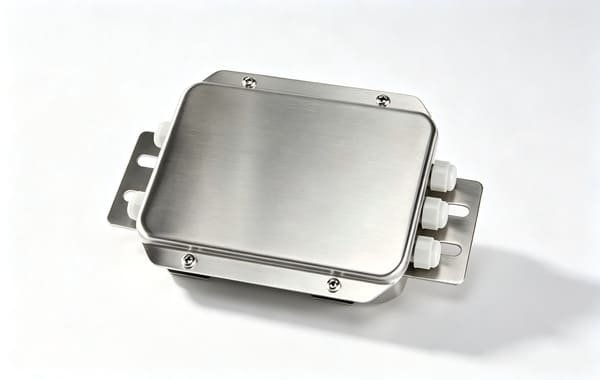
- Surge and inductive protection on the board. A batching plant tower is a lightning target and the cells are at the end of a long cable. Our WST1513 board carries anti-surge and anti-inductive protection components for exactly this reason.
- Enough channels for the cells you actually have — four, six or eight.
One more junction-box habit worth building: check the box after every heavy rain and after any washdown near the hoppers, and log the empty zero the same morning. A zero that has walked 3 kg overnight is a junction box telling you it is wet, a week before it becomes a complaint.
Calibration: the 10 % rule, substitution loading, and the portable plant exception
All three cases above would have been caught by one procedure that costs almost nothing and involves none of my parts. So here it is properly, because I would rather you ran it and never needed me than the reverse.
The requirement is to test the scale with certified test weights, and the minimum quantity of test weights is 10 % of the scale’s capacity. The aggregate scale usually governs the plant’s test weight inventory, because it is the biggest capacity on site — a 3 000 kg aggregate scale sets a 300 kg minimum, and on large plants that requirement is routinely well over a tonne of certified weight. Test weights must themselves be certified to 0.01 % of their indicated load, and within the previous two years. Check that arithmetic before you buy a weight set: a 4.5 kg permitted error on a 3 000 kg scale is not much room, and uncertified weights are a very expensive way to fail an inspection.
Substitution loading, in the order you do it
- Up to 50 % of capacity, build the test load from a combination of product and certified weights — the classic substitution method. Do not skip increments.
- The material left in the scale must only ever be loaded to the level you have already verified — as close as possible, so the substitution stays honest.
- Above 50 % of capacity, strain (product) test loading is permitted: charge an unknown quantity of material and verify the incremental indication with the weights.
- At least two points inside your normal working range, not just at the ends. A scale that is perfect at zero and full scale and 2 % out in the middle is a scale that will quietly ruin your morning production.
Frequency: at least every six months for the scales, the water meter and the admixture dispensers — and more often if a state or national road authority requires it, in which case the more frequent requirement governs. Water meters must be accurate to ±1.5 % and verified with a volume of at least about 50 gallons (roughly 190 litres). Admixture dispensers must hold ±3 % of the required quantity.
Two details in that paragraph are worth pulling out. First: if the water is measured by weight rather than by flow, the scale rules replace the meter rules — and the scale acceptance criterion is the greater of 0.15 % of capacity or 0.4 % of applied load, against a flow meter’s ±1.5 %. That is roughly a tenfold tightening, which is precisely why weighing is the better instrument for the two tightest constituents in the mix. Second: the verification must be documented as data — test loads, increments, indications, errors. Industry guidance is explicit that a certificate simply stating the scale is “OK” is not acceptable.
The portable plant exception — the one everybody forgets
Scale accuracy must be re-verified any time a portable plant is moved, any time maintenance work touches the weighing system, and any time the batchman or the quality team raises a doubt. Case 1 in this article is a mobile plant that was reverified at commissioning and then moved. Six weeks later it was 1.83 % out on the aggregate scale. If your plant travels, your verification schedule travels with it — and the anti-lift bolts and the mounting pads are the parts that need looking at every single time.
The truck scale is the referee
Here is the idea that ties this article together, and it is the same idea I keep coming back to across very different industries.
The batching computer is a control loop. The weighbridge is a referee. A control loop runs fast and repeats reliably, and it will happily integrate a small systematic error into a large one — that is exactly what happens when a cement weigher reads 12 kg light and the computer spends eleven months faithfully adding 12 kg to every batch. A referee is slow, independent, and answerable to nothing but the truth, and its job is to tell you when the control loop has drifted. Swap the two roles and both fail.
IS 4925 caps total batch mass at ±1 %, and the practical way to check that is not inside the batch computer. It is to weigh the truck: compare the sum of the batched weights recorded on the ticket against the loaded-versus-tare difference on the dispatch weighbridge. If the two disagree by more than 1 %, you have a multi-component error and you have found it the same day. That single check would have caught the Paraná moisture problem and the Guanajuato cement sock without anybody opening a datasheet.
And this is why the industry keeps moving water onto the scale
A flow meter is accepted to ±1.5 %. A scale is accepted to 0.15 % of capacity. On the constituent with the single largest effect on strength, a factor of ten is worth having — and it is not a sensor argument, it is an instrument-selection argument. One Mexican batching plant manufacturer, HEGAMEX in Atotonilco el Alto, Jalisco, states plainly that it was the first in Mexico to implement electronic water weighing on batching plants instead of flow meters, on the grounds that it measures by weight, not by volume, keeps the water–cement ratio exact, and is easy to calibrate. They build the ZEUS line, 32 to 75 m³/h, mobile and stationary, with load cells, junction box and digital indicator — the three parts I supply, made into a machine by somebody else. When you see that claim in a machine builder’s brochure, the trend is real.
I am not affiliated with them and I am not recommending them. I am pointing out that they are the layer above me, and that the trend they are describing is the reason a weighing supplier gets called at all.
What I supply, and what I do not
I export weighing components. I am not a batching plant manufacturer and I am not a systems integrator, and the honest version of that boundary is more useful to you than a capability statement. So here it is as two columns.
What I do supply
- Load cells across the families a batching plant needs — compression, tension, S-type, shear beam, double-ended, column and spoke, plus integrated weighing modules.
- Matched cell sets with tested output data, so you can parallel four legs without spending a morning fighting the corner trim.
- Stainless multi-channel junction boxes with corner-trim potentiometers and surge protection.
- Multi-channel indicators for the static duties — silo inventory, dispatch weighbridge, manual check weighing.
- The full electrical data you need to do your own error budget: mV/V, input and output impedance, creep, temperature effect on zero and on span, IP rating.
- A calibration protocol and test-weight schedule matched to the standard you are verified against.
- Load distribution and corner-trim guidance, mounting hardware selection, anti-lift and rocker advice.
- Custom capacities, custom cable lengths, custom hole patterns and special materials.
What I do not supply
- The plant itself — bins, gates, pneumatic actuators, conveyors, mixer, dust collection.
- The batch computer, the mix-design software, the PLC, or the moisture-compensation algorithm.
- Moisture probes. Capacitance and microwave probes are a specialist product and you should buy them from a specialist.
- Any legal metrology certificate for the plant: NRMCA plant certification, NTEP or Handbook 44 verification, MID 2014/32/EU, or an IS 4925 verification. Those belong to the plant and its verifying body.
- HACCP or food-contact certification, and hazardous-area system certification.
- End-to-end onboard weighing integration on the mixer trucks.
- Commissioning of somebody else’s control system.
The certificate sentence that matters most in this article
OIML R60 is a component-level certificate. It says something specific and limited about a load cell. It does not approve a scale, it does not approve a batching plant, and it does not approve a control loop. Where a plant needs a certified weighing result, the instrument-level and system-level approvals — OIML R76, EN 45501, MID, NTEP, NRMCA plant certification — sit with the plant and the verifying authority, not with me. I will send you the R60 documentation for the models that hold it and I will not upgrade that into a claim about your plant.
And the honesty I owe you on ratings: our catalogue cells are IP65 to IP67 and rated −20 to +65 °C. That is correct for aggregate and cement weigh hoppers under a roof or in a covered plant. It is not sufficient for an admixture scale that gets hosed down nightly, or a coastal plant with salt air. For those you want IP68 and 316L, and that is a custom part, not a catalogue line. I will tell you that at quotation stage rather than after the first failure.
When I tell you not to buy a load cell from me
These are the five conversations where the right answer is not a quotation. I have had all of them.
| What you ask me for | What I say |
|---|---|
| A better load cell to fix inconsistent slump | Buy a moisture probe, a drying oven and a rule that says you test the sand every shift. This is not a weighing problem and a load cell cannot touch it. Case 2. |
| A bigger cell because the aggregate cells keep dying | First tell me the free-fall height and what the mounting looks like. If there is no rocker, no compliance and no stop clearance, a bigger cell buys you a season, not a life. |
| Certified parts, but we are not going to recalibrate | Then the certificate is decoration. An untested C3 scale and an untested cheap scale fail in exactly the same way. The three cases in this article are what an uncalibrated plant looks like from the inside. |
| A catalogue cell for the admixture scale | No. Superplasticiser through a pinhole will destroy the gauge grid quietly. You need 316L, IP68, hermetic, and I will quote that as a custom — or you should buy it elsewhere. |
| A verified plant, so send the certificate with the sensors | I cannot. R60 is component-level. Verification is your plant, your weights and your inspector. I will support the documentation and the test protocol, and that is the whole of what a component supplier can honestly offer. |
Inside the quote: what to send me
I would rather answer eight questions once than exchange twenty emails. If you send these, I can normally come back inside a working day with a matched set, a junction box, an error budget and the calibration schedule — and I will tell you which of the answers you gave me is the one that decided the part.
- Which scale, and what duty. Aggregate batcher, cement or SCM weigher, water, admixture, belt weigher, silo stock, or dispatch weighbridge. These are five different answers.
- Capacity and normal batch weight. Not just the capacity — I need the working point, because a scale that runs at 90 % of full scale has no room for a shock and no room for a temperature coefficient.
- How many cells, and how the load is carried. Compression on the legs, suspended on rods, or a module between two plates. And a sketch of the load path, however rough.
- Indoors or outdoors, covered or not, and whether it gets washed. This decides IP rating and material, and it is the question people leave out.
- The cable run from the hopper to the control cabin, in metres. It decides whether you need a six-wire run and remote sensing, and whether surge protection is worth specifying.
- What the indicator is. Does it support six-wire remote sensing? Does it have the input for the number of channels you want? Is it already installed, because retrofitting a wiring scheme is the expensive part.
- The admixture chemistry, if it is that scale. Sealed units for washdown, and 316L if the chemistry is aggressive.
- The standard you are verified against, and who signs the certificate. ASTM C94, EN 206, IS 4925 — and whether the weighing result determines payment.
Frequently asked questions
How many load cells does a concrete batching plant scale need?
Aggregate batchers and cement or SCM weighers normally use three or four cells each. Three is statically determinate and avoids the rocking problem; four gives you better load distribution over a rectangular hopper but must be corner-trimmed. Water and admixture scales are usually one or two cells, because the vessel is small and the load path is simple. More cells also means more summing error at the junction box — you gain load capacity but you add drift paths.
What accuracy class should batching plant load cells be?
C3 is the normal answer and C4 is available. But understand what you are buying: the standard permits the scale to be off by the greater of ±0.15 % of capacity or ±0.4 % of applied load, while a properly mounted C3 set will be five to ten times tighter than that. Upgrading the class usually buys you less than fixing the mounting, the flex connections and the moisture probe. Buy the class your verifier needs and spend the rest of the budget on the mechanical side.
Compression or tension load cells for a cement weigher?
Both work, and the choice is about keeping the screw feeder off the weighed frame. Suspended tension — an S-type cell hanging the hopper from the plant structure — decouples the hopper from the frame, so the screw conveyor’s reaction and thermal growth in the support steel have a much shorter path to the cells. Compression cells under the hopper are simpler to build but need proper flex connections on every inlet or they will read light. On the tightest tolerance in the plant, I lean towards suspended.
Why does my batching scale read differently in the morning and the afternoon?
Check four things in this order. First, is the empty zero walking at all? If it is, suspect moisture in the junction box or a wet connector before you suspect the cell. Second, has anybody cut or extended the load cell’s own flying lead — that invalidates the factory temperature compensation and shows up exactly like this. Third, is the plant in direct sun with one leg warmed more than the others? Fourth, is the cable run four-wire when it should be six? A cell’s own temperature effect is usually a fraction of a kilogram per ten degrees; if your drift is bigger than the datasheet by a factor of ten, the cause is not the cell’s inherent behaviour.
Can I use a load cell instead of a flow meter to control batching water?
Yes, and it is the better instrument for this measurement. A flow meter is accepted to about ±1.5 %; a scale is accepted to the greater of ±0.15 % of capacity or ±0.4 % of applied load — roughly ten times tighter. Water is one of the two constituents that set the water–cement ratio, so the tightening is worth having. What you must do is decouple the water hopper from the pipework with a flexible connection and make sure the tank stand is not also carrying anything else.
How often should a concrete batching plant scale be calibrated?
At least every six months, with a daily zero check and a weekly partial-load check in between. More often for high-volume plants, for plants with vibration problems, and whenever a road authority requires it. And after every move of a portable plant, after any maintenance touching the weighing system, or whenever anybody raises a doubt about accuracy. The verifier needs the recorded data — test loads, increments, indications and errors — not a certificate that says “OK”.
Do I need OIML R60 certified load cells for a batching plant?
Only if your verification regime asks for them, and only when the weighing result actually determines payment or compliance. If the plant is doing internal process control against a fixed mix design, you may need no certificate at all. If the answer to “does this weight decide what somebody pays?” is yes, then the certificate becomes a hard procurement requirement — and remember that R60 is component-level. The instrument and system approvals (R76, EN 45501, MID, NTEP, plant certification) belong to the plant and its verifier, not to the cell supplier.
How much certified test weight does a batching plant scale need?
At least 10 % of the scale’s capacity, and the largest scale on site sets the requirement — which usually means the aggregate scale governs the whole plant’s weight inventory. The weights themselves must be certified to 0.01 % of their indicated load within the previous two years. Test through at least two points in your normal working range, and use substitution loading below 50 % of capacity so you are not buying half a tonne of weights you do not need.
Can I mix load cells of different capacity or different output on one scale?
Technically you can parallel cells of different capacity, but do not do it on a scale you care about. Mixed capacities put different loads into different cells and mixed sensitivities (mV/V) make the sum depend on where the weight sits — so your corner trim becomes a moving target and your reading starts tracking the load position. Use the same model, same capacity, same accuracy class and same sensitivity across the set, ideally from one production batch, and ask your supplier for the tested output figures so you can match them before installation.
What IP rating do batching plant load cells need?
Aggregate and cement weigh hoppers in a covered plant: IP67 minimum, hermetically sealed, with surge protection on the lines, and a dust consideration because settled dust on a sensing surface introduces error. Water scales and anything that gets washed: IP68. Admixture scales: IP68 plus 316L stainless, because the chemistry is aggressive and a pinhole in the potting will let it reach the gauge grid. Outdoor coastal plants: IP68 and 316L for everything, plus genuine attention to the connectors, because salt air plus nylon connectors is a drift generator.
The nine parts I would quote for a batching plant
Mapped to the four weighing jobs above, so you can see which part belongs to which scale rather than reading a catalogue in the dark. Capacities and specifications are from the current datasheets; anything not listed here, ask me and I will tell you whether it exists or whether it has to be a custom part.

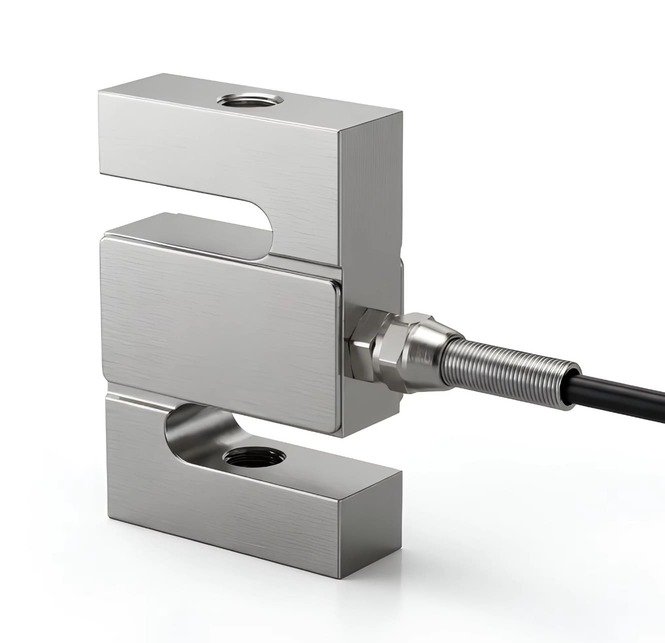
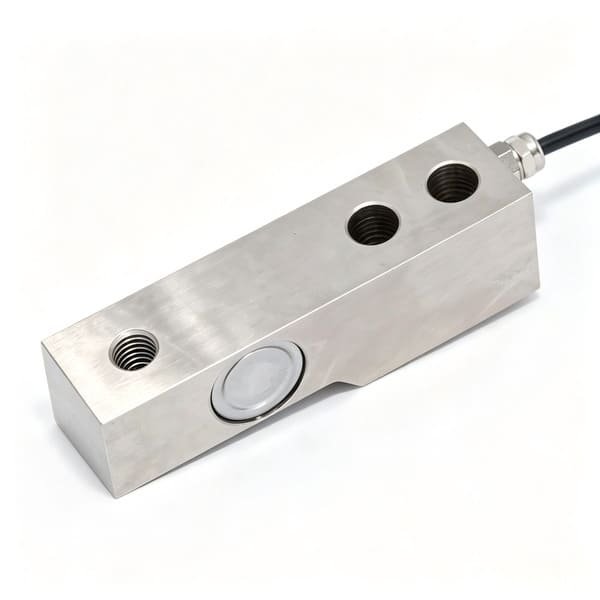


Two more parts worth asking about even though they are not the headline: the WST503 for belt-scale and batching-scale duty where you want a compression element with an optional 4–20 mA or 0–5 V output, and the WST511 canister cell in C3/C4 where a silo sits on a fully welded, IP67/IP68 column load cell.
Send me the scale, not just the capacity
Tell me which of the four scales you are building, and I will send back a matched cell set, a junction box and an error budget
Aggregate batcher, cement weigher, water or admixture scale — put the capacity, the batch weight, the number of cells, the mounting and the cable run in one email, and I will answer within a working day. Trial orders welcome, and if the honest answer is that you should be buying a moisture probe instead of a load cell, I will say so.
VektorForce · www.vektorforce.com · Robin@vektorforce.com · +86 15829026027