


A pet scale weighs a load that walks on, walks off and edits itself, so the arrival, not the residence, sizes the cell.
If you are specifying a load cell for pet scales, there are three numbers you need before any datasheet matters — and none of them is the accuracy class. A smart electronic pet scale is the only weighing instrument I sell where the load walks on by itself, walks off by itself, and edits itself between two readings. In eleven pet-tech programmes since 2022 I have never once found the load cell to be the fault. What I have found is a platform sized for the animal’s residence instead of its arrival, a four-beam deck whose corners disagreed by 38 g before the cat ever stood on it, and an owner trying to read a 25 g weekly change through a 250 g daily glass of water.
A 10 g display over a 30 g hardware floor
4.99 × body weight on arrival
A trotting forelimb: 125 % BW in 0.278 s
GPSR (EU) 2023/988 · IEC 61010-1
1. A pet scale is three instruments in one housing
“We need a load cell for our pet scale” is one sentence hiding three instruments that share a housing and nothing else. They have different accuracy demands, different speeds and different failure modes, and the reason so many pet scales ship disappointing is that the same cell is asked to do all three at once.
| Job | What it needs from the sensor | What it usually gets wrong |
|---|---|---|
| Absolute weight “How heavy is my dog?” |
Accuracy and linearity. A 2 % error is invisible to the owner. | Nothing much. This is the easy job, and it is the one every datasheet is written for. |
| Trend “Is he losing weight?” |
Repeatability, zero stability and creep — over weeks, at the same hour, on the same platform. | Everything. A scale can be perfectly accurate and still show a trend line that is really a thermometer. |
| Identity “Which cat is this?” |
Resolution finer than the difference between the animals. | It gets sold a better sensor for a problem that is not sensor-shaped. |
The commercial reason these enquiries keep arriving is that connected pet devices are now a category with real money in it. One research house puts the smart pet technology segment at USD 1.73 billion in 2025 rising to USD 5.44 billion by 2033, a 15.4 % CAGR, with health-monitoring devices named as the fastest-growing slice. Other houses are more bullish still, and they disagree by a factor of three on the base year, which tells you something about how young the category is.
The clinical reason is harder to argue with. The Association for Pet Obesity Prevention’s 2025 owner survey found 43 % of cat owners and 37 % of dog owners describing their pet as above ideal weight, up from 33 % and 35 % a year earlier. More owners than ever are trying to help: 56 % of dog owners and 53 % of cat owners reported a weight-loss effort. And only 28 % of the dogs and 19 % of the cats actually reached a healthy target. The same survey found the reason tucked away in a footnote — only 16 % of dog owners and 3 % of cat owners weigh the food at all. Everyone else estimates with a scoop.
I make the sensing hardware: load cells, the summing junction box, the indicator or the digital output, and the matching test data that tells you what a set of four cells actually does when it is wired together. I do not make the enclosure, the deck, the firmware, the averaging filter, the app or the radio, and I do not sell a finished pet scale.
That boundary matters here more than in almost any other article I have written, because in a pet scale the largest single error source is a decision made by the mechanical designer, and the second largest is a decision made by the firmware engineer. Neither of those is my component. What I can do is tell you exactly what your platform will do before you cut the tooling, which is worth more than a tighter cell.
One more thing before the numbers, because it comes up in every first call. A pet scale is not a baby scale with a different logo on it. A 20 kg / 10 g infant scale rests on the assumption that the subject lies still in a shaped tray and is placed there by someone who is trying to weigh it. A cat is placed there by nobody, has no interest in the outcome, and will leave. The electronics are nearly the same; the mechanical design and the protocol are not. If you are coming from infant or medical baby scale weighing, read the arrival and single-limb sections carefully — that is exactly where the design carries over and then stops.
2. Four places to put the cell
There are four architectures in production pet scales. They differ far more in what they cost you downstream than in what they cost per unit.
| Architecture | Typical total capacity | What it buys you | What it costs you |
|---|---|---|---|
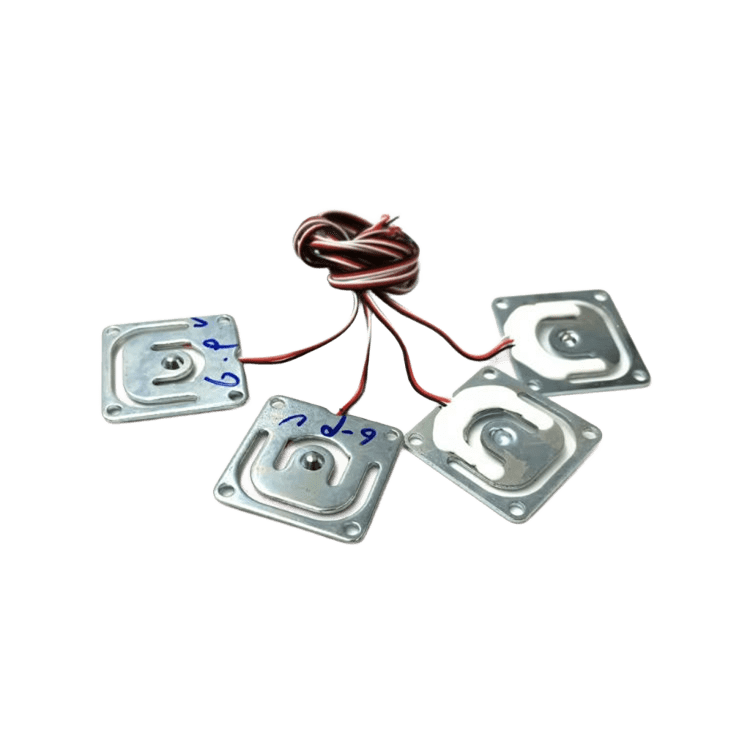
| A. Four half-bridges under the deck corners | 4 × 5 to 4 × 100 kg (total capacity = 4 × single) |
Cheapest and flattest. The only family here that publishes an excitation window starting at 3 V, so a two-cell battery or a coin cell can drive it directly. Wiring is three wires per cell. | The four cells end up in one bridge, so an uneven mechanical preload stops looking like a corner error and starts looking like zero offset and temperature drift. |
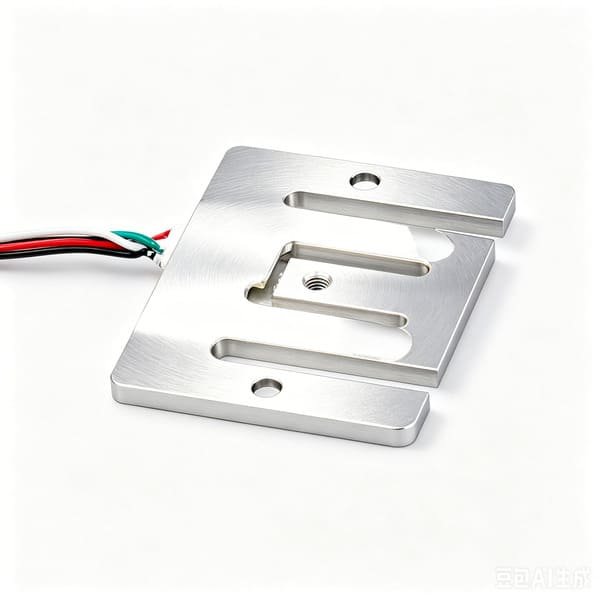
| B. Four planar beams at the platform corners | 4 × 7.5 to 4 × 600 kg | A practical unlimited platform size, very low profile, and the best overload margin in the family (150 % safe / 200 % ultimate). | As the datasheet says out loud, most planar beams are not corner-adjusted. If you leave the four outputs unmatched, position becomes an error source. This is Case 2. |
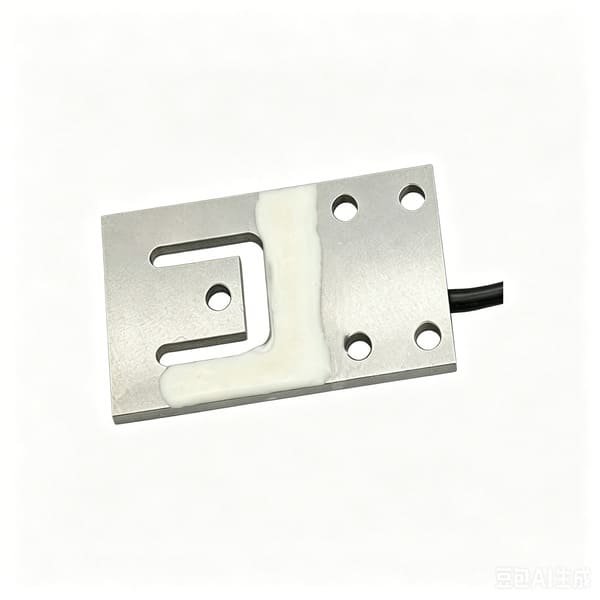
| C. One single-point or parallel-beam cell at the platform centre | 50 kg to 500 kg, one cell | No corner problem at all and the best error specification available (0.02 % FS, C3) — a 50 kg cell gives a 10 g error floor, which is better in grams than any 0.05 % cell in the range. | The published minimum range is 50 kg or 100 kg. Put a 3 kg kitten on it and you are reading 6 % of capacity. It is the large-dog architecture. |
| D. A pad under something the pet already uses | Object + pet. A litter box is 15–30 kg before the cat gets in. |
No new behaviour to teach. Litter-box weighing earns its keep this way, and it is the only architecture where the weighing can double as a safety interlock. | The object’s own mass is the tare, and the object is a tent that the cat can lean on. Every wall, hood and litter-box rim becomes a route for load to bypass the cell. |
If your product is a flat weighing pad for cats and small dogs, architecture A with a matched set of four half-bridges is almost always the right answer, and it is what the 20 kg / 10 g reference instrument in this category is built on — four 5 kg half-bridges, 20 kg of total capacity, 10 g of display division. If you are building a walk-on deck for a 45 kg Labrador, architecture C is worth the extra money because a single cell removes a whole class of error that you would otherwise have to manage in production.
A resistive cell only measures what moves. Plan on 0.5 mm of usable deflection at full scale and at least 1 mm of free travel before anything touches a stop. On a low-profile pet pad that budget is the hardest part of the whole mechanical design, and it is the one that a decorative moulding, a rubber foot or a screw boss will quietly eat.
It is also why a pad under an existing litter box is harder than it looks: the box wants to sit flush on the floor, and a flush box transmits load straight through to the floor around the cell. If you want to see what that failure looks like when it is stable rather than intermittent, the standing-plate version of it is written up in tank and silo weighing systems.
3. The last digit is the error bar
Here is the arithmetic that decides whether a pet scale is worth building. Start from the reference instrument the category settled on: 20 kg capacity, 10 g display division, 50 g start weight, 3 V supply. That is one part in two thousand. It is also, almost exactly, the resolution every veterinary weight-management guide tells an owner to look for — “a scale accurate to 0.01 kg”.
Now look at what a 10 g division actually is. 10 g on 20 kg is 0.05 % of capacity — and 0.05 % FS is precisely the comprehensive error of every small load cell in this application. The display division and the error specification coincide. That is not a coincidence you should be pleased about. It means every press of a paw that moves the last digit is moving it by one error bar. A scale whose last digit is its own uncertainty cannot tell you whether that digit just changed because the animal did.
Then add the number that no datasheet contains, the one that comes from the animal. A healthy cat drinks roughly 40–60 mL per kilogram per day; a dog 60–80. Take the middle of the cat band and a 5 kg animal: 250 mL of water a day, which weighs 250 g, which is 5 % of its body weight, every single day. Meanwhile the veterinary target for safe feline weight loss is 0.5–1.5 % per week — for that same cat, 25 g to 75 g per week, or 3.6 g to 10.7 g per day.
| Number | Where it comes from | Grams | Display divisions |
|---|---|---|---|
| Display division | Your specification | 10 g | 1 |
| Hardware floor forced by the arrival | 4-cell platform, 0.05 % FS | 30 g | 3 |
| The animal’s own daily water | 50 mL/kg/day, 5 kg cat | 250 g | 25 |
| The fat you are trying to see, fastest | 1.5 %/week | 75 g per week | 7.5 |
| The fat you are trying to see, slowest | 0.5 %/week | 25 g per week | 2.5 |
Read the last two lines together. The change you are trying to detect is between two and a half and seven and a half display divisions per week, and the animal moves its own reading twenty-five divisions before breakfast. For a 30 kg dog the ratio is gentler but still not kind: 60–80 mL/kg/day is 1,800 g to 2,400 g of water, against a 1–2 %/week target of 300 g to 600 g. The water is 21 to 42 times the fat signal per day.
A 30 g hardware floor on a 5 kg cat is 0.60 % of body weight. The daily water swing is 5 %. The animal is eight times louder than the electronics. Which means that if your trend line is noisy, the load cell is almost certainly not your problem, and buying a tighter cell will not fix it.
I have talked three customers out of a tighter cell on exactly this arithmetic. The fix is a weighing protocol — same hour, fasted, after the litter box, and only ever compare readings taken under the same conditions. Do that and a 30 g floor becomes sufficient. Skip it and a 3 g floor is still useless.
A creep figure is a promise about minutes. WST102 publishes ±0.05 % FS per 3 min; the 50 kg single-point cells publish ±0.02 % FS per 30 min. A pet pad that is zeroed once at the factory and then left on a floor for a month is asking a three-minute specification to hold for thirty days, and it will not. Over a three-second weighing the same cell moves 0.042 g, which is nothing.
So: design in an auto-zero. Re-tare with the platform empty before every recorded reading, or on every wake from sleep. No load cell I sell promises a month, and any supplier who says theirs does is quoting a three-minute number at you.
One useful consequence of that: if you re-zero before every weigh-in, a whole family of errors cancels with it — temperature drift on zero, creep recovery, and the slow set that follows a hard landing. Section 8 shows what happens when you do not.
4. Case 1: what arrives is not what stays
A connected-device company in Hangzhou came to me in the autumn of 2025 with a flat cat weighing pad. Four WST102 half-bridges at the deck corners, 5 kg each, 20 kg of total capacity, a 10 g display and an app that drew a lovely trend line. They had shipped a few thousand units and the field data was wrong in a specific and interesting way: cats were gaining weight. Not some cats. Cats in households that returned the unit had gained a median of 96 g, and the worst returned units read 310 g heavy against a certified 5 kg weight — 6.2 % on a 5 kg animal, which is not a cat, that is a small dog.
My first instinct was the firmware, because a positive offset in a scale usually is. Their engineer had already ruled it out. So I asked for the correlation instead of the mean, and there it was: the drift tracked the age of the cat. Households with cats under three years old averaged +168 g; households with cats over eight, +54 g. A factor of 3.1 between the playful cohort and the sedentary one, on identical hardware and identical firmware.
That correlation is the whole diagnosis. Nothing about being young makes a cat heavier. What a young cat does is jump onto the pad, and what a jump does is this:
| Step | Value | Meaning |
|---|---|---|
| Drop height | 0.50 m | A cat leaving a sofa, a table, a windowsill. Ordinary. |
| Impact velocity | 3.13 m/s | v = √(2gh) |
| Stopping time | 80 ms | Paw to full contact on a compliant pad |
| Deceleration | 39.15 m/s² = 3.99 g | a = v/t |
| Peak force | 244.8 N = 24.96 kg | F = m(a+g). That is 4.99 × the cat’s weight. |
| Worst-corner share on a 4-point deck | 60 % → 14.97 kg | A rigid deck with the load over one support does not divide evenly. |
| Against a 5 kg cell | 299 % of rated | Safe overload is 120 %, ultimate overload 150 %. This is twice the survival limit. |
So the pad was being driven to twice its cells’ ultimate overload every time a young cat used it. The reason nobody noticed for nine months is the same reason the failure is so nasty: the firmware averaged the peak away. A 40 ms spike inside a two-second averaging window raises the displayed value by a few grams and disappears. The cell, meanwhile, took a set. Permanently. Positively. In proportion to how often it happened.
This is the single most important design rule in the whole article, and it is the one that costs the least to obey: size the cell for the arrival, not for the residence. Four times the resting body weight is the working number for a cat that is allowed to jump on the pad. A 5 kg cat needs cells of at least 10 kg just to survive, and 15 kg to stay comfortably inside the safe-overload band; the arithmetic falls out as 14.97 ÷ 1.5 = 9.98 kg for the ultimate limit and 14.97 ÷ 1.2 = 12.48 kg for the safe limit.
Two things, and neither was the cell’s accuracy. First, the cells went from 5 kg to 10 kg. Second, and this is the cheaper half of the fix, we put a mechanical landing stop under the deck: a compliant bumper that lets the free end travel its 0.5 mm, then bottoms out and carries anything beyond about 15 kg per corner straight into the frame. The cell never sees the fourth multiple of body weight; the frame does.
Cost of the change: cells from 5 kg to 10 kg (a smaller jump than it sounds — half of WST102’s published range is under 50 kg), plus a two-shot bumper in a mould they already had. What it bought: the platform’s error floor went from 10 g to 20 g and the cells stopped taking a set. Same firmware, same app, same enclosure, same display. And the trend lines, three months later, were flat for the cats that were actually maintaining weight.
If you take one diagnostic away from this case, take the direction of the drift. A positive zero offset that correlates with how energetic the animal is means landing overload, not firmware. Zero drift from thermal effects goes whichever way the room goes. Zero drift from an impact goes one way, and it goes further in the units that play hardest. I have used this test four times since, and it has never once let me down. If you want the systematic version of it, it is in how to determine whether a load cell is damaged.
5. Case 2: you never weigh a whole dog
The second thing about a living load is that it is not applied all at once and not held in one place. There is good published data on this, and it is worth knowing because it breaks the intuition that a pet scale is a static instrument with a slow animal on it.
Force-platform gait studies of clinically normal dogs report a peak vertical ground reaction force of 106.7 % of body weight on a single forelimb at a trot — 65.1 % on a hind limb — with a mean stance time of 0.278 s for the forelimb and 0.261 s for the hind limb. Reviews of the same literature quote 110–125 % for the forelimb at a trot, and around 60 % at a walk, where the loading curve turns biphasic: a first peak at paw strike, a second at toe-off, with a trough between them. The study is Rumph et al., 1994, in the American Journal of Veterinary Research, and it is one of the most useful papers I have ever read for a hardware problem.
Now put those numbers on a deck with four cells. A 30 kg dog trotting across your platform puts 37.5 kg on one corner for 0.278 seconds, then hands it to the next corner. On a 4 × 10 kg deck that corner cell is at 375 % of rated. On a 4 × 30 kg deck it is at 125 %, which is over the 120 % safe-overload line every time the dog walks. Even an 80 kg giant breed, standing still, leans its weight through two forelimbs and a shifting centre of pressure — and its trotting forelimb is a 100 kg point load.
It weighs whichever paw is on the platform, and it weighs that paw under conditions no static datasheet describes. This is why I ask for a photo or a video of the animal on the deck before I quote, and why I have twice asked for the video to be re-shot with the animal walking rather than standing. The engineer always thinks I am being difficult. The engineer is always looking at a standing-still test rig.
Practical consequence: on any pet platform where the animal can walk on rather than be placed, assume one corner takes the full forelimb peak. That single assumption moves a 30 kg dog from 10 kg cells to 30 kg cells, and it is the difference between a product that lasts five years and one that lasts one.
The moving load has a second cost, which is what happens when four cells have to agree with each other. A German OEM building a premium cat-only pad called me in early 2026 with a spread of complaints that all said the same thing in different words: the same cat reads differently depending on which side of the pad it stands on. They had measured it. Put a certified 2 kg weight on the front-left corner and it reads 2.015 kg; move the identical weight to the back-right and it reads 1.999 kg. On a 5 kg cat, that same 0.76 % spread becomes 38 g — and their whole product promise was that the app shows the cat’s weight to 10 g.
The four WS1102 planar beams were individually perfect. I re-tested all of them: every one inside 0.05 %, every one inside its published specification. The cells were fine. The set was not. Their datasheet says this out loud, in the second paragraph, and I would rather quote it than paraphrase it: “Most planar beams are not corner-adjusted. Using 3 or 4 planar beam load cells is an alternative to a single point load cell configuration with the additional benefit of a practical unlimited platform size.” That sentence is the trade. You get unlimited platform size and a very low profile; you pay by having to match the outputs yourself.
Two fixes, and we did both. The first was to order the cells as a matched batch with a stated output window rather than four cells off the shelf, which is a production-line change on my side and costs a couple of renminbi per cell. The second was to stiffen the deck plate so the load divides by geometry before it divides by cell stiffness — a thin plate lets the nearest cell take the load and the far one take almost none, and a stiff plate makes all four share. The corner spread went from 0.76 % to 0.12 %, which is 6 g on the same 5 kg cat. Both of those fixes live on the mechanical side of the drawing. Neither one is a load cell I can sell you.
Put the same certified weight on each corner in turn and write the four numbers down before you ship a single unit. If the four numbers disagree by more than about a fifth of your display division at working load, your product promise is bigger than your corner performance, and no amount of firmware will close the gap — because the cat is not going to stand in the same place twice. The multi-cell version of this problem, at a much larger scale, is covered in tank and silo weighing, where three or four cells have to agree across metres instead of centimetres.
6. Case 3: the animal edits itself
In late 2025 a veterinary group running feline weight-management programmes in Germany asked me for a quotation for WST107. Their reasoning was sound and I want to put it on the record because I agreed with the first half of it: WST107’s smallest published range is 3 kg, and at 0.05 % FS that is a 1.5 g error figure. The obvious alternative, WST1101, has a 7.5 kg minimum and therefore a 3.75 g figure. WST107 looks 2.5 times finer, and on a page of datasheets that is the end of the argument.
It is not the end of the argument, because a scale in a room has a temperature, and the two cells do not age the same way. Compare them on the line that actually matters for a programme that runs for six months — temp effect on zero, converted into grams:
| Cell | Smallest range | Comprehensive error | Temp effect on zero | Zero movement per 10 °C |
|---|---|---|---|---|
| WST107 | 3 kg | 0.05 % FS = 1.5 g | ±0.5 % FS / 10 °C | 15 g |
| WST1101 | 7.5 kg | 0.05 % FS = 3.75 g | ±0.05 % FS / 10 °C | 3.75 g |
The cell that looks 2.5 times finer drifts four times more for the same change in room temperature. Both specs are true. Both are printed on the same page. They just answer different questions, and only one of them is the question a weight-loss programme asks.
Their consulting room swung from 24 °C in the morning, before the heating had caught up, to 31 °C in the afternoon with the sun on the window — a 7 °C span, which is nothing unusual and nothing they could fix without moving the scale. On a four-cell deck, worst case: four WST107s at 3 kg move the zero by 42 g over that 7 °C. Four WST1101s at 7.5 kg move it by 10.5 g. The wrong cell choice costs 31.5 g, which on a 5 kg cat is 0.63 % of body weight — between 42 % and 126 % of an entire week’s intended weight loss. They would have spent six months measuring the weather.
Refused: the tighter cell. They did not have a resolution problem; a 3.75 g floor against a 25 g weekly signal is already a factor of seven. Selling them the 1.5 g cell would have made the datasheet better and the product worse.
Refused: a temperature-controlled enclosure, and then a temperature-compensation firmware feature. A pet scale is the wrong instrument for thermal management, and the honest answer to “can you make the scale immune to the room?” is that the room is not my component. I have written before about where weighing duty ends and the appliance’s duty begins, and it is the same line here.
Sold: WST1101 instead of WST107, and a one-line firmware rule — re-zero with the platform empty on every wake, and log the platform temperature with every reading. The second half is the free one. When your trend line and your room temperature move together, you can see it in your own data instead of arguing about it with your sensor supplier for a season.
This is the case I use when an OEM tells me they have narrowed the choice down to two cells that differ only in range. It is always true that the smaller range gives the smaller number of grams. It is not always true that it gives the better instrument. The smaller range buys you resolution; it charges you in temperature coefficient, in overload margin, and in the number of grams the frame has to survive. A pet scale is where those three bills arrive at the same time.
7. Case 4: two cats, one number
The last case is the one where I did not sell anything, and it is the one worth reading twice if you are building a multi-pet product.
A pet-boarding operator in Texas wrote to me with a working product and a broken assumption. Their litter-box-adjacent weighing deck logged every visit, and it identified which cat was on the platform by weight. Two cats in the household: 4.1 kg and 4.4 kg. A 300 g gap. Their deck resolved 10 g. On paper that is thirty display divisions between the two animals, and thirty divisions feels like a comfortable margin — which is exactly why they shipped it.
Then one of the cats got ill and lost 400 g over five weeks, and the system started attributing her readings to her housemate. The owner’s app showed one cat gaining and the other holding steady. The vet saw two healthy-looking lines. It took the owner, who knew which cat was eating less, three weeks to notice that the app and the kitchen disagreed.
They asked me for a sensor accurate enough to separate them. I did the arithmetic and told them no such sensor exists, at any price, because the problem is not on my side of the fence. A 4 kg cat drinking 50 mL/kg/day takes on 200 g of water a day. The difference between a fasted morning reading and a just-fed, just-drunk reading is most of that 200 g. The gap they were trying to resolve was 300 g. The swing on a single animal was 200 g — 67 % of the gap. Two distributions whose individual ranges cover two thirds of the distance between them cannot be separated on a single reading, no matter how good the amplifier.
That is the whole finding, and it applies to every pet product that tries to know which animal it is looking at by how much it weighs. It is also why the litter-box products do it the other way round: they do not identify a specific cat, they detect the presence of a cat, using a threshold. One commercial design I have seen documents a minimum identifiable weight of 1.5 kg and uses it as a safety interlock — if anything above that is in the drum, do not rotate the drum. That works, because it is a threshold question, not an identity question.
Note the same number from the other direction: a 1.2 kg kitten is invisible to that threshold. If your product needs to weigh kittens, the interlock and the weighing function need separate specifications.
What I recommended instead was a second, orthogonal signal — an NFC or RFID tag read at the platform, or a camera and an on-device classifier — with weight used as a plausibility check rather than a key. A tag costs a few cents and answers the identity question completely. A weight-based key answers it probabilistically, gets worse the closer the two animals are in size, and collapses exactly when it matters most: when one of them is ill. If you want to see how a large fleet handles the same class of ambiguity with a second sensor instead of a better one, the reasoning in smart shelf weighing is structurally identical.
8. When your trend line is a thermometer
Case 3 is worth generalising, because temperature is the failure that looks most like a real result. A pet pad lives on a floor. A floor next to a radiator, a conservatory, a garage, a south-facing window. An 11 °C seasonal swing from 21 °C to 32 °C is not extreme; in some markets it is an ordinary summer.
| Cell and range | Temp effect on zero | Per cell, per 10 °C | Four-cell deck, 11 °C season change |
|---|---|---|---|
| WST107, 3 kg | ±0.5 % FS / 10 °C | 15 g | 66 g |
| WST1101, 7.5 kg | ±0.05 % FS / 10 °C | 3.75 g | 16.5 g |
| WST101 or WST102, 5 kg | ±0.1 % FS / 10 °C | 5 g | 22 g |
| WST202, 50 kg | ±0.02 % FS / 10 °C | 10 g | 44 g |
A 66 g shift across a season, on a 5 kg cat, is 1.3 % of body weight — more than an entire week of intended loss, appearing over three months, in one direction, looking exactly like a trend. And it is the reason the auto-zero rule in Section 3 is not a nicety. If you re-zero with the platform empty before every recorded reading, temperature drift on zero largely cancels; if you zero the product once at the factory and let it run, your trend line is a thermometer.
There is a second temperature effect worth knowing about, and it belongs to the electronics rather than the room. A 1000 Ω bridge on a 3 V supply dissipates 9 mW. A 406 Ω bridge on 5 V dissipates 61.6 mW — 6.8 times as much, in the same small aluminium beam. Self-heating is a gradient, not a bulk temperature change, so it is not what the temperature-compensation resistors were trimmed for, and it is worst on exactly the cheap battery designs where nobody measures it. If you are asking a pet pad to hold a zero for days at a time, keep the excitation modest and use the highest bridge resistance you can. Section 9 does that arithmetic against a real battery.
And the unglamorous version of the same point: check the scale against a known weight on a schedule. Every digital scale drifts over time as the sensing element ages, and a pet pad that is never checked will report a confident number indefinitely. A bag of flour is not a calibration weight, but it is better than nothing, and it is a five-minute monthly habit that turns an invisible error into a visible one.
9. Urine, fur, wet paws and the 3 V budget
A pet scale is the only weighing instrument I supply that gets urinated on as part of normal use. That sentence is not a joke, it is a specification input, and it changes three things: the ingress protection grade, the choice of material, and where you are allowed to put the summing board.
Volumes here are small — a cat’s bladder holds roughly 50–100 mL and a dog proportionally more — but the exposure is repeated, it is warm, and it is not water. Uric acid and ammonia attack the passivation layer on an anodised aluminium beam, and the thin film that is left behind after a wipe is conductive enough to matter if it bridges the strain-gauge bond. Six of the seven cells I recommend in this article are published at IP65. The exception is worth stating plainly: WST101 is quoted without an ingress protection grade on the datasheet, which makes it the right cell for a sealed indoor deck and the wrong cell for anything that gets wiped down. I would rather tell you that than let you find it in a returned-unit analysis.
| Exposure | What it does to the weighing | What to do about it |
|---|---|---|
| Urine pooling under the deck | A liquid film in the 1 mm clearance gap becomes a load path. It is soft, so it does not step the reading; it makes it creep. | Drain, do not seal. A sealed cavity becomes a reservoir. Route the gap so anything that gets in can get out. |
| Fur and hair | Hair is 20–60 µm and it is a spring, not a shim. Packed into a gap it turns a hard contact into a soft one and adds hysteresis: the deck returns to a slightly different zero depending on which way it was last loaded. | Keep gaps wider than a hair mat can bridge, or make the gap a labyrinth so it cannot pack. Auto-zero covers the rest. |
| Wet paws | A wet paw on a smooth deck slips. A slipping paw is a moving point load, which is Section 5 again, at a higher rate. | Non-slip mat — and tare it once, or include it consistently. A mat that is taken off for cleaning and put back differently is a 40 g step. |
| Cleaning chemistry | Alcohols and quaternary-ammonium wipes are fine on a sealed cell and hostile to an unsealed strain-gauge bond. | Decide the cleaning method before you choose the cell, not after. If it is a veterinary or boarding environment, assume daily disinfection. |
The other half of this section is power, and it is where the choice of cell stops being about accuracy at all. Battery-powered connected pet products live and die by bridge current, and the published input resistance of these cells varies by a factor of two and a half. The current the bridge draws is simply the excitation voltage divided by the input resistance:
| Cell | Input resistance | Published excitation window | Bridge current | Self-heating |
|---|---|---|---|---|
| WST102 | 1000 Ω ±10 % | 3–10 VDC | 3.00 mA at 3 V | 9.0 mW |
| WST107 | 1090 Ω ±10 Ω | 3–10 VDC (rec. 5 V) | 2.75 mA at 3 V | 8.3 mW |
| WST1101 | 1090 Ω ±30 Ω | 3–15 VDC (rec. 6–12 V) | 5.50 mA at 6 V | 33.0 mW |
| WS1102 | 395 Ω ±20 Ω | 3–15 VDC | 7.59 mA at 3 V | 22.8 mW |
| WST202 / WST203 | 406 Ω ±20 Ω | 5–12 VDC (rec.) | 12.32 mA at 5 V | 61.6 mW |
Run that against a real battery and the choice becomes stark. Two AA cells at 3 V and 2000 mAh hold about 21,600 J. Driving a WST102 bridge continuously at 3 V, that is 27.8 days of bridge-only life. The same battery driving a WS1102 bridge at 3 V lasts 11.0 days, and a WST202 bridge at 5 V lasts 4.1 days. Same battery, same pad, a factor of 6.8 between the best and worst cell — and I have not counted the ADC, the MCU or the radio, which usually dwarf all of it. Real products duty-cycle; at a 5 % duty cycle the 27.8-day figure becomes most of a year and the 4.1-day figure becomes two months.
If your pet pad is battery powered and you want the bridge to run from the cell directly, WST102 is the only cell in this set whose published excitation window starts at 3 V. WST101 starts at 5 V, which means a 3 V coin cell needs a boost converter in front of it. That is an engineering constraint, not a marketing one, and it is the single most useful sentence I can put in a first reply to a connected pet-tech enquiry.
One footnote on that table, because I would rather flag an inconsistency than have you find it in a meeting. WS1102’s product page lists a recommended excitation of 3–15 VDC and a maximum of 6–12 VDC, which is impossible in that order — the recommended window cannot be wider than the maximum. Treat the published maximum as the binding number and confirm it against the batch test certificate before you commit a design. If you are comparing on paper, the same class of trap exists in reading a load cell datasheet properly, and it catches more engineers than any genuinely hard question does.
10. Which rules actually apply
Pet products sit in a regulatory gap that surprises almost every OEM I work with at least once, and the surprise is usually in the wrong direction: teams either assume there is a veterinary equivalent of the medical-device regulation, or they assume there is nothing at all. Both are wrong.
| Instrument or rule | Applies to a home pet scale? | What it means in practice |
|---|---|---|
| GPSR — Regulation (EU) 2023/988 | Yes, from 13 December 2024. | A pet scale is an ordinary consumer product with no sector-specific safety legislation, so the general product safety regime is what governs it. Regulation (EU) 2023/988 requires a responsible economic operator established in the EU, contact details on the product or its packaging, traceability, and a risk assessment covering physical, mechanical, chemical and — for a connected product — cybersecurity aspects. Human and veterinary medicines are exempt; devices are not. |
| NAWI / MID — Directive 2014/31/EU, OIML R76, EN 45501 | Only if it is used for trade. | A bathroom-style pet scale is not a legal measuring instrument and needs no metrological type approval. The moment the same platform is used to sell loose pet food or treats by weight in a shop, it becomes a non-automatic weighing instrument and the whole MID apparatus applies. If your roadmap includes a retail weighing mode, tell your supplier at the start — the component consequences are large. |
| MDR 2017/745 | No — and this is the trap in reverse. | The medical device regulation is written for devices used on humans. A scale that weighs animals is outside it. But the same weighing platform, marketed for weighing human infants, is inside it. If one product line straddles both markets — a flat planar beam cell sold into infant scales and pet pads alike — keep the two technical files and the two marketing claims strictly apart. The distinction has real consequences and it is a marketing decision, not a hardware one. |
| IEC 61010-1 and IEC 61326-1 | Usually, for the measuring function. | Safety and EMC requirements for electrical measuring, control and laboratory equipment. This is the cleanest fit for a weighing instrument. Mains-powered variants may fall under IEC 62368-1 instead, or under the household appliance series with the applicable Part 2 — the classification follows the product, so your compliance house decides, not your supplier. |
| LVD 2014/35/EU | Not for a battery product. | The Low Voltage Directive covers equipment above 50 V AC or 75 V DC. A 3 V pet pad is below the threshold, so the CE route is EMC and, where applicable, radio — not LVD. It is a common error to claim LVD on a battery product in a technical file. |
| RED 2014/53/EU and FCC Part 15 | Yes, if there is a radio. | A Bluetooth or Wi-Fi pet scale is radio equipment: RED in the EU, FCC Part 15 in the US, and a Bluetooth SIG declaration if you are using the trademark. The radio module’s own approvals carry most of the burden, but the antenna integration and the enclosure are yours. |
| IEC 62133-2 and EU Battery Regulation 2023/1542 | Yes, for the battery. | Cell safety and the newer EU battery rules on carbon footprint, removability and recycled content. Primary coin cells fall under the IEC 60086 series instead. This is the part of the compliance stack that changes most often, so re-check it per project rather than reusing last year’s file. |
| RoHS 2011/65/EU, REACH, WEEE 2012/19/EU | Yes. | Substance restrictions, plus take-back obligations if you sell into the EU under your own brand. Ask any supplier for the RoHS declaration before you ask for the price, and note that the declaration is per part number, not per catalogue. |
I sell the load cell, the junction box and the indicator. I do not certify your pet scale, I do not hold a certificate for it, and I cannot put a CE mark on it. What I can do is supply the component documentation that makes your certification cheaper: the CB test certificate for the cell, a batch test record with the actual output and zero figures for the units shipped, and a material declaration. A load cell with its own CB certificate is a declared component in your CB report rather than an untested part your compliance house has to test separately — on a four-cell platform that is four parts removed from the testing scope.
And I do not design the safety interlock. If your product uses weight to decide whether a drum may rotate, or whether a lid may close, that is a safety function with a risk assessment attached, and it belongs to you and your notified body. I will tell you what my cell’s repeatability is; I will not tell you that it is adequate for a safety-rated function, because that is not my determination to make.
Two adjacent cases are worth a look if your product sits nearer one edge of this table. If the platform is part of an unattended retail machine, the question of whether goods are sold by weight may pull you into legal metrology. If it is a clinical weighing function, the claims discipline is different again even though the hardware may be identical. Same cells, three different rulebooks — which is the whole reason a component supplier’s boundary should be drawn in writing.
11. Nine questions before you specify a load cell for pet scales
This is the list I actually send. It is ordered by how much each answer changes the recommendation, and the first four answers together decide about eighty per cent of the design.
| # | Question | Why it changes the answer |
|---|---|---|
| 1 | What is the heaviest animal, and can it jump onto the deck? | An 80 kg giant breed that walks on needs a 100 kg cell. A 5 kg cat that jumps on needs a 10 kg cell. The ratio of the two answers is 10:1 in the wrong direction from the ratio of their body weights. |
| 2 | Platform footprint and deck material? | A stiff deck divides load between four cells; a flexible one lets the nearest cell take it. This single answer decides whether you can use four cells or need one. |
| 3 | Display division and start weight? | 10 g on a 20 kg platform is 0.05 % — the same number as the cell’s own error. Anything finer than that needs a bigger platform budget, not a tighter cell. |
| 4 | Where does the scale live, and does the room change temperature? | Ask for the temp-effect-on-zero figure in grams, not per cent, and multiply it by the number of cells. A 5 °C swing is enough to matter on a 3 kg cell. |
| 5 | Excitation voltage, and is it primary or coin cell? | This one narrows the field immediately. Only part of the catalogue publishes a 3 V-capable window, and bridge current varies 2.5× across the range. |
| 6 | Will the platform be cleaned, and how? | Daily disinfection in a boarding environment rules out any cell without a published IP grade. |
| 7 | How often is the product allowed to re-zero itself? | If the answer is “never”, say so early. No creep specification I publish covers a month, and pretending otherwise is how a trend line turns into a thermometer. |
| 8 | Is any decision in the product based on the weight? | Identity, alarms, or a mechanism that moves. If yes, the weighing is a functional input and the specification has to be argued from the failure mode, not from the datasheet. |
| 9 | What are the target markets and annual volume? | EU means GPSR and a responsible operator; the US means FCC Part 15 for anything with a radio. Volume above a few tens of thousands a year is what makes a matched batch and a custom cable length worth setting up. |
Send those nine answers and you will get a specific part number, a gram figure and a warning about whichever one of the four field cases above most closely resembles your design. Send “we need a load cell for a pet scale” and you will get a catalogue, which is a worse outcome for both of us.
12. What I supply, and what I do not
| I supply | I do not supply |
|---|---|
| Load cells: half-bridge sets, planar beams, single-point and parallel-beam cells, micro and miniature cells | The deck, the tray, the housing, the moulding or the non-slip mat |
| Summing junction boxes, and the wiring scheme that goes with a four-cell set | The firmware, the averaging filter, the animal-weighing algorithm or the app |
| Weighing indicators, digital load cells, and serial or analogue output modules | The Bluetooth stack, the antenna design, the radio module approval |
| Matched batches with a stated output window, custom cable length and connector, custom capacity within a published range | A finished pet scale, an OEM version of one, or a reference design |
| Batch test records: actual output, zero balance, input and output resistance per unit | CE marking, the GPSR technical file, the EU responsible operator |
| Component documentation for your certification: CB test certificate, RoHS and material declarations | Safety-rated functions, risk assessments, or a determination that a weighing result is adequate for a safety interlock |
| Selection arithmetic: what your platform will do in grams before you cut the tooling | Veterinary advice, weight-management protocols, or claims about an animal’s health |
The right-hand column is not a limitation I am apologising for. It is the reason the left-hand column is worth anything. A pet scale is a system made of a mechanical decision, an electronic decision and a protocol decision, and I can only be accountable for one of the three — but I can tell you with some precision how the other two will behave, because I have watched them behave that way in eleven programmes.
13. Questions I get asked about pet scales
Which load cell should I use for a pet scale?
There is no single answer, but the shape of the answer is predictable. For a flat cat or small-dog pad, four half-bridge cells such as WST102 form the cheapest and flattest solution and are the only family here that will run from a 3 V supply directly. For a low-profile platform where you want a larger footprint, four planar beams — WS1102 at 5 kg and up, or WST1101 from 7.5 kg — give you unlimited platform size and the widest overload margin. For a walk-on deck for medium and large dogs, one WST202 parallel beam at 50 kg or a WST203 single point at 100 kg removes the corner problem entirely and gives you a 10 g or 20 g error floor. The deciding inputs are the heaviest animal, whether it can jump, the deck stiffness and the excitation voltage.
My pet scale reads light when the cat stands on the edge. What is wrong?
That is a corner error, and with four cells it is almost always output mismatch rather than a faulty sensor. Test it properly: put the same certified weight on each of the four corners in turn and record the four readings. If they spread by more than about a fifth of your display division, the set is not matched or the deck is too flexible. The fix is a matched batch plus a stiffer plate — in one production case that took the spread from 0.76 % to 0.12 %, which on a 5 kg cat is 38 g down to 6 g. Do not solve this with firmware; the animal will not stand in the same place twice.
Do I need a certified or approved load cell for a pet scale?
Not for metrological reasons. A home pet scale is not a legal measuring instrument, so no OIML R60 or R76 approval is required. What you may want is component documentation for product compliance — a CB test certificate, a material declaration, a batch test record. If your roadmap includes selling loose pet food by weight, the platform becomes a non-automatic weighing instrument and the legal metrology route applies; tell your supplier that on day one, because it changes the component selection.
Can one load cell weigh a whole pet platform?
Yes, and for larger animals you should. A single-point or parallel-beam cell has no corner-matching problem at all, and because the specification is 0.02 % FS rather than 0.05 %, a 50 kg cell gives a 10 g error floor — better in grams than any 0.05 % cell in the range. The trade is the published minimum capacity: 50 kg for WST202, 100 kg for WST203. Below about 10 kg of animal you are reading a small fraction of capacity and the four-cell arrangement wins.
How do I stop a pet scale drifting when it is only zeroed at the factory?
You cannot, and no load cell will promise you otherwise. Creep is specified over minutes — 0.05 % FS per 3 min on this family, 0.02 % FS per 30 min on the 50 kg class — and temperature effect on zero over 10 °C steps. Over an 11 °C seasonal swing, four 3 kg cells can move the zero by 66 g. Design in an auto-zero on every wake, with the platform empty. That single line of firmware removes most of the drift class, and it costs nothing.
Is a pet scale load cell the same as a baby scale load cell?
The cell often is. A flat planar beam sold into infant scales is the same part that goes into a pet pad, and several of the models I recommend here carry both descriptions. What is not the same is the mechanical design and the regulatory claim. A baby scale assumes the subject lies still and is placed by someone who wants a reading; a pet scale assumes neither. And the same platform marketed for human infants falls under the medical device regulation, while the pet version does not — so keep the technical files and the claims apart even when the hardware is identical.
What is the smallest weight a pet scale can reliably detect?
Distinguish two questions. The smallest displayed value is set by the electronics and can be made arbitrarily small; the smallest trustworthy value is set by the error floor, which is the error specification multiplied by the platform’s total capacity. On a 4 × 5 kg pad that is about 10 g; on a 4 × 15 kg pad built to survive a cat’s landing it is about 30 g. A useful rule of thumb is that you want three to five error bars per displayed step, so a 20 kg / 10 g product with a 30 g floor is optimistic by design. For thresholds rather than measurements — a litter box deciding whether a cat is present — published products use a minimum identifiable weight around 1.5 kg, which is a different specification entirely.
Can a pet scale tell two cats apart by weight?
Not reliably, and this is the one question where I would rather lose the sale than answer optimistically. A 4 kg cat takes on around 200 g of water in a day; two cats 300 g apart therefore have overlapping daily ranges covering two thirds of the gap between them. You cannot identify an animal with a number the animal moves. Use weight as a plausibility check and get identity from a second, orthogonal signal — an NFC or RFID tag read at the platform, or a camera with an on-device classifier. A tag costs a few cents and answers the question outright.
Recommended load cells for pet scales
Seven models I would quote for this application, grouped by the platform they belong on. Every figure below is taken from the published product page, and the capacities and excitation windows have been checked against the current listings.
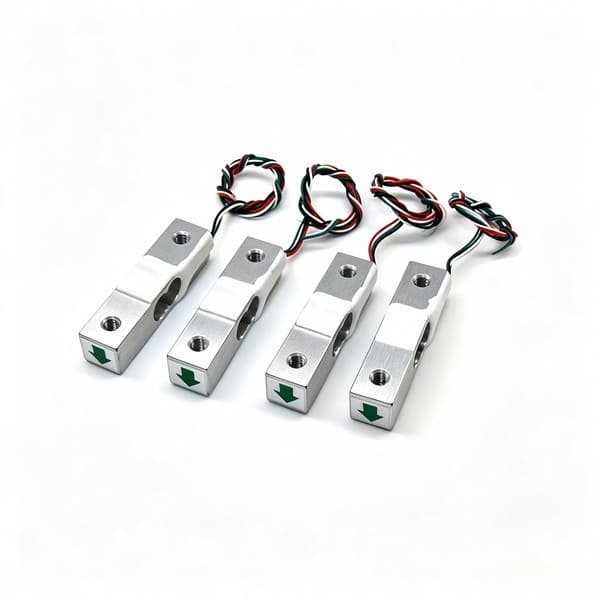
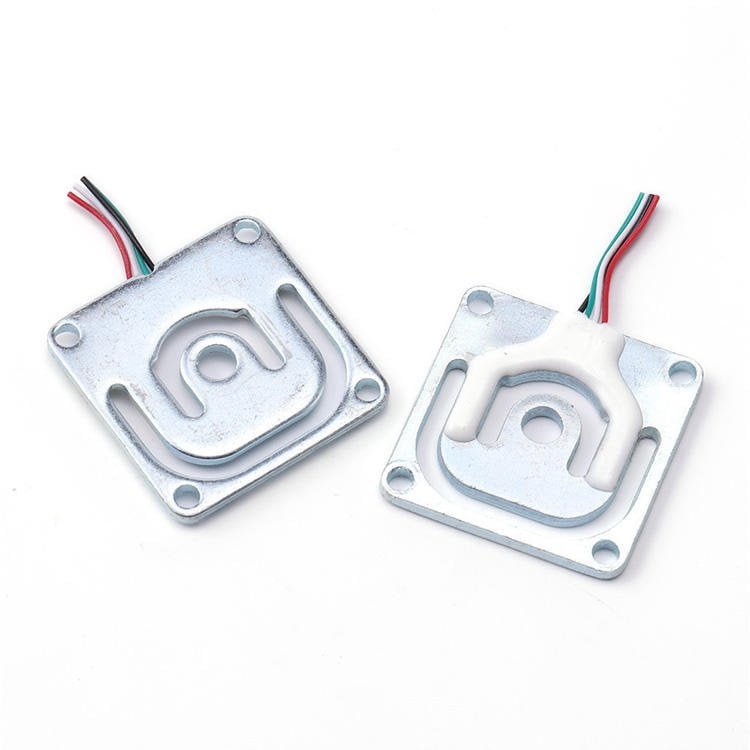
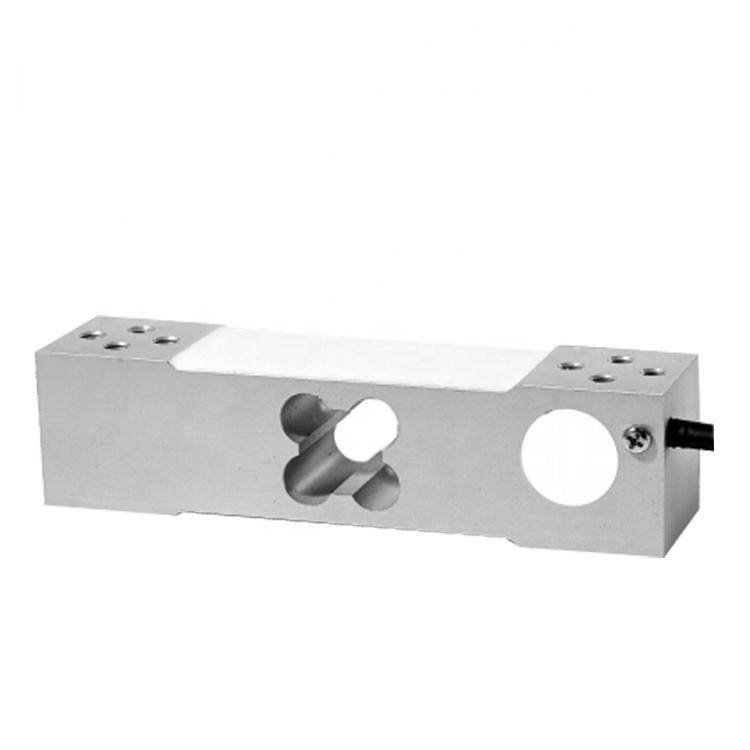
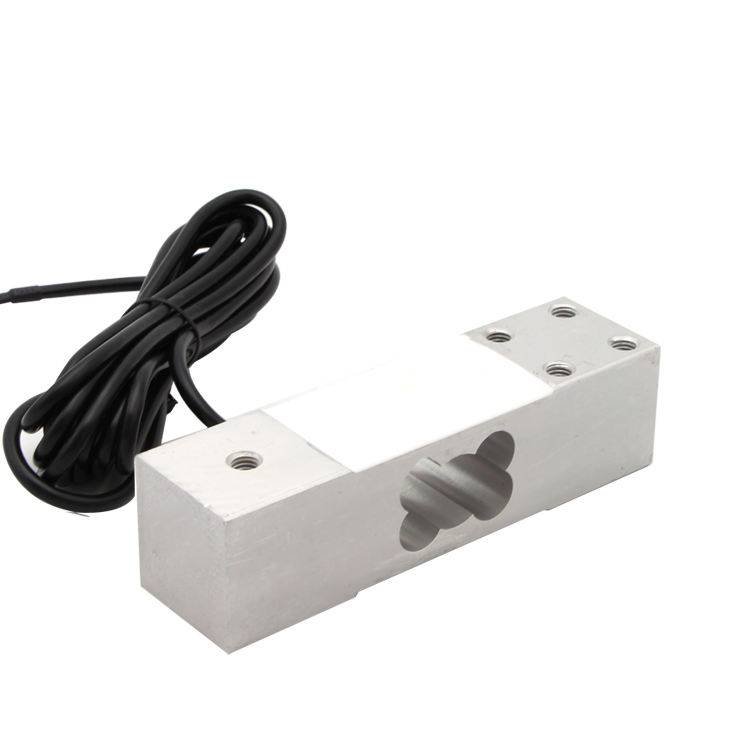
Two of those cards are worth a second look for a different reason. The half-bridge family needs its four cells wired into one bridge, which means an uneven mechanical preload shows up as zero offset rather than as a corner error; the wiring and the matching rules are set out in the complete guide to load cells. And if your product puts the pet on something that also holds food or water, the tare behaviour is the same problem as a remote-monitored hive scale, where the load changes by a few hundred grams a day and the box weighs ten times that.
Those two numbers plus your display division and your excitation voltage decide the part number, the error floor in grams and whether your deck needs a landing stop. Send them with your annual quantity and I will come back within twelve hours with a specific recommendation and the arithmetic behind it — including the cases where the answer is that you should change your protocol rather than your load cell.
Robin · Export Sales Engineer · VektorForce · www.vektorforce.com